
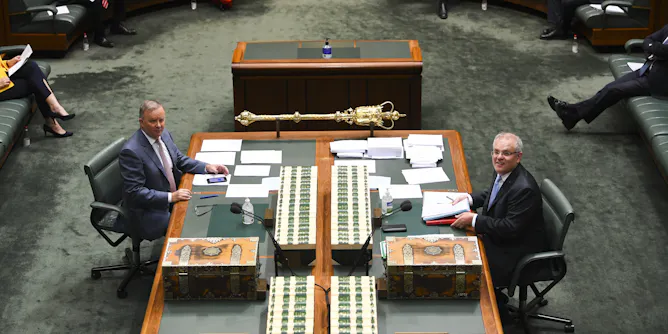
Michelle Grattan talks about the week in politics, including the parliament’s action and analysis of the coronavirus crisis.
Articles on Coronavirus stimulus program
Displaying 21 - 37 of 37 articles
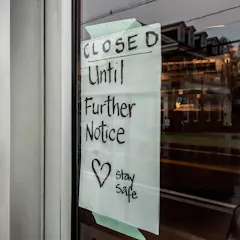
Many countries are spending record amounts to support people and businesses affected by COVID-19, but we need to scrutinise fiscal support because it’s money we’re borrowing from future generations.
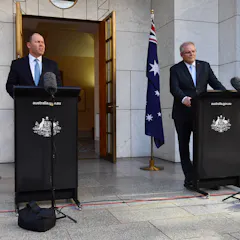
The Morrison government will provide a flat $1,500 a fortnight JobKeeper payment for businesses to retain or rehire nearly six million workers, in a massive $130 billion wage subsidy scheme.
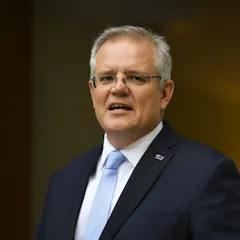
Scott Morrison will unveil a $1.1 billion package to make Medicare telehealth services available during the coronavirus pandemic and to support mental health, domestic violence and community services.
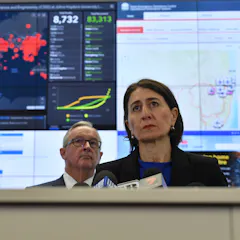
NSW and Victoria are shutting down non-essential services and activities over the next 48 hours, and the federal government has announced it will widen eligibility and increase income support as the coronavirus crisis escalates.
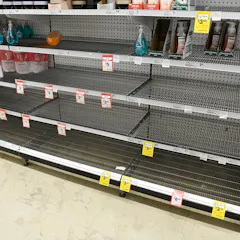
Small and medium-sized businesses will get up to $100,000 in cash payments in the government’s second stage of emergency assistance, worth a huge $66 billion, to cushion businesses and individuals as the coronavirus cuts a swathe through Australia’s economy.
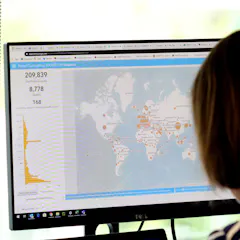
The federal budget will be delayed until October 6, as the demands of dealing with the rapidly moving pandemic and the impossibility of forecasting have made the May timetable impossible.
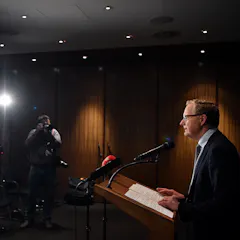
Morrison has stressed Australia is not in shut down. Not officially. But out of a combination of alarm, caution and government measures to contain the virus’s spread, many activities have shut down and more do so every day.

The Trump administration is asking for US$850 billion in stimulus spending. Given the debt’s already at record levels, can the US afford it?

A move towards working from home, less air travel and prudent stimulus spending could flatten emissions growth in the longer term.
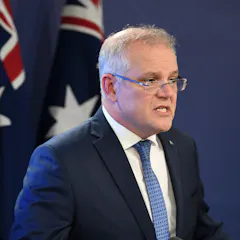
The federal-state national cabinet is being dubbed a “war” cabinet, as the government rushes to meet the social, health, and economic demands of the rapidly escalating coronavirus pandemic.
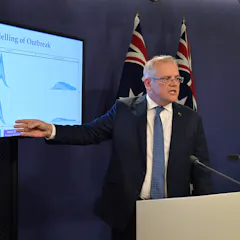
With the announcement of mandatory self-isolation, the escalation of the coronavirus has forced Morrison to take a less optimistic, more pragmatic stance.
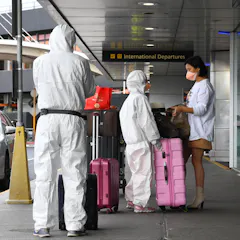
Michelle Grattan talks about the week in politics, including the worsening coronavirus situation, and the specifics of the government’s $17.6 billion stimulus package.
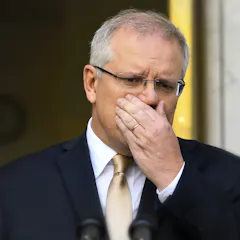
Cash payments are much more likely to be spent than bonus tax refunds.

When a health crisis is the driver of an economic crisis, the uncertainties are multiplied, and people’s reactions are more difficult to predict.
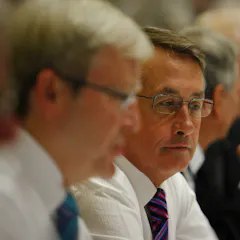
The attempts at product differentiation that preceded the $18 billion program are all but exhausted.
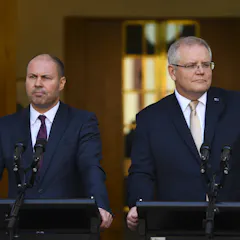
The government has announced it’s $17.6 billion stimulus package, focused on investment in business, boosting cashflow, and putting cash in the hands of lower income earners.
Top contributors
-

Professorial Fellow, University of Canberra
-
Associate Professor in Property, Construction and Project Management, RMIT University
-
Visiting Fellow, Tax and Transfer Policy Institute, Crawford School of Public Policy, Australian National University
-
Adjunct Professor, School of Public Health, Curtin University
-
Adjunct Professor of Architecture, University of Technology Sydney
-
Academic Director Living Lab Northern Rivers, University of Technology Sydney
-
Associate, Grattan Institute
-
Professor, School of Economics, The University of Queensland
-
Postdoctoral Research Associate, University of Sydney
-
Senior Researcher, Center for International Climate and Environment Research - Oslo
-
Associate Professor of Finance, Mississippi State University
-
Honorary Associate Professor, ANU College of Law, Australian National University
-
Chair in the Economics of Disasters and Climate Change, Te Herenga Waka — Victoria University of Wellington
-
Adjunct associate, James Cook University
-
Senior Lecturer in Urban and Environmental Planning, Griffith University