

Doctors hear many of the same basic questions about sex from their patients.
Articles on Contraception
Displaying 61 - 80 of 130 articles

After half a century of ambiguous policy regarding LGBTQ inclusion, the United Methodist Church may well split up in May.

Access to early medical abortion is an important part of women’s sexual and reproductive health care. Yet often country GPs don’t offer this service.

The benefits of midwifery for women and babies globally are clear. In Canada, innovations in midwifery centres and services are tempered by low pay and high rates of burnout.

A growing number of women may be looking to non-hormonal methods of contraception, in the form of fertility awareness apps. But apps are not likely to be as effective as other forms of contraception.

Australia’s year 10-12 students are getting good marks when it comes to sexual health, according to new research out today. But there’s room for improvement.

Thousands of Australian men have vasectomies each year. These surgeries are successful in more than 99% of cases.

Women of all walks of life have abortions: married, single, child-free, and mothers. New research shows what’s happening in their life when they do.

Having a ‘period’ on the pill is far from necessary.
Partners and wider family members often meddle in women’s reproductive choices.
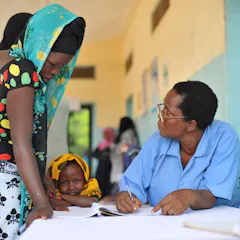
Tanzania was an early, ardent believer in family planning. Now it joins a growing number of developing nations that see potential advantage in having a huge and growing workforce.

Abortion appears to be illegal and clandestine in large parts of the Muslim world. Yet, women continue to challenge the status quo and archaic laws through their daily practices and activism.

The notion that religious groups are opposed to sex-ed is simply not true. And our youth need it more than ever to take control over their lives, their bodies and their decisions.

It’s unsurprising that such apps are popular. Contraceptives come with a slew of hazards.
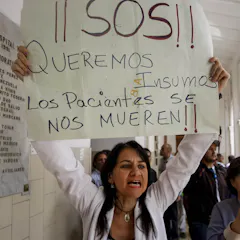
The impact of Venezuela’s medical crisis is not gender-neutral.

On the 50th anniversary of Humanae Vitae, an encyclical released by Pope Paul VI calling for prohibition on contraceptive use, a scholar describes the struggles of Catholic women, as well as their activism.

When and how teenage girls can consent to contraceptive implants.

Unlike condoms, which need to be used every time with sex, or the pill, which must be taken every day, LARC doesn’t require any action after placement in the body and is immediately reversible.

Men want to have a say in conversations about contraception – but they’re worried about imposing on women’s autonomy.

Male contraceptives have been under development for at least the past 50 years, because of the success of the female pill and pessimism about men taking a pill.
Top contributors
-

Professor of Practice, Sydney Medical School, Faculty of Medicine and Health, University of Sydney
-
Venable Professor of Law, University of Baltimore
-
Associate Professor in Contraception, Reproductive and Sexual Health, Anglia Ruskin University
-
Angela Taft is a Friend of The Conversation.
Emeritus Professor, Judith Lumley Centre (JLC) of Mother, Infant and Family Health, La Trobe University
-
Professor of Pharmaceutical Chemistry, Macquarie University
-
Associate Professor of Women and Gender Studies & Jewish Studies, University of Colorado Boulder
-
Assistant Professor of Obstetrics and Gynecology, University of Michigan
-
Research Scientist, African Population and Health Research Center
-
Adjunct Professor, La Trobe University
-
Associate Professor, Public Health Ethics, School of Population Health, UNSW
-
Gilles Pison is a Friend of The Conversation.
Anthropologue et démographe, professeur émérite, Muséum national d’histoire naturelle (MNHN); Ined (Institut national d'études démographiques)
-
Professor at Prince Henry's Institute, Hudson Institute
-
Director, SPHERE NHMRC Centre of Research Excellence in Women's Sexual and Reproductive Health in Primary Care and Professor and Head of the Department of General Practice, Monash University
-
Lecturer, Division of Health Research, Lancaster University
-
Sciences Po