
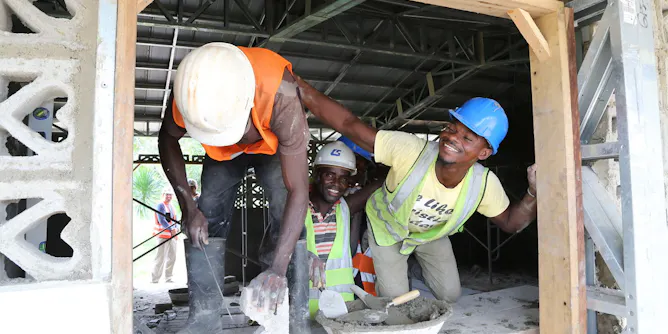
An unregulated construction sector is stifling its potential to influence Ghana’s economy consistently.
Articles on Construction
Displaying 181 - 200 of 284 articles

Australia is in the midst of a solar energy boom, yet it is lagging behind other countries when it comes to ‘building-integrated photovoltaics’ - solar cells built into the very fabric of buildings.
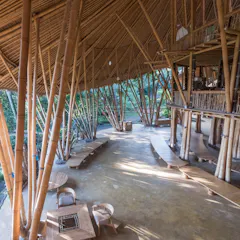
Bamboo has been used since ancient times for building, but only in recent decades has pioneering work in Bali inspired its wider use for substantial and enduring structures.
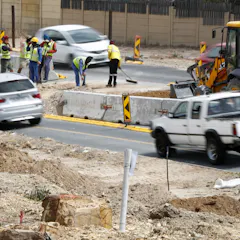
There’s no uniformity around health and safety management programmes and practices within the construction industry.

Air conditioning requires energy, and contributes to global warming – here are five ways of cooling which won’t cost the planet.
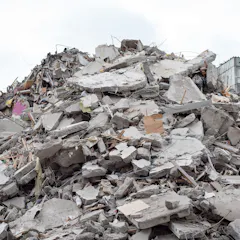
China has put the onus back on Australia to take responsibility for our waste, and Germany has shown us the way with extended producer responsibility for construction and demolition waste.

From cobbled laneways to grand buildings, bluestone has a long history in Melbourne – one that starts millions of years ago.

We now have a proven model for supporting self-determined building on Aboriginal homelands. The next question is how can its reach be extended?

Trump may find it harder to maintain support for his escalating tariffs on China if the US economy shows further signs of weakness.
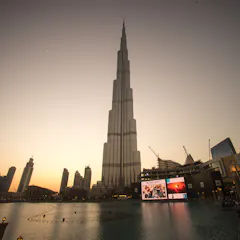
It would be difficult, but we could probably build a tower over 2,000 metres tall, which would be like ten normal skyscrapers on top of each other! This is probably not a very good idea though.
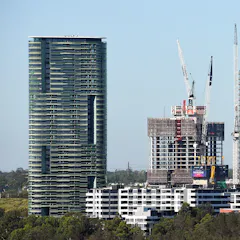
Under the new code, buildings are hardly likely to differ measurably from their fault-ridden older siblings and can still fall short of a six-star rating. It’s possible they may have no stars!
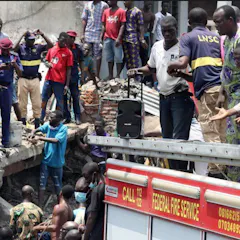
Lagos has all the appropriate laws but it needs to adopt the right procedures and see them through.
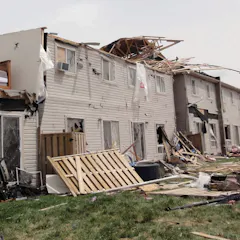
Weather-related catastrophic events have cost Canadians more than $17 billion in the past decade. That only stands to grow, unless building codes change to make homes more resilient.
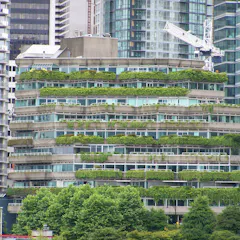
Buildings are responsible for 40 per cent of energy-related carbon dioxide emissions worldwide. Efforts to reduce emissions should no longer be voluntary.
While Opal Tower residents are more badly affected than most, up to 80% of multi-unit buildings have serious defects. Here’s what government can do right now to fix the industry.

Hazardous professions including agriculture and heavy engineering are already having to find ways to adapt.

Centralised policies are not meeting the needs of remote Indigenous settlements. Increasing their decision-making input and the role of local industry can overcome the challenges of building remotely.
The government’s ambitious plans for T-levels might struggle to get off the ground given that further education colleges are already short of 20,000 staff.

By the time a building is abandoned and falls into disrepair, its community is already suffering. Michigan scholars suggest it’s time to plan for structures’ end of life before they even go up.

Pouring concrete into formwork limits the creativity of architects to build unique shapes. 3D printing could change that.
Top contributors
-

Senior Lecturer, UTS Faculty of Law, University of Technology Sydney
-
Professor of Construction Management, University of Technology Sydney
-
Senior Lecturer, University of Technology Sydney
-
Scientia Professor of Economics, UNSW
-
Associate Professor in Civil Engineering and Environmental Materials, Brunel University of London
-
Head of School and Professor of Architecture, UNSW Built Environment, UNSW
-
Associate Professor in Property, Construction and Project Management, RMIT University
-
Professor of Sustainable Architecture, Lancaster University
-
James R. Rice Distinguished University Professor of Engineering, University of Michigan
-
Associate Professor, School of Sciences, RMIT University
-
Associate Professor in Construction and Environmental Performance, The University of Melbourne
-
Professor of Future Construction, University of Edinburgh
-
Associate Professor & Global Challenge Lead, Urban Transformations Research Centre, Western Sydney University; University of British Columbia
-
Professor, Melbourne Law School, The University of Melbourne
-
Professor of Sustainability Science, Edinburgh Napier University