

Melissa Kang answered hundreds of questions from girls for the Dolly Doctor column. What she found on analysis was a sense of shame when young women experienced sexual pleasure.
Articles on Consent
Displaying 61 - 80 of 125 articles

Jane Austen’s Pride and Prejudice and the film Rear Window are great examples of how parents and teachers can use movies and books to start discussions with young people about consent.

To be effective, a video needs to be clear about its message and relatable. The government’s milkshake video seemingly about consent failed on both counts. But these videos get it right.

A gender-justice researcher reviewed the entire newly released government sexuality education resource for teachers. She found several significant problems.

We often hear of sexual harassment and bullying of a sexual nature being perpetrated by men/boys against women/girls. But it happens within groups too

A study on the delivery of sexuality education found some teachers were anxious about parental fear, negative media and political hysteria. Sometimes they watered down ‘risky’ content.

Children take their lead from their parents. And it is, after all parents, not teachers, who have regular, long-term contact with children from birth onwards.

Juries in rape cases must decide whether the prosecution has proven there was no free and voluntary consent. And this is where broader societal attitudes come into play.

An app to record consent won’t address the real problems of sexual violence and how our society responds to it.

Millions of people are reading young adult fantasy novels like Twilight or A Court of Thorns and Roses. But the way sexual consent is depicted in these can be confusing or even harmful.

In interviews, female teachers at three all-boy schools in three capital cities have disclosed instances of sexism from students, male colleagues and parents.

A sexual education program in Mexico City provides a blueprint for Australia. It shows how to engage students in conversations about lived experiences, among other effective methods.

All-boys’ schools often choose texts for English study written by men. But the sexism goes beyond that. They are more likely to shy away from any exploration of gender in literature.

Sexual negotiation can be a difficult process. It’s about reading body language as well as verbal cues, and respecting the wants and needs of your partner. Schools need to teach it early and often.

Female sexuality and sex on screen have come a long way since the four friends were looking for love in the Big Apple.
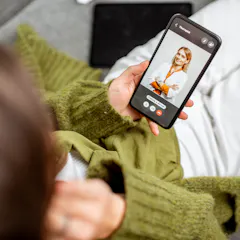
You might need permission to record a doctor’s appointment and extra permission to share it. That depends on where you live.

Forty years since Fame showed the vulnerability of performing arts students, we can still do more to protect them. As we resume physical contact, we can use performance to renegotiate safe intimacy.

Assuming everyone we encounter in public is vulnerable to COVID-19 may be the best ethical response to social distancing and consent.

The law on indecent imagery of children should distinguish between pictures or videos produced by young people and those taken by adults.

As the Harvey Weinstein trials start, a psychology scholar explains why jurors may be biased on the question of consent. While the situations examined in these studies are not equivalent to sexual assault, they illustrate a pervasive psychological bias.
Top contributors
-

Sexologist & Lecturer and Research Fellow in Communications & Culture, Edith Cowan University
-
Lelia Green is a Friend of The Conversation.
Professor of Communications, Edith Cowan University
-
Senior Research Fellow and Lecturer, Health Promotion and Sexology, Curtin University
-
Principal Research Fellow, Australian Research Centre in Sex, Health and Society, La Trobe University
-
Professor of Adolescent Health, Co-Head of the General Practice Clinical School, University of Sydney
-
Head of School and Dean, School of Law and Justice, University of Southern Queensland
-
Senior Lecturer, Criminal Law, Nottingham Trent University
-
Writer, University of Westminster
-
Professor of Psychology, University of New Brunswick
-
Associate Professor in Criminology, The University of Melbourne
-
Professor, Canada Research Chair in Determinants of Child Development, Owerko Centre at the Alberta Children’s Hospital Research Institute, University of Calgary
-
PhD student in Clinical Psychology, University of Calgary
-
Senior Lecturer in Law, Queen's University Belfast
-
Lecturer in Education (Literacy and Language), Deakin University
-
Senior Lecturer in Ethics and Professionalism, Adelaide University