
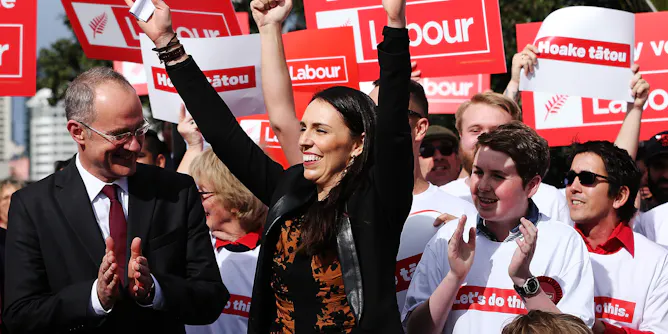
Jacinda Ardern, like Kamala Harris, unexpectedly became the leader of her political party close to the election. The similarities don’t stop there.
Articles on Comparative politics
Displaying 1 - 20 of 32 articles
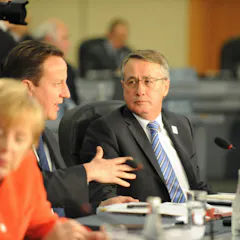
While both parties may have set out to modernise and renew their ideologies, the ALP’s and Labour’s attempts to marry the old and new instead precipitated two separate identity crises.
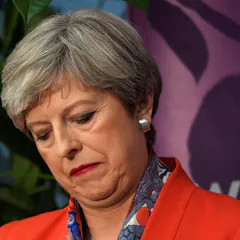
The stunning UK election result – a hung parliament – may be another sign of the rise of ‘anti-politics’, particularly among the young.

The rationale for banning foreign donations is to stop the threat of overseas interests undermining Australian democracy.
A minor change, substituting ‘vilify’ for ‘offend’ and ‘insult’, would bring Section 18C more in line with similar laws in other democracies without undermining its effectiveness.

How can we explain that wealth is associated with protectionism and support for populist leaders?

Many in Australia look to the use of the referendum in Ireland as an example of how its marriage equality debate might be resolved. But what worked well in Ireland might be very damaging in Australia.
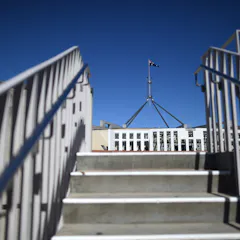
Australia is lagging behind other countries in adopting practical measures to achieve gender balance in public decision-making.

How will the Brexit referendum work? And what distinguishes it from referendums that have been held in Australia?
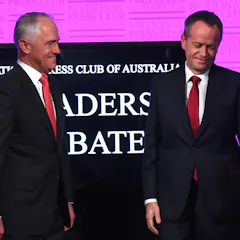
A party can have the most brilliantly informed and farsighted policies. But if the protagonists cannot communicate these effectively to the electorate, they will be overlooked.
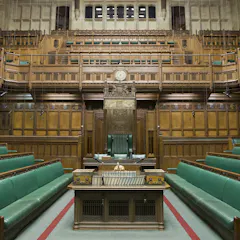
Unlike similar democracies, Australia neither limits political donations nor campaign expenditure by political parties at the federal level.

The reality is that intergovernmental relations are not the strong point of federal systems generally. But some do it better than others.

Primaries are the ultimate American invention. Unfortunately, they are a terrible invention – they actually destroy the political system.
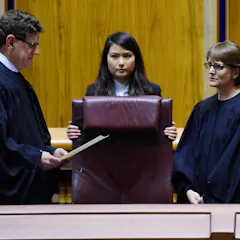
It is no criticism of Australia’s judiciary to say that it would be preferable, both for them and the public, if they took office after a more transparent process.

The role of money in politics challenges rich and poor countries worldwide. Its abuse raises problems of graft, corruption and cronyism, undermining legitimacy and governance.
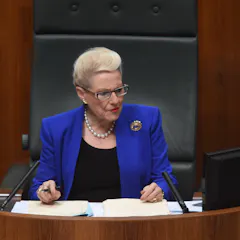
During the UK’s parliamentary expenses scandal, many questioned the system as – just like Bronwyn Bishop in Australia now – they felt that they had acted within the rules that existed at the time.
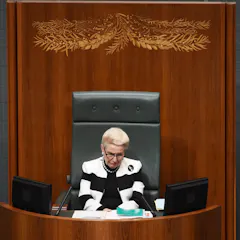
By making the speakership a political gift of the party in power, Australia is missing a major opportunity for democratic renewal of its parliament.
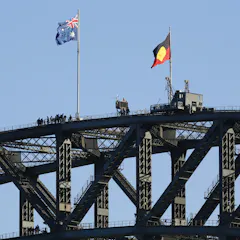
Constitutional recognition may have very limited impact if the groups benefiting from the change lack the political weight to leverage it into greater social change.
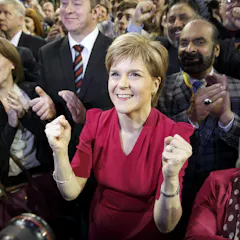
With a steady hollowing out of membership, the cosying up to vested interests with pockets deep enough to maintain party, today’s political parties barely “represent”.
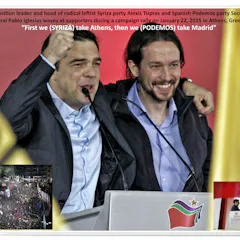
The rise of left-wing populism challenges those who flatly denounced right-wing populism as undemocratic. Populism can appear as a democratic force in some contexts and anti-democratic in others.
Top contributors
-

Associate Professor, Politics and Public Policy, Flinders University
-
ANU Law, Australian National University
-
Emeritus Professor, School of Politics and International Relations, Australian National University
-
Associate professor, The University of Western Australia
-
Teaching Associate in Politics and History, Monash University
-
Senior Lecturer in Politics and International Relations, Monash University
-
Professor of Political Science, Health and Social Policy, McGill University
-
Professor of History and Politics, School of Humanities and Social Inquiry, University of Wollongong
-
Partner, Government & Public Sector, Providence / Honorary Fellow, Australian National University
-
Professor of Politics, Curtin University
-
Associate Professor in Politics and International Relations, Monash University
-
Professor of Comparative Political Science and Democracy Research at the Humboldt University Berlin; Associate of the Sydney Democracy Network, University of Sydney; Director of Research Unit Democracy: Structures, Performance, Challenges, WZB Berlin Social Science Center.
-
Honorary Associate Professor, The Crawford School of Public Policy, Australian National University
-
Professor of Politics, Griffith University
-
Associate Professor, Faculty of Law, Monash University