

The issue is not whether cities should use technology for public safety, but how those technologies are chosen, evaluated and governed.
Articles on Community policing
Displaying 1 - 20 of 29 articles
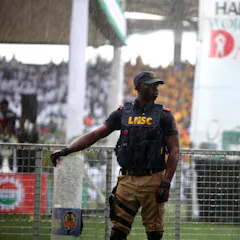
In response to the general state of insecurity in Nigeria, local community groups in Lagos are mobilising and providing solutions.
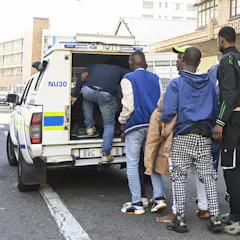
Police officials in high-crime areas are overwhelmed by the many criminal cases they must investigate.
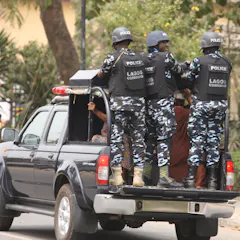
In Nigeria, the festive season comes with security and safety challenges. Here’s how to keep safe.

Both major parties have pledged to increase recruitment to England and Wales’s police forces. But more needs to be done to rebuild trust with communities.
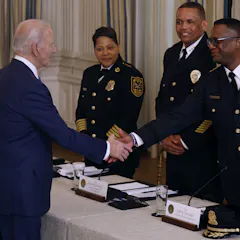
Research has shown that anti-gun violence programs have more success when they address root causes such as generational poverty, easy access to guns and a lack of affordable housing.

Community police officers are important for maintaining trust in police.

Nigeria’s new police chief needs fresh ideas to confront old challenges.

Alternatives to violent policing already exist in the daily practices of Nairobi residents who don’t depend on the police for safety.

Nigeria should consider embracing a decentralised policing system as community mobilisation during COVID lockdown ensured law and order.

Public trust and confidence in the police is a concern in many parts of the world. How can Nigeria get it right?

Uganda uses unpredictability to combine democratic institutions with authoritarian power.

At the centre of the persisting violence in the north-central region of Nigeria is bad governance.
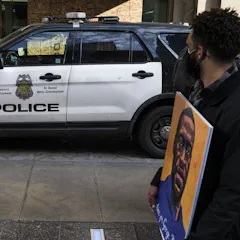
Attempts to reform US police departments fail when they are unable to get community support. Perhaps it is time to take a different tack, argue two criminal justice scholars – one a former cop.

Scholars who study policing explain what they have found that could help reduce police prejudice and violence.
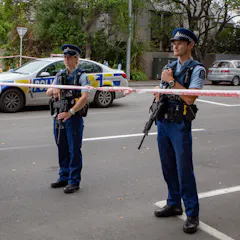
As a former NZ Police sergeant, I know firsthand how police fatalities shape one’s behaviour. The recent shooting of two officers in Auckland cuts to the heart of NZ’s trust-based policing policies.
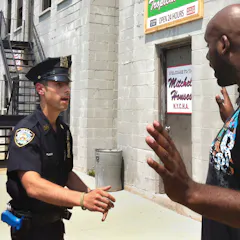
Former New York Mayor Michael Bloomberg apologized for his city’s ‘stop-and-frisk’ police strategy. Two criminologists argue it isn’t necessarily inherently racist – though New York’s program was.
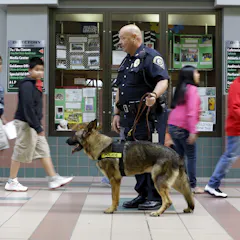
When police coax information from low-level offenders with threats of harsh sentencing, it breeds distrust in the community and ultimately contributes to mass incarceration.

In one bloody week in June, 181 Rio residents were shot, including a baby in utero. It’s now impossible not to notice that city’s once-lauded favela “pacification” strategy has all but collapsed.
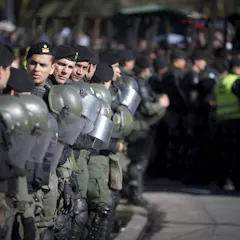
Research shows how politics can easily halt reforms that require time to take effect.
Top contributors
-

Assistant Professor, Augusta University
-
Assistant Professor of Criminal Justice and Criminology, Georgia State University
-
Professor and Chair, Department of Sociology & Anthropology, West Virginia University
-
Director, Center for Applied Insight Conflict Resolution; Adjuct Faculty at the School for Conflict Analysis and Resolution, George Mason University, George Mason University
-
Associate Dean of Graduate Studies and Associate Professor of Criminal Justice, Texas Christian University
-
Professor and former ARC Future Fellow, Griffith Criminology Institute, Griffith University
-
Assistant Professor of Criminal Justice, Harrisburg campus, Penn State
-
Professor of the Practice and Faculty Director of the Master's in Applied Intelligence, Georgetown University
-
Associate Professor of History, University of California, Irvine
-
Director, School of Public Affairs, and Professor of Public Administration, Harrisburg campus, Penn State
-
Coordinator, Centre for Studies on Public Security and Citizenship, Universidade Candido Mendes (UCAM)
-
Founding Director, Georgia International Law Enforcement Exchange (GILEE) and Professor Emeritus of Criminal Justice, Andrew Young School of Policy Studies, Georgia State University
-
Assistant Professor, School of Conflict Analysis and Resolution, George Mason University
-
Senior Lecturer in Criminology and Policing, Teesside University
-
Associate Professor, School of Social Science, The University of Queensland