
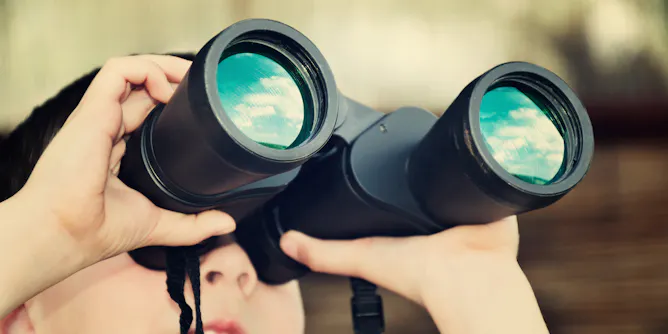
Some colour blind people only have two kinds of cone cell in their eye. Others have three kinds, but the cones do not pick up the same light waves as the cone cells in most people’s eyes do.
Articles on Colours
Displaying 41 - 60 of 75 articles
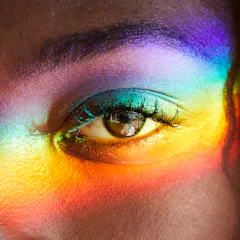
What colours we see depends not just on how things are in the world around us, but also on what happens in our eyes and our brains.
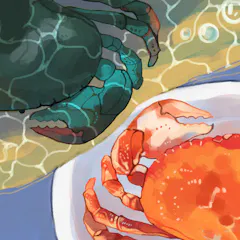
When crustaceans are cooked, some chemicals in their shells react with heat and change colour.

How our life experiences change the way we perceive colours.
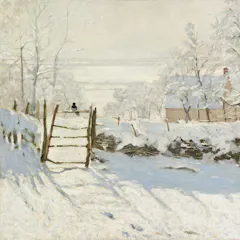
Claude Monet painted The Magpie in winter 1868, turning his interest in colour on the blank canvass of snow.

Turkish painter Esref Armagan uses colour and perspective that he has never seen.

From Superman to Jurassic Park, green screen technology is what makes the jaw-dropping effects you see in blockbuster movies possible. But how does it work?

An unlikely combination of artists, medieval historians, philosophers and scientists have converged to create an exhibition of glass artworks.
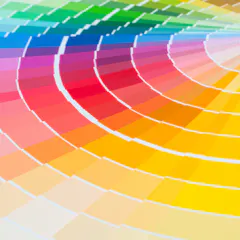
It has long been known that colour and emotion are linked – so could colour could be used as a language to express how we feel?

Colour can have surprising effects on us, which we are only now beginning to understand.
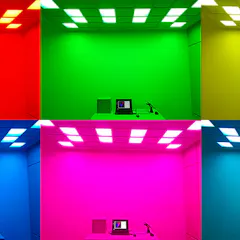
The brain processes colour in more ways that just creating visual images – here’s how.
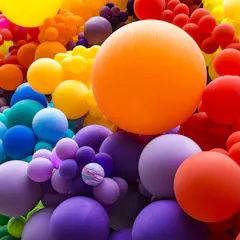
People across the globe all see millions of distinct colors. But the terms we use to describe them vary across cultures. New cognitive science research suggests it’s about what we want to communicate.
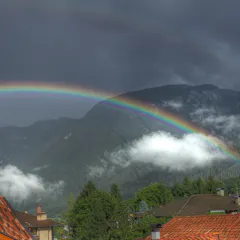
Georgina, age 5, wants to know why rainbows are round.
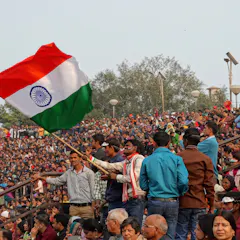
As India celebrates its independence, the flag is on full display, but few people know about the complex origins of this ubiquitous national symbol.

Indian girls grow up in an environment where they are constantly reminded that fair is beautiful.
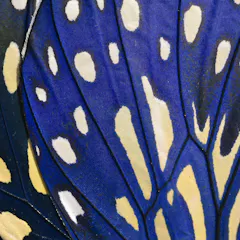
Scientists continue to invent new colours for new applications thanks to nanoscale structures.

Coating paper with an inexpensive thin film can allow users to print and erase a physical page as many as 80 times. That reduces both the cost and the environmental effects of paper use.
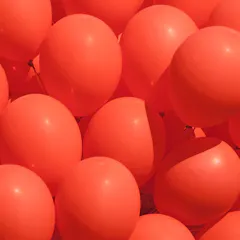
Red is the colour of life, of danger and of good luck.
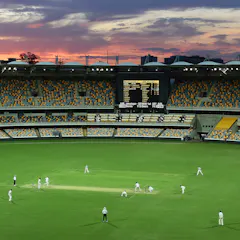
New research shows pink cricket balls can be extra difficult to see in those crucial minutes when day turns to night during play.
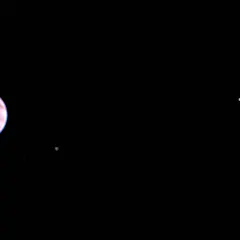
Many images of planets have been manipulated. So have we seen their true colours? Not always, it turns out. But Jupiter’s red spot really is red.
Top contributors
-

Associate Professor, Department of Physiology, Monash University
-
Professor of Psychology, Edge Hill University
-
Professor in High Medieval History, Durham University
-
Professor, School of Psychology, The University of Queensland
-
Professor of Natural Philosophy in the Department of Physics, University of York
-
Lecturer in Museum Studies, University of Leicester
-
Senior Lecturer in Fine Art, UCL
-
Reader in Polymers ad Nanomaterials, School of Pharmacy and Biomedical Sciences, University of Lancashire
-
Postdoctoral Researcher in Evolutionary Biology, Université de Lausanne
-
Senior Lecturer in the School of Psychology, University of Lincoln
-
Lecturer in Language, Cognition and Neuroscience, Lancaster University
-
Professeur, Chercheur Ornitologue, Université de Lausanne
-
Research fellow, Geology and Geophysics, University of Oslo
-
Senior Investigator at the National Eye Institute, Section on Perception, Cognition, and Action, National Institutes of Health
-
Professor, Palaeobiology, University College Cork