
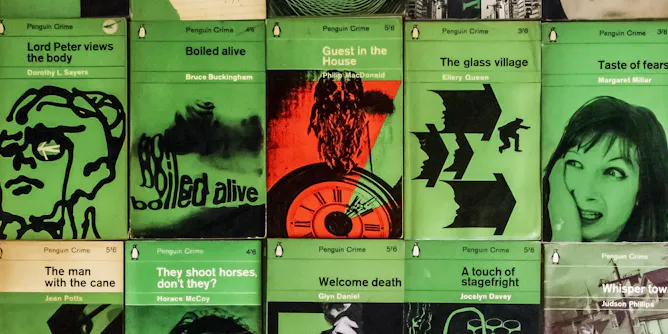
Green is lethal: the colour of radioluminescent paint, arsenic and chlorine gas. It is also the colour of crime fiction paperbacks.
Articles on Colors
Displaying 21 - 34 of 34 articles

The millennials have boosted rosé consumption: in the United States alone, 65% of them declare themselves “rosé drinkers”. How can this overall success be explained?

Being the media-savvy women that they were, suffragists realized they needed to come up with a meaningful, recognizable brand.

Studies show a weak relationship between tip amounts and quality of service. But the color gold seems to have a way of making diners feel wealthier – and more generous.

Famously feminized by the Nazis – and later used in prison cells to limit aggression in inmates – the color pink toes a shaky line between social psychology and gender stereotyping.
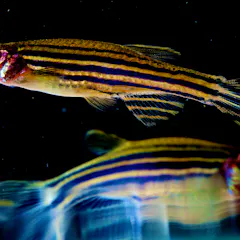
Zebrafish are known for their black and gold stripes, but researchers are still figuring out how pigment cells interact to form these patterns.

Through his art and his travels, 19th-century French Romantic painter Eugène Delacroix sought to understand the chaos of an era he called ‘the century of unbelievable things.’

You know you’ve hit it big when your designs find their way into millions of kitchens – and the Museum of Modern Art.

Your blood is red;
it’s never blue.
Because of hemoglobin;
and the view through tissue.

While it might seem like a longstanding tradition, it’s a relatively recent phenomenon in the U.S.
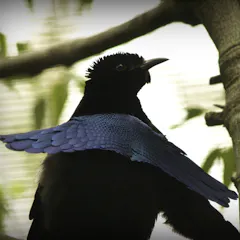
Male Birds of Paradise have patches of super-black plumage that absorb 99.95 percent of light. New research identified their feathers’ microscopic structures that make them look so very dark.
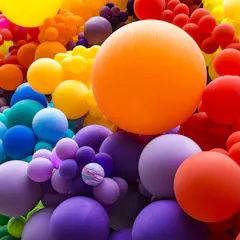
People across the globe all see millions of distinct colors. But the terms we use to describe them vary across cultures. New cognitive science research suggests it’s about what we want to communicate.
New research investigates how people sequentially add new color terms to languages over time – and the results hold surprises about assumptions linguists have made for 40 years.

The global color authority seems intent on obliterating the confines of gender-color associations.
Top contributors
-

Senior Investigator at the National Eye Institute, Section on Perception, Cognition, and Action, National Institutes of Health
-
Dean of the College of Science, Technology, Engineering, Mathematics & Management, University of Wisconsin-Stout Polytechnic
-
Assistant Professor of Interior Design, Iowa State University
-
Professor of Art History, Columbus State University
-
Professor of English & Distinguished Teaching Scholar, University of Florida
-
PhD Student in Organismic and Evolutionary Biology, Harvard University
-
Associate Teaching Professor of Small Animal Science, Penn State
-
George M. Bodman Professor of English, Yale University
-
Anthropologue, Co-directeur du Food 2.0 LAB Paris, chercheur associé au CNRS (ISCC), ESSEC
-
Visiting Fellow in Sensation, Cognition & Action, National Institutes of Health
-
Assistant Professor of Mathematics, Purdue University
-
Professor of Archaeology, College of Humanities, Arts and Social Sciences, Flinders University
-
Research Associate in Archaeology, Flinders University
-
Rédacteur en chef, coordination internationale et technique, The Conversation France
-
Ph.D. Student in Chemistry, University at Albany, State University of New York