
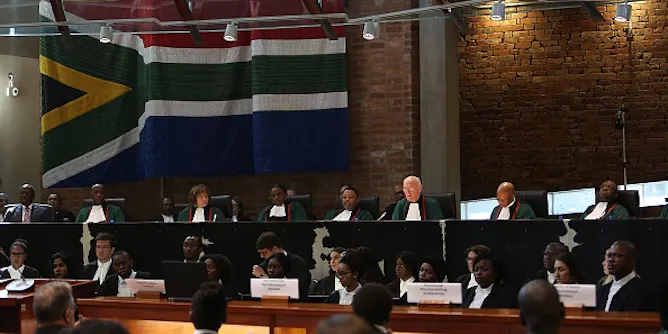
The growing defence of South Africa’s beleaguered constitutional democracy is bolstered by African thinker Mahmood Mamdani’s latest book.
Articles on Codesa
Displaying 21 - 40 of 44 articles
Whites lived well under apartheid and it is not absurd for black leaders to want all to live in the same way.

Professionalism has to start with ministers for it to stand any chance of being embedded throughout the public service.

His appearance on behalf of the families of mine workers shot by the police at the Marikana Commission of Inquiry was just one of his efforts to seek justice for the poor and marginalised.
The book shows that the claim made by some analysts that it was the fall of communism that prompted moves towards negotiations to end apartheid is off the mark.
The life story of Mandlenkosi Makhoba represents the losers in the new South Africa, showing how inequality is produced and reproduced generationally.
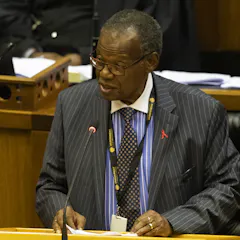
Mangosuthu Buthelezi deserves better than being dismissed as an apartheid stooge. But he deserves little praise as an advocate for human rights and civil liberties.
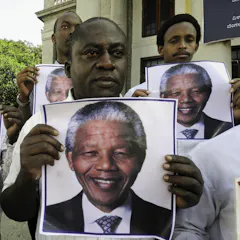
Mandela left at the right time in 1999, when the country still seemed in a healthy state, after which he consolidated his international reputation.
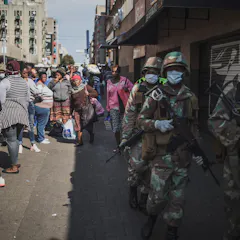
For the first time since the end of apartheid in 1994, citizens have had to accept stringent restrictions on their normal civil liberties.
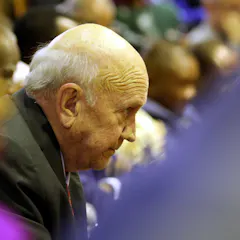
It seems that former president FW De Klerk continues to find it hard to accept that apartheid was a crime against humanity.
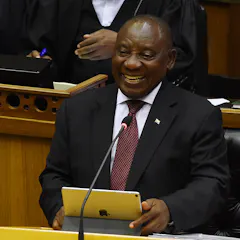
Ramaphosa is constrained by his tenuous control over South Africa’s governing party, the ANC.
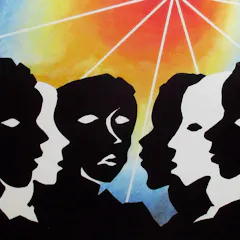
A retrospective exhibition displays the key works from the life and times of activist and artist Judy Seidman. She has used political posters as a galvanising force in the fight against injustice.

Marking the end of the Cold War offers the chance to reflect on the changes and continuities in African politics and international relations since 1989.
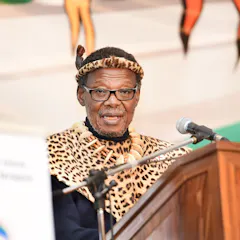
The IFP’s constitution provides that the nomination of national office bearers be approved by the branches. But this was not done in the nomination of its new president.
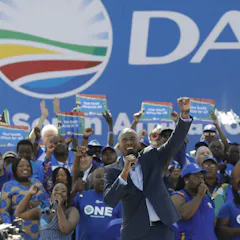
Despite its endurance, the Democratic Alliance still hasn’t found a firm foothold to grow the votes in South Africa’s changing political landscape.
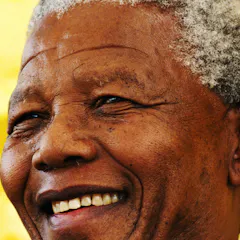
Mandela’s reconciliation message may have partly reflected his view of the world. But it was also a product of his party, the ANC.
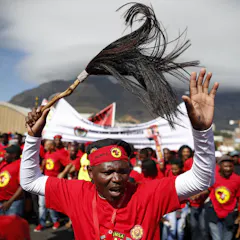
South Africa marks 24 years of freedom amid continuous contests over over governance, economic justice as well as reconciliation and inclusion.

The removal of Jacob Zuma from power is to be welcomed but, it’s not the answer to South Africa’s problems.
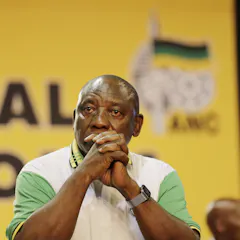
Cyril Ramaphosa is likely to emphasise stability - in government and the ANC. Given his history he is likely to want to stabilise the economy rather than pursue radical interventions.

After South Africa’s first democratic election in 1994, the previously oppressed and dispossessed black majority hoped for constitutional restitution of their land. This has largely failed.
Top contributors
-

Lecturer, Culture and Media department, Birkbeck, University of London
-
Political Scientist, University of the Western Cape
-
Professor of Sociology, University of the Witwatersrand
-
Professor of Political Studies, University of Johannesburg
-
Extraordinary Professor, Department of Political Sciences, University of Pretoria
-
Professor, Sociology, University of the Western Cape, Nelson Mandela University
-
Emeritus Associate Professor in Public Law, UCT. Visiting Adjunct Professor, WITS School of Governance; Director, Africa Programme, University of Cambridge Institute for Sustainability Leadership, University of Cambridge
-
Canada150 Research Chair in Gender and African Politics and Visiting Professor, WiSER Wits University, Carleton University
-
Professor of Political Science and Chair of the South African Research Initiative in Gender Politics, Stellenbosch University
-
Lecturer, Nelson Mandela University
-
Professor of Political Science, University of the Western Cape
-
Associate Professor in Sociology, University of Zululand
-
Professor of Political Science, Department of Political Studies and Governance, University of the Free State
-
Professor, University of Oxford
-
Campus Principal: Strategic Leadership and Management, Nelson Mandela University