
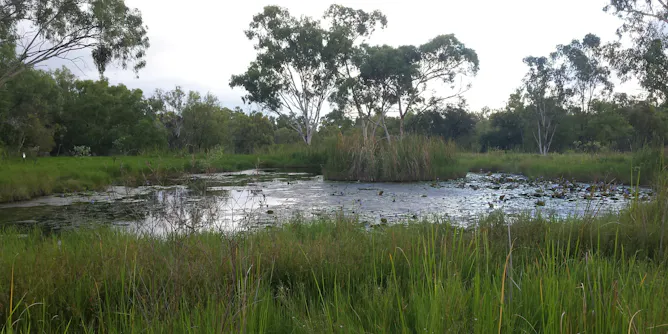
Conflict between coal giant Adani, the Queensland government and traditional owners over harm to groundwater ecosystems stems from a flawed interpretation of the ‘adaptive management’ approach.
Articles on Coal seam gas
Displaying 1 - 20 of 99 articles
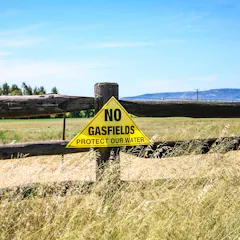
Investment in gas will not herald Australia’s economic recovery. It’s likely to hinder it.
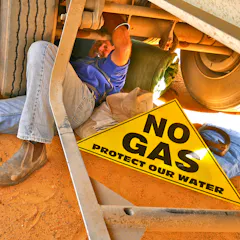
We believe the Narrabri Gas Project is unsustainable, unviable and not in the public interest.
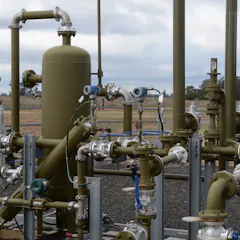
Gas mining is expanding across Australia, and has been touted as part of the answer to cutting emissions. But there is evidence that this rollout will pose significant health and environmental risks.
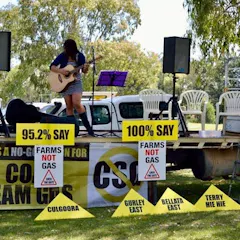
While anger mobilises opposition to coal seam gas projects, it is also joy, especially the joy of social connection, that helps to sustain involvement.
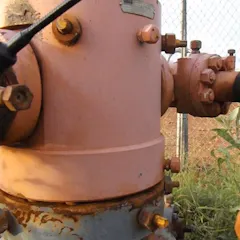
The Western Australian government’s decision to green-light fracking in selected areas aims to walk a line between industry interests and community opposition. But across Australia the picture varies widely.
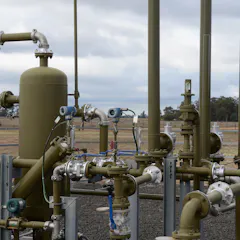
The coal seam gas industry and its regulators still have work to do in persuading local communities that old wells can be decommissioned without future problems, according to new CSIRO research.

Research into Queensland’s Darling Downs area has found social stress caused by housing pressure, population shifts and the ‘two-speed economy’ of coal seam gas.

‘Social licence to operate’ is a term describing how much community support a project or company has. As the Northern Rivers CSG experience shows, failing to get it can have costly impacts for firms.
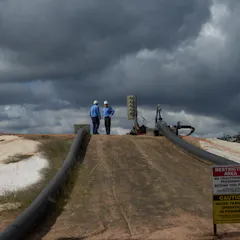
Australia has enough gas reserves to supply the next 25 years’ demand. Federal pressure to lift state bans on onshore gas development is pointless, risky – and won’t bring prices down.
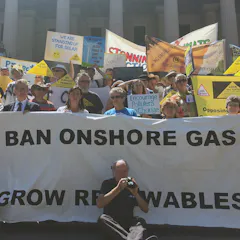
The federal government seems keen to usher in a new boom in onshore gas production. But gas firms will need to tread carefully, as past experience in Queensland’s fracking heartland shows.
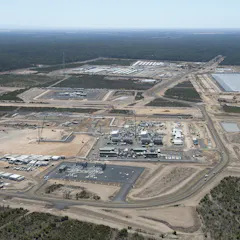
The latest survey of residents in coal seam gas regions reveals continuing lukewarm attitudes towards the industry.
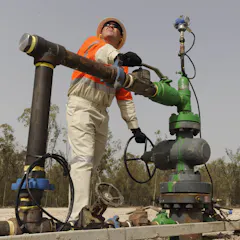
Extracting coal seam gas produces billions of litres of water. A new CSIRO report suggests that, when treated, this water can be pumped back underground.
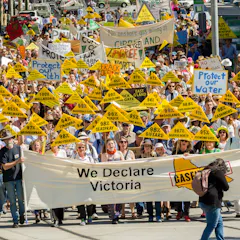
Victoria will permanently ban unconventional gas, and extend a moratorium on onshore gas until 2020.
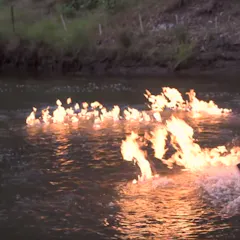
Coal seam gas may not be responsible for a flaming river in Queensland, but it still raises uncomfortable questions.
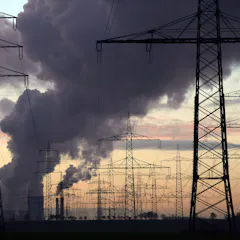
Energy companies are realising that, in light of the Paris climate deal, the economics are starting to line up in favour of climate action, not against it.
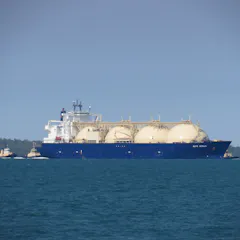
Coal seam gas companies have invested billions of dollars to export their products overseas. But is their investment paying off?

How do you balance coal and conservation? New research from Queensland hints at an answer.
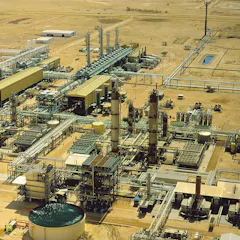
The Northern Territory is joining eastern Australia’s gas market - good news for gas customers.
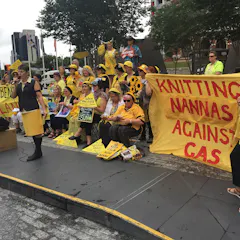
As a landowner, can you veto a coal seam gas development? And does the environment minister have the power to say no to coal mines?
Top contributors
-

Professor of Law, Deakin University
-
Senior Fellow in Energy and Climate Change, Grattan Institute
-
Professor of Energy and Natural Resources Law, Macquarie University
-
Honorary Fellow in Economics, The University of Queensland
-
Professor of Environmental Engineering, School of Engineering, Griffith University
-
Program Manager for Unconventional Resources, Australian School of Petroleum, Adelaide University
-
Emeritus Professor of Medicine, Adelaide University
-
Adjunct Associate Professor in the School of the Environment, The University of Queensland
-
Lecturer, School of Environment, Science and Engineering, Southern Cross University
-
Professor of Health, Safety and Environment, School of Public Health and Social Work, Queensland University of Technology
-
Professor in Earth Sciences, Southern Cross University
-
Associate Professor, Connected Waters Initiative, UNSW
-
Social Scientist, CSIRO
-
Director of the NSW Institute for Frontier Geoscience, University of Newcastle
-
Professor, National Marine Science Centre, Southern Cross University