
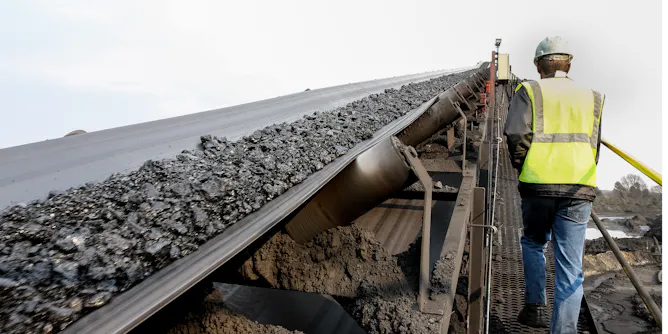
Listen to the third episode of a new series from The Anthill Podcast ahead of the COP26 climate change summit in Glasgow.
Articles on Coal
Displaying 141 - 160 of 567 articles
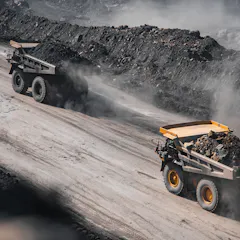
Japan, South Korea and China are all moving away from overseas coal financing. For Australia, the writing is on the wall – the clean energy transition is inevitable.
Xi Jinping has been talking tough on decarbonising China, but blinked after an energy crisis threatened to derail the world economy.

China’s Belt and Road initiative offers advantages and drawbacks for renewable energy development worldwide.
Natural gas was once widely seen as a bridge fuel to renewable energy. But the industry’s methane leaks make it a larger global warming threat than people realized.
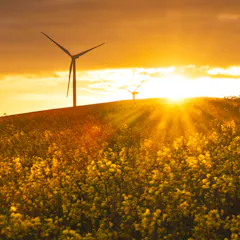
The world is moving away fossil fuels, and there’s nothing Australia can do about it. Racing to dig up and sell whatever fossil fuels we can before the timer stops is not a future-proof strategy.
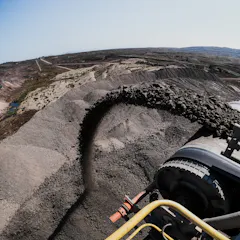
Major research found Australia must keep 95% of coal in the ground to limit global warming. With a little political will, this would be easy to do.
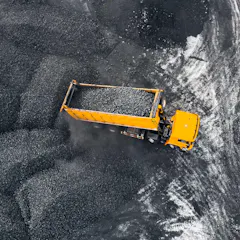
Our new study reveals how tight the world’s remaining carbon budget is.
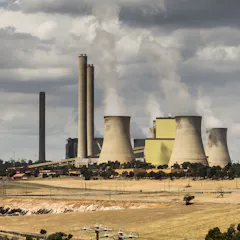
Major coal generators say the proposal will help shore up energy supplies. But opponents say it will pay coal plants for simply existing and delay the clean energy transition.
At the bottom of our carbon fears is a big black problem.
South Africa needs a detailed and thoroughly researched set of scenarios mapped out to inform a new electricity plan.
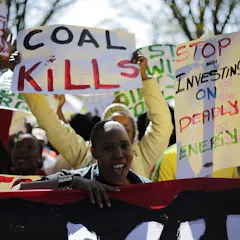
There is significant potential for the community trusts to improve the financial position of communities. But it’s not happening.

More than ten offshore wind farms are currently proposed for Australia. If built, their combined capacity would be greater than all coal-fired power plants in the nation.
Colonialism, political turmoil and unmet citizen promises all lie behind the rise of attacks on foreign-run fossil fuel plants in Mozambique.
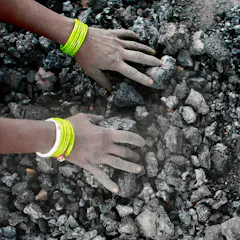
India is expected to overtake China this decade as the world’s most populous nation. That puts it at the heart of the global challenge to beat climate change.
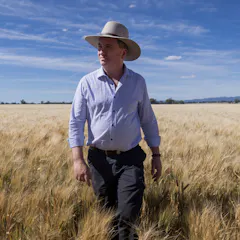
Barnaby Joyce’s pro-mining stance is at odds with the more progressive quarters of the party, and puts the Nationals in a difficult position on global carbon tariffs.
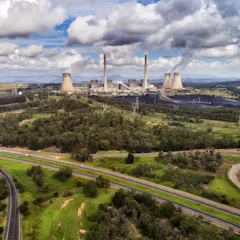
New research found power stations in the Latrobe Valley emit around 10 times more mercury than power stations in the Hunter Valley. The stark difference has a lot to do with regulations.
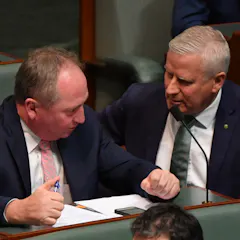
Barnaby Joyce is back as Nationals leader, three years since his reluctant resignation.
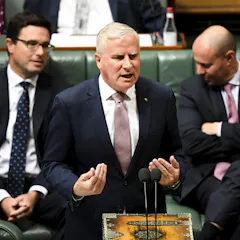
Acting Prime Minister Michael McCormack on “net-zero 2050” and coal
Michelle Grattan discusses coal, the nationals, and China with Acting Prime Minister Michael McCormack
Renewables form an ever-greater share of the electricity mix. But elsewhere in the energy sector – in transport, industry and buildings – emissions reduction is very slow.
Top contributors
-

Professorial Fellow, University of Canberra
-
Professor, School of Economics, The University of Queensland
-
Professor, Crawford School of Public Policy and Director, Centre for Climate and Energy Policy, Australian National University
-
Professor of Law, Deakin University
-
Professor of Physics, University of Johannesburg
-
Senior Fellow in Energy and Climate Change, Grattan Institute
-
Former Visiting Fellow, SPRU, University of Sussex Business School, University of Sussex
-
Senior Research Associate, Renewable Energy & Energy Systems Analyst, UNSW
-
Research fellow, Centre for Policy Futures, The University of Queensland
-
Assoc Prof. Renewable Energy, Monash University
-
Senior Industry Fellow, Environment and Planning, RMIT University
-
Professor, TC Beirne School of Law, The University of Queensland
-
Honorary Associate Professor, Centre for Climate Economics and Policy, Australian National University
-
Professor of Regional Economic Development, School of Business and Law, CQUniversity Australia
-
Conjoint Academic in Sustainability, University of Newcastle