

At a very simple level, “weather” refers to day-to-day conditions. “Climate” describes the average over many years.
Articles on Climate data
Displaying 21 - 37 of 37 articles
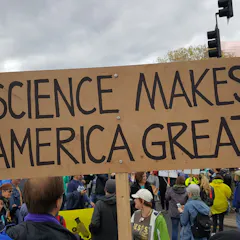
The March for Science on April 14 and Earth Day on April 22 are likely to generate big crowds demonstrating against Trump administration policies. Here are some issues they’ll be marching about.
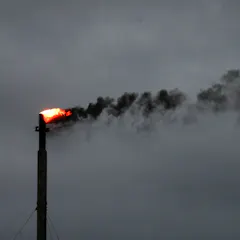
Despite scientists’ initial concerns, federal climate change data sets are still available. But other documents and web pages have changed over the last year.
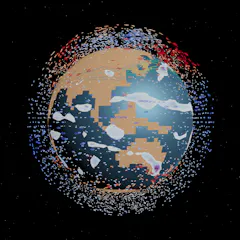
The creation of climate models with open source code, available for anyone to use, has improved scientific collaboration and helped research get more efficient.

Information to weather changes is often unavailable to Africa’s farmers and even if it does exist, the quality is poor or inaccessible to those who need it most.

Activists today are racing to save climate records from the Trump administration. Secret archives were a powerful way to fight hostile political climates throughout history – from the Nazis to the Islamic State.

During a Q&A discussion about climate change, Tasmanian Senator Jacqui Lambie said it was four degrees hotter 110,000 years ago. Is that right?
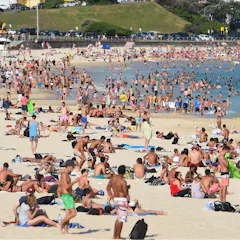
Australasia’s warming in recent decades is unprecedented in the past millennium. But a mistake in the paper reporting this finding took four years to fix, and was viciously attacked by bloggers.

This risk of climate-exposed investments dwarfs that of the sub-prime crisis.

CSIRO’s climate science has contributed a number of important, and unexpected, findings.

CSIRO is set to cut dozens of jobs from its climate research units, as part of a wider series of job losses to be formally announced today.
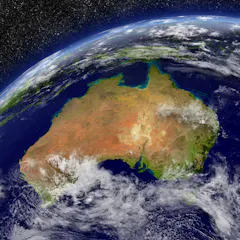
Former PM’s business advisor Maurice Newman recently claimed that satellite temperature data tell a different story to data collected on the ground. He’s right - but that’s how it’s meant to be.

Climate change means droughts will become more frequent, and butterflies will be particularly affected.

To create accurate models that predict how ice sheets and oceans will react to changing climate, modelers need precise current data. One researcher heads to the ends of the earth to collect just that.
If you’re always above average, it’s probably time to redefine what’s normal. The new normal for Earth’s climate is systematically rising temperatures.
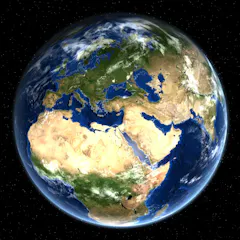
As the world wakes up to the power of data, we need to start working out how to join up all this information. We need to turn it into meaningful findings that will help us to make changes to the way we…
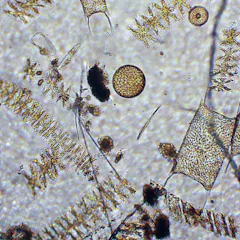
Climate change in the past can tell us much about what is happening today. New research shows how plankton shells dredged from sea floors hold the information we seek. For climate data dating back as far…
Top contributors
-

Professor of Physical Geography, University of the Witwatersrand
-
Ph.D. Student in Information Studies, University of California, Los Angeles
-
Professor emeritus, School of Earth, Atmosphere and Environment, Monash University
-
Lecturer in Data & Society, University of Edinburgh
-
Professor of Atmospheric Sciences, Climate Change Research Centre, UNSW
-
Affiliate Researcher, Department of Geography, McGill University
-
Professor of Mathematics at Center for Atmosphere Ocean Science, New York University
-
Lecturer, School of Agriculture, Food and Ecosystem Sciences, The University of Melbourne
-
Director, European Centre for Environment and Human Health, University of Exeter
-
Professorial Research Fellow, Victoria University
-
PhD student, Swiss Graduate School of Public Administration (IDHEAP), Université de Lausanne
-
Professorial Fellow, School of Earth Sciences, The University of Melbourne
-
Senior Lecturer in Atmospheric Science, Climate Change Research Centre, UNSW
-
Professor of Public Ethics, Charles Sturt University
-
Professor Emeritus of Climate and Space Sciences and Engineering, University of Michigan