
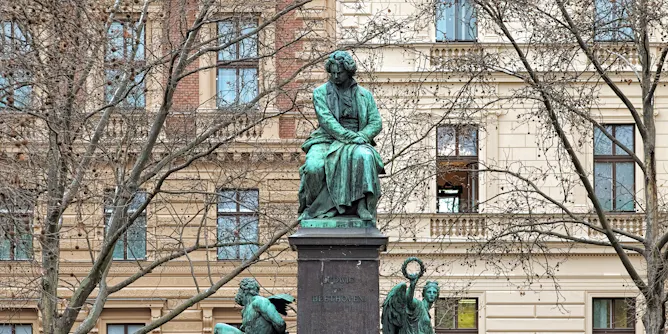
The last movement of Beethoven’s Ninth Symphony gave us ‘Ode to Joy’, one of the most famous tunes of all time. But the composer initially thought he’d made a grave mistake with it.
Articles on Classical music
Displaying 101 - 120 of 151 articles
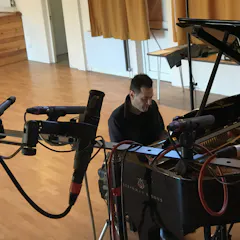
A new recording of South African composer Arnold van Wyk’s complete solo piano music explores new perspectives.
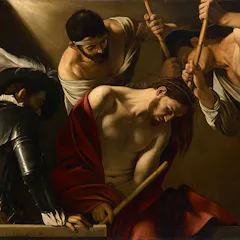
The power of the Easter story gave birth to the most beautiful music of the Christian calendar.
Divine inspiration was at the centre of music for thousands of years – until post-war conservatoires got other ideas.
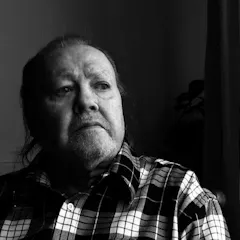
Performing art music in South Africa today is ideologically ambiguous. And in this ambiguity, there is much artistic and intellectual interest.

Listeners often describe the music presented at Tasmania’s Mofo festival as ‘weird’. But to do so sells the experience short.
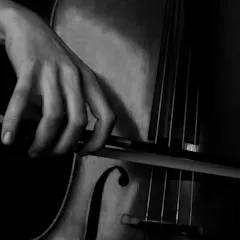
Johann Sebastian Bach was 30 when he became head of music in Anhalt-Cöthen, in what is now Germany. Here he started an uncharted experiment in classical music: solo works for string instruments.
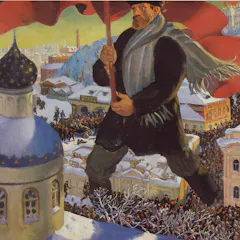
Sergei Rachmaninoff fled the Russian revolution 100 years ago. Spending the remainder of his life in the US, he composed what is perhaps his greatest work in 1940, the Symphonic Dances.

On September 29 1941, Nazis murdered more than 30,000 Jews in a ravine outside Kiev. Dmitri Shostakovich’s 13th Symphony, Babi Yar, is a damning critique of the Soviet Union’s lack of recognition of the massacre, and a condemnation of Stalinism.

A year before his death at 31 Franz Schubert published ‘Winterreise’ or ‘winter’s journey’, a series of 24 poems set to music exploring unrequited love. Schubert described them as ‘truly terrible’.
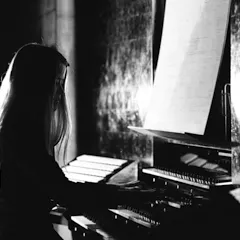
Other than church, the pipe organ is often perceived as belonging in horror movies. But there’s more to the instrument that spans most musical genres.
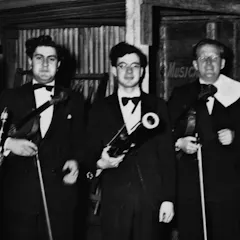
In the late 1930s, Australia sought to restrict the flow of refugees, ruling that musicians were ‘unsuitable’ as migrants. Yet some talented Jewish musicians did arrive here and their work has enriched our cultural life.

Debussy’s Clair de Lune, meaning ‘moonlight’, is one of the most easily recognised pieces of music, but its origins are complex. The piece was influenced by poetry, Baroque music and the Impressionist movement.
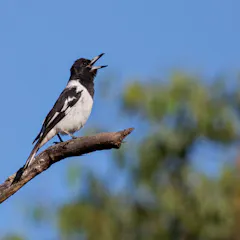
Is birdsong simply a hard-wired, functional, primitive sound – or could we call it ‘music’? Australia’s pied butcherbirds show there are surprising overlaps between birds’ and humans’ musical abilities.
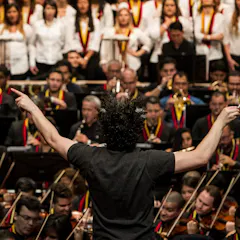
The world seems convinced that Venezuela’s famous national orchestral programme is turning on the government. Why?

With An Alpine Symphony, Richard Strauss achieved something remarkable: the painting of the German alps, complete with cow meadows and waterfalls, in sound.
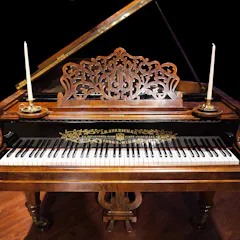
The 29-year old Johannes Brahms had his first major public success with his piano quartet in G minor, but not everyone gave it glowing praise.
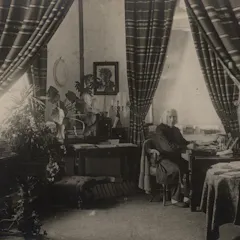
Whoever finds it beautiful is beyond help, quipped critic Eduard Hanslick upon hearing Franz Liszt’s Sonata in B minor for the first time. Fortunately, posterity did not agree with him.
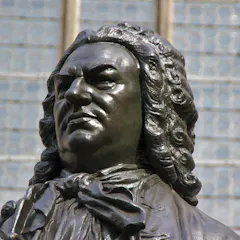
Johann Sebastian Bach’s The Art of Fugue is a work of high art. But in keeping with the late works of artists such as Shakespeare, Beethoven and Goya, it contains elements of pathos, humour, gravity, exuberance and tragedy.
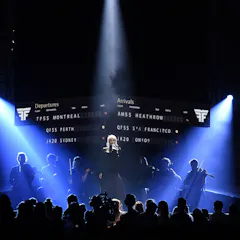
High-profile awards ceremonies are often only as interesting as the controversies they create. The 2016 ARIA Awards has started strongly in this area. Although the main ceremony is still a month away…
Top contributors
-

Deputy Head of School, Senior Lecturer in Piano and Musicology, School of Music, Australian National University
-
Principal Fellow and Professor of Music, The University of Melbourne
-
Cellist and musicologist, University of Sydney
-
Senior Lecturer in Musicology, University of Sydney
-
Associate Professor of Musicology and Director of Academic Program, Music, Western Sydney University
-
Professor of Music, Culture and Society, City St George's, University of London
-
Musicology, Stellenbosch University
-
Senior Lecturer Composition, Australian National University
-
PhD candidate, Music Theory, McGill University
-
Professor, Musicology, University of Alberta
-
Honorary Associate, Hebrew, Jewish and Biblical Studies, University of Sydney
-
Associate Professor and Head of Composition, The University of Melbourne
-
Senior Lecturer and Programme Leader for Performance, University of the West of Scotland
-
Research Fellow, Creativity and Wellbeing Hallmark Research Initiative, The University of Melbourne
-
Associate professor, University of Sydney