
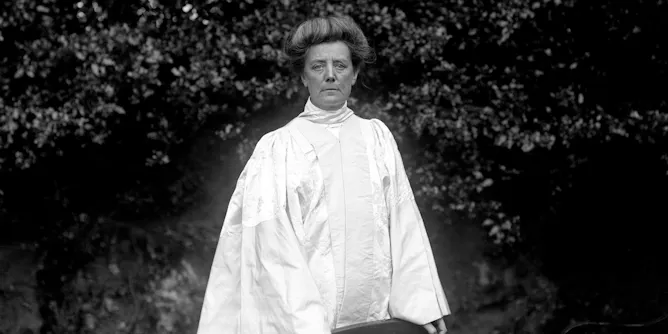
A new book about female composers in the 19th and 20th centuries misses an opportunity to cast its net wider in the pool of female musical talent and fails to prove the claims of its title.
Articles on Classical music
Displaying 41 - 60 of 151 articles

Iain Grandage’s fourth Perth Festival continued his focus on First Nations performance, together with an exhilarating dose of Black Futurism as well as demanding post-classical music.
‘Tár’ shines a spotlight on the challenges of working in the ultraconservative world of classical music, including complex social issues such as misogyny, racism and homophobia.
The classical music industry has especially high numbers of people drawn from private wealth and educational privilege
Tár muddles fact in with its fiction, creating a skewed impression of a conductor’s power.
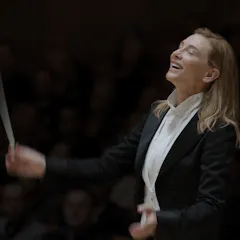
A complicated look at power and abuse in classical music.
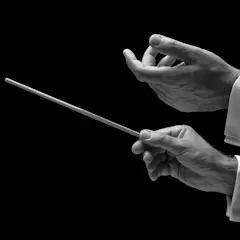
It’s about much more than arm waving.
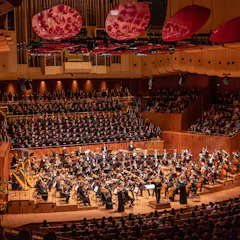
Research shows we make better judgements about music when hearing and seeing it, and classical music was designed to be experienced live.

John Williams’ compositions have an unparalleled reach. He defined the sound of the 20th century.

Two arts companies’ creative choices in interpreting Handel’s ‘Messiah’ for our times provide an opportunity to consider future directions for classical music.
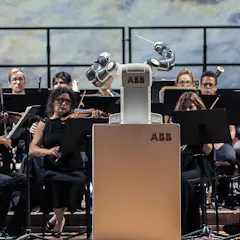
Machines have been getting better at mimicking improvisation. But can this distinctly human process serve as a bulwark against the mechanization of life and art?

Many features of proteins are analogous to music. Mapping these features together creates new musical compositions that help researchers learn about proteins.

In popular media, Beethoven is imagined as a punk rocker. But what do these claims reflect about our relationship to classical music?
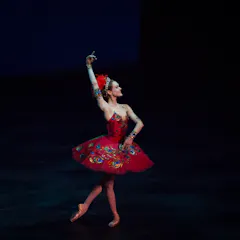
A ballet about a mythical bird, Igor Stravinsky’s composition has gone on to make myths of its own.
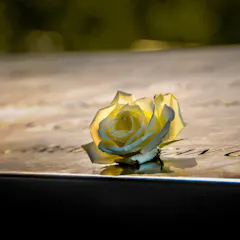
There is a lot of classical music written in response to the terrible events of 9/11, however, not all of it should have been written.

Premiering in 1937 in Frankfurt during the Third Reich, there is a ritualistic force to Carl Orff’s Carmina Burana. This makes it a guilty pleasure for some and perfect fodder for ad jingles.
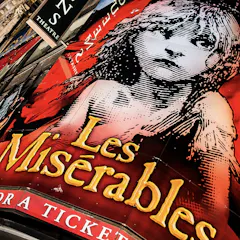
A formula found often in nature, many artists believe that following the golden ratio leads to the most aesthetically pleasing work. It can also accidentally turn up in musicals.

As a concert pianist, Scott Davie has been searching for the spirit of Chopin since his teens. It’s taken him to Paris and Majorca and channeled tantalising notes through time.
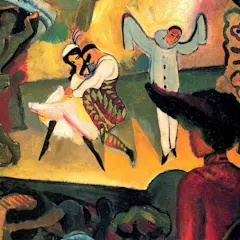
Woolf thought of her books as music before she wrote them so it is unsurprising that her writing influenced the work of composers.
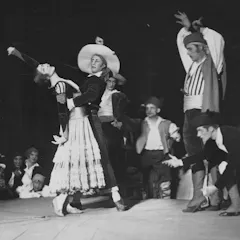
It’s repetitive — playing the same drum rhythm like a heartbeat — with two simple melodies entwined. But this masterful composition shifts just when it needs to.
Top contributors
-

Deputy Head of School, Senior Lecturer in Piano and Musicology, School of Music, Australian National University
-
Principal Fellow and Professor of Music, The University of Melbourne
-
Cellist and musicologist, University of Sydney
-
Senior Lecturer in Musicology, University of Sydney
-
Associate Professor of Musicology and Director of Academic Program, Music, Western Sydney University
-
Professor of Music, Culture and Society, City St George's, University of London
-
Musicology, Stellenbosch University
-
Senior Lecturer Composition, Australian National University
-
PhD candidate, Music Theory, McGill University
-
Professor, Musicology, University of Alberta
-
Honorary Associate, Hebrew, Jewish and Biblical Studies, University of Sydney
-
Associate Professor and Head of Composition, The University of Melbourne
-
Senior Lecturer and Programme Leader for Performance, University of the West of Scotland
-
Research Fellow, Creativity and Wellbeing Hallmark Research Initiative, The University of Melbourne
-
Associate professor, University of Sydney