
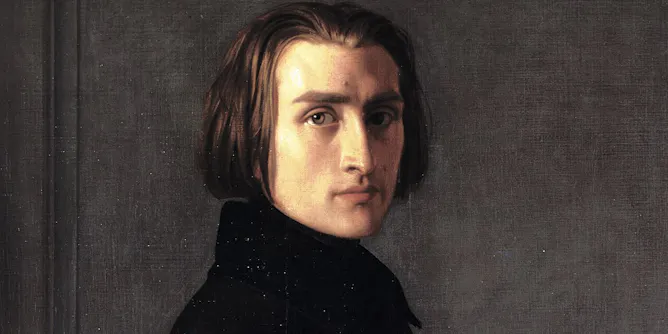
‘He is the sovereign master of his piano; he knows all its resources; he makes it speak, moan, cry, and roar under fingers of steel,’ wrote one critic at the time.
Articles on Beethoven
Displaying 1 - 20 of 22 articles
Deifying the composer and his work only serves to reinforce America’s white patriarchy at the expense of countless others who were no less great.
It stands as the crowning achievement of Western classical music.
Beethoven initially composed the work for the enthronement of his friend as archbishop. Two centuries on, it has endured the test of time.

There is something truly ineffable about art in its metaphysical otherness.
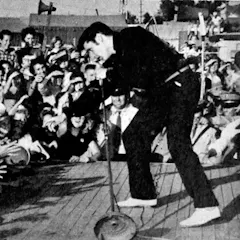
Artists draw on their lives and their conflicts to produce their work. Thanks to psychobiography we can see how.

Beethoven was afflicted with health conditions for much of his adult life, and wished for their cause to be discovered and made public.

Plus, how a team of musicologists and computer scientists completed Beethoven’s unfinished 10th Symphony using AI. Listen to The Conversation Weekly podcast.
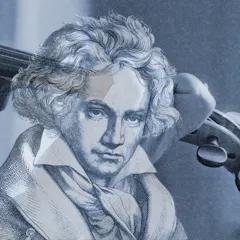
When Beethoven died, all he left behind were some sketches for his 10th Symphony. Now, thanks to the help of artificial intelligence, the composer’s vision is coming to life.

In popular media, Beethoven is imagined as a punk rocker. But what do these claims reflect about our relationship to classical music?
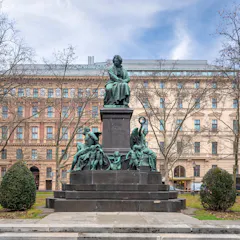
In his work, many heard freedom as espoused by contemporary Enlightenment philosophers, like Immanuel Kant.
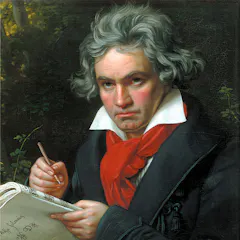
Assessing around 500 of the composer’s correspondence, we are able to see how a rise in sadness and other negative emotions resulted in increased creative productivity.
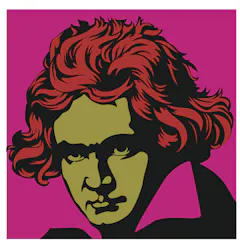
Every once in a while, the story that Beethoven was Black circulates in popular culture, but there’s no evidence to support this claim.
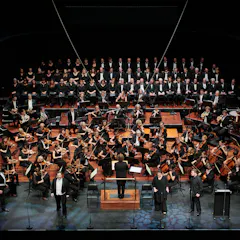
A new narration written by Alison Croggon and performed by Eryn Jean Norvill comes together in triumph.
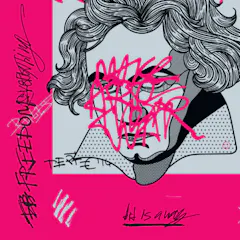
An epic battle between the EU anthem and a pro-Brexit pop song was narrowly won by Beethoven’s Ode to Joy.
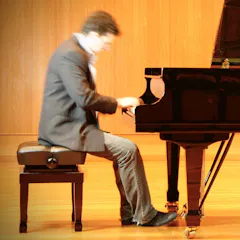
Audiences know what it’s like to listen to Beethoven’s iconic works - but to play his creations as a concert pianist is to grab the music with both hands and join the composer in a powerful battle.

Beethoven’s compositions combine power, rhythm and deeply felt meaning - and they did not come easily. The composer was ahead of his time, and he knew it, even then.
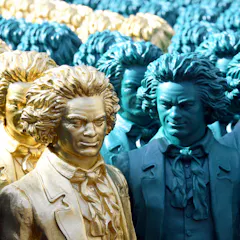
This year Ludwig van Beethoven turns 250. Though some of his creations have been overexposed, they are indisputably brilliant. And there are still others waiting to be discovered by music lovers.
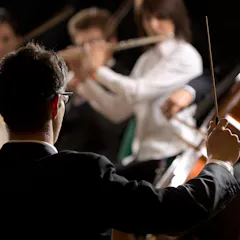
A conductor’s role is about communication with performers and their audience. They do so using eye contact, dress, and of course, the fabled waving of the arms.
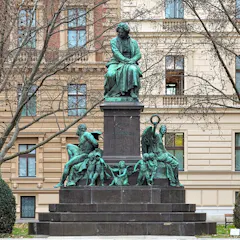
The last movement of Beethoven’s Ninth Symphony gave us ‘Ode to Joy’, one of the most famous tunes of all time. But the composer initially thought he’d made a grave mistake with it.
Top contributors
-

Deputy Head of School, Senior Lecturer in Piano and Musicology, School of Music, Australian National University
-
Professor of Computer Science and Director of the Art & AI Lab, Rutgers University
-
Professor, Musicology, University of Alberta
-
Principal Fellow and Professor of Music, The University of Melbourne
-
Associate Professor of Theatre Arts, Curtin University
-
Reader in Music, Politics and Society, Newcastle University
-
Registrar and Academic Director (Education), University of Sydney
-
Professor of Appalachian Studies and Bluegrass, Old-Time and Roots Music Studies, East Tennessee State University
-
PhD Candidate in Medical Sciences, Coma Science Group, University of Liège, Belgium, Université de Liège
-
Lecturer in Conducting, The University of Queensland
-
Lead, Cognition and Consciousness Imaging Group, Division of Anaesthesia, University of Cambridge
-
Honorary Senior Lecturer in Bioanthropology, Australian National University
-
Senior Lecturer in Literature, University of Brighton
-
Senior Lecturer in Musicology, University of Sydney
-
Professor of the Economic History of the Arts, University of Southern Denmark