
There are many legal ways for employers to advance their commitment to equal opportunity without discriminating against anyone.
Articles on Civil Rights Act of 1964
Displaying all articles
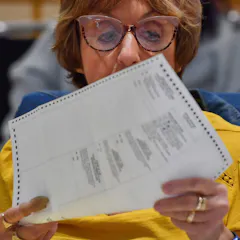
What counts as fast for a court is slow for the rest of the world, and judges can give contradictory or vague rulings that delay final decisions into the future.

Though the Civil Rights Act of 1964 officially ended racial discrimination in public places, relics of the Jim Crow South still haunt modern memory.

President Lyndon Johnson’s commencement address at Howard University in 1965 offered a compelling argument on the need for affirmative action. His policies have been challenged ever since.
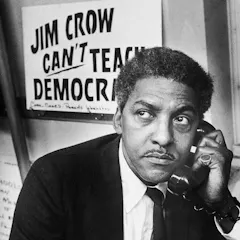
Bayard Rustin led a long and complicated life dedicated to the fight for equal rights. Targeted by the FBI, Rustin became a close adviser to Martin Luther King Jr.

Digging deeply into the nation’s past can help illuminate the racial setbacks facing the US today.
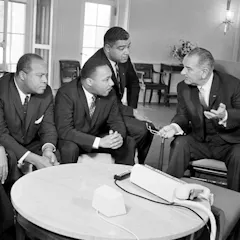
MLK’s vision for nonviolence included abolishing what he called triple evils – racism, poverty and militarism.
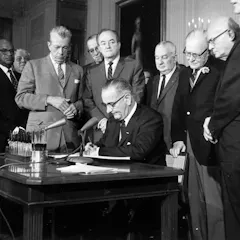
A scholar of race and racism explains what critical race theory is – and how many people get it wrong.
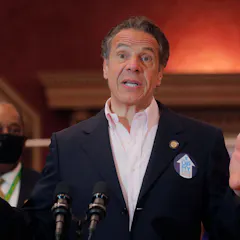
Men accused of sexual harassment, including New York Gov. Andrew Cuomo, often refer to their accomplishments in their responses. Their power is their defense, and it blinds them to their victims’ suffering.
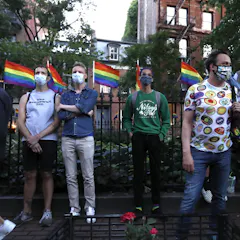
Federal law now protects lesbians, gay men and transgender people from being fired or otherwise discriminated against at work. But there are more questions and court cases to come about their rights.
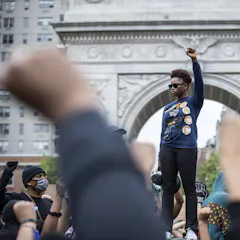
Sweeping changes were possible in the past because black leaders were willing to risk their lives and call out problems before they became crises.
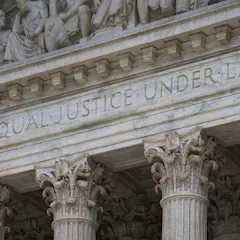
The upcoming Supreme Court session will address notable cases about the rights of different groups. The cases go to the heart of how U.S. laws protect both individual and group rights.
Top contributors
-

Assistant Professor of History and Community Engagement, St. John Fisher University
-
Adjunct Professor of History, University of North Carolina – Charlotte
-
President, Dickinson College
-
Professor of History, Lawrence University
-
Professor of Political Science and Women’s, Gender and Sexuality Studies, University at Albany, State University of New York
-
Professor of Critical Race and Ethnic Studies, Miami University
-
Senior Lecturer of African American Studies, University of Florida
-
Professor of American Civics, University of Tennessee
-
Assistant Professor of Philosophy, Affiliate, Institute for Intelligent Systems, University of Memphis
-
Associate Professor of Law and Analytics, Georgia State University
-
Professor of Law & William M. Rains Fellow, Loyola Law School Los Angeles
-
Associate Dean for Research and Professor of Law, Loyola Law School Los Angeles
-
Professor of Law and John F. Kimberling Chair, Indiana University
-
Professor of Law, University of Florida