
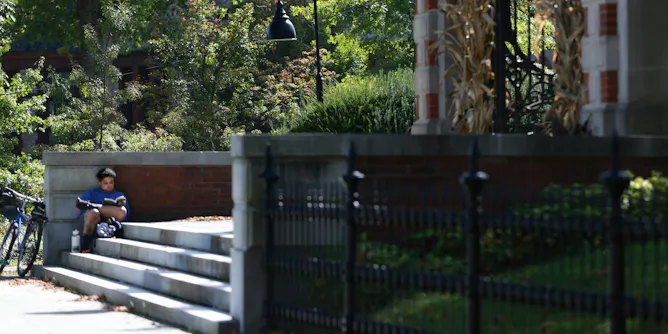
Title IX’s language is clear that the 1972 law does not cover the admissions decisions private colleges and universities make.
Articles on Civil Rights Act
Displaying 1 - 20 of 21 articles

In 1976, a small Christian college refused to comply with Title IX. The ensuing legal back-and-forth still matters today as the Trump administration places pressure on universities.
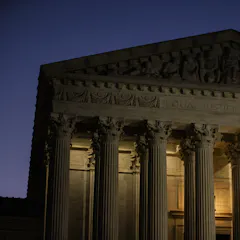
With partisan advantage, clashing perceptions of reality and revolutionary readings of the Constitution all in play, the Supreme Court’s cases this year reach far into American politics and culture.
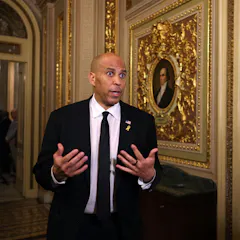
The length of Booker’s speech grabbed headlines, but the senator’s media strategy helped sustain attention afterward while disrupting Trump’s public spotlight.

Educators must obey the law, meaning schools cannot impede a criminal investigation. But students and teachers have rights, too.

Donald Trump’s measures ending government diversity efforts are part of a much broader effort to reverse civil rights gains for all Americans. It’s not the first time such a backlash has happened.
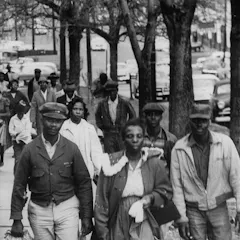
By putting financial pressure on white businesses – often in a highly organized way – Black civil rights leaders achieved social change.
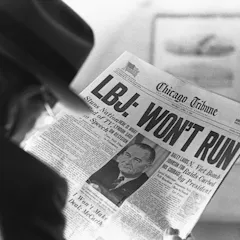
How does someone with power and fame walk away from it? It’s not easy, as these three examples from politics and sports show.
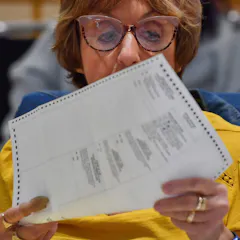
What counts as fast for a court is slow for the rest of the world, and judges can give contradictory or vague rulings that delay final decisions into the future.

President Lyndon Johnson’s commencement address at Howard University in 1965 offered a compelling argument on the need for affirmative action. His policies have been challenged ever since.
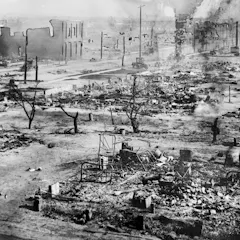
Digging deeply into the nation’s past can help illuminate the racial struggles facing the U.S. today.
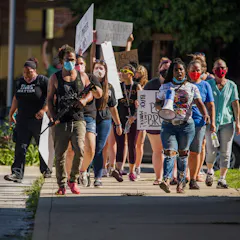
In principle, white Americans support efforts to end racism. But in practice, they have long been unwilling to support the fundamental change needed to do that. Will this year’s events change that?

Justice Neil Gorsuch joined the Supreme Court as a conservative. But his ruling in a major civil rights case is part of a pattern of justices setting aside ideology to address historic injustices.
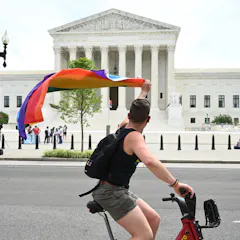
The US Supreme Court has ruled that the Civil Rights Act applies to LGBT people. A business law scholar explains why this is one of the most consequential discrimination cases in decades.
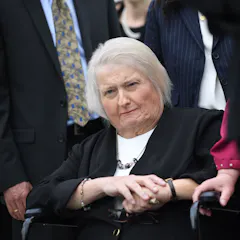
In a national survey, transgender individuals had worse employment outcomes, lower incomes and higher rates of poverty than cisgender people.
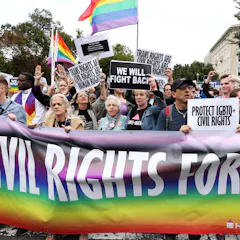
The U.S. Supreme Court will rule on how the Civil Rights Act applies to LGBT people. A business law scholar explains why it could be one of the most consequential discrimination cases in decades.
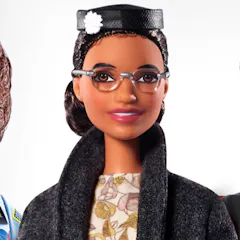
It’s great that toy companies are celebrating diverse role models, but children could be taught so much more in their write ups of their stories.
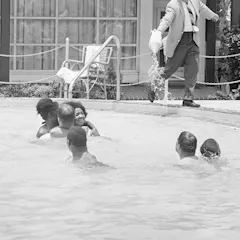
Municipal swimming pools flourished in the 20th century. But too often, their success was based on the exclusion of African Americans.
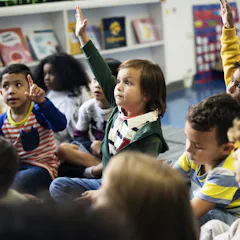
A scholar of discrimination law explains why regulations set up in the 1960s are still critical to protecting racial groups today.
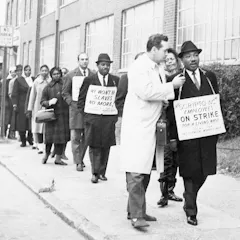
Most people think of Martin Luther King Jr. as a civil rights leader who led the nation in addressing the evils of systemic racism. What many don’t know is that he also championed labor unionism.
Top contributors
-

Professor of Business Law, Indiana University
-
E. Bronson Ingram Professor of Economics and Director of the Vanderbilt LGBT Policy Lab, Vanderbilt University
-
President, Dickinson College
-
Professor of History, University at Buffalo
-
Chairperson and Associate Professor of Law, College of Staten Island, CUNY
-
Assistant Professor of Medicine, Health and Society, Vanderbilt University
-
Associate Professor of History, UMass Amherst
-
Adjunct Professor of History, University of North Carolina – Charlotte
-
Lecturer in American History, Keele University
-
Professor of Law, University of South Carolina
-
Professor of Political Science, Anthropology, Public Policy and Law, USC Dornsife College of Letters, Arts and Sciences
-
Assistant Professor of History and Community Engagement, St. John Fisher University
-
Professor of History, Western Illinois University
-
Associate Professor of Political Science & African American Studies, Penn State
-
Professor of Political Science, Trinity College