
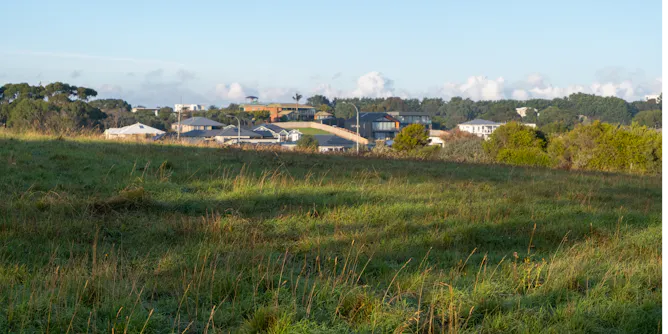
The tangle of greenery along railway lines, flowers growing on vacant lots, or unmown grassy patches under power lines, it turns out people in cities engage with nature in all these spaces.
Articles on Citizen science
Displaying 41 - 60 of 213 articles
The new level won’t trigger automatic cleanups, but it sets a lower threshold for taking precautions to reduce lead exposure.
Even in a concrete jungle like Los Angeles, wild species show up in surprising places. New research identifies the types of wildlife that best tolerate urban development.

Where specialized algorithms fail to classify star-borne pulses, human volunteers with just a little training can step in.
Since an eclipse only lasts a few minutes, you need more than just a handful of scientists running around collecting data on bird activity. That’s where a new app comes in.

Bushwalkers with smartphones could help scientists track a fungus lethal to many of Australia’s most loved trees.

Egg cases of sharks and rays can be found washed up on the shore. Citizen science data helps scientists understand the life cycles of these marine animals and how to best conserve them.

In South Africa, a group of citizen scientists who test water quality and log the results on a specialised app have helped keep the water supply for 4.3 million people clean.
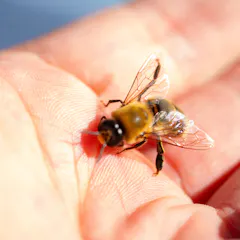
Australia could still take action in the fight against Varroa that wasn’t possible elsewhere. But to do so, we need to fill urgent gaps in bee research.
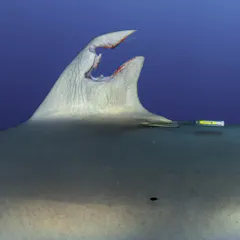
After scientists’ GPS tracking tag was violently removed from one shark’s dorsal fin, they were in for a surprise: The wound didn’t just heal, but the missing tissue grew back.

With smartphones as commonplace as towels and sunscreen in the beach bag, why not add coastal data collection to your list of holiday activities this summer? Look for the CoastSnap camera cradles.
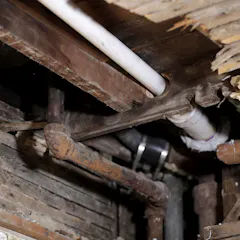
For a project on identifying lead water pipes in homes, outreach through partner groups produced a more representative set of volunteers.
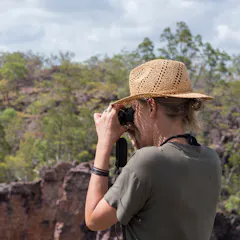
Researchers used ‘citizen science’ birdwatching data to rank Australian species. Among the most elusive birds were ‘hide and seek’ champions and a few possibly headed for extinction.
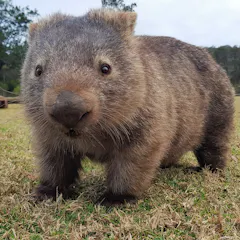
Contributors to the WomSAT website have already reported more than 23,000 wombat sightings. We can use the data to cut the risks to wombats – and anyone with a smartphone can help.
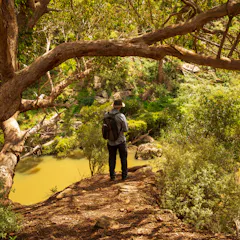
Citizen science is coming of age. The data are pouring in from observations by naturalists and birders.
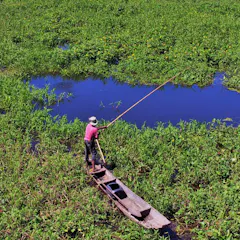
Riverside communities in the Pantanal make sustainable use of natural resources within an unpredictable system.
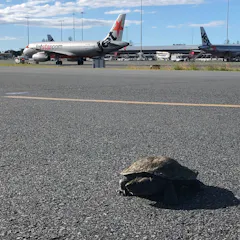
Turtles could spell trouble for Western Sydney Airport, which is being built in a wetland. But it’s not too late to include turtle-friendly infrastructure such as underpasses and fences.
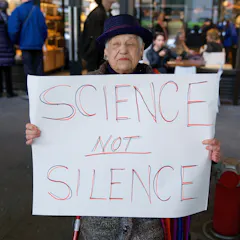
Mae gwyddoniaeth dinasyddion yn cynnig y posibilrwydd o wyddoniaeth i'r bobl, gan y bobl.
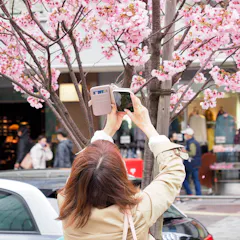
Publicly available data on social media opens a new avenue for studying the environment with “incidental citizen science”.
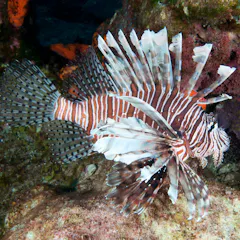
One of the most damaging invasive species in the oceans has breached a major barrier – the Amazon-Orinoco river plume – and is spreading along Brazil’s coast. Scientists are trying to catch up.
Top contributors
-

Curator, Amphibian & Reptile Conservation Biology, Australian Museum, UNSW
-
Professor of Science Communication and Chemistry, University of Hull
-
Sector Lead, Atlas of Living Australia, CSIRO
-
Dean Students, College of Health, Adelaide University
-
Lecturer, School of Life and Environmental Sciences, University of Sydney
-
Associate Professor in Biology, Zoology and Animal Science, Western Sydney University
-
Associate Professor in Ecology and Evolution, UNSW
-
Postdoctoral Fellow, Evolution & Ecology Research Centre, UNSW Sydney, UNSW
-
Clinical Associate Professor, School of Medical Science & Sydney Infectious Diseases Institute; Principal Hospital Scientist, University of Sydney
-
Research Fellow at the University of Sydney, University of Sydney
-
Adjunct Fellow, Institute for Sustainable Futures, University of Technology Sydney
-
Associate Professor, Animal Anatomy and Physiology, Charles Sturt University
-
Associate Teaching Professor of Meteorology and Atmospheric Science and Manager of the Joel N. Myers Weather Center, Penn State
-
Honorary Fellow, Space and Astronomy, CSIRO; Western Sydney University
-
Chair of ARC Centre of Excellence for Quantum Biotechnology, The University of Queensland