
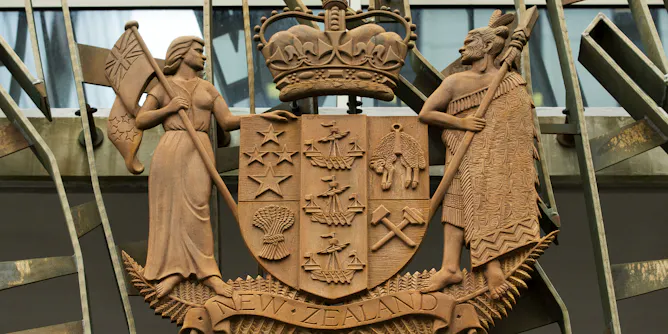
Brenton Tarrant’s case before the Court of Appeal this week raises simple questions that help explain how New Zealand’s legal system works.
Articles on Christchurch Mosque shootings
Displaying 1 - 20 of 64 articles
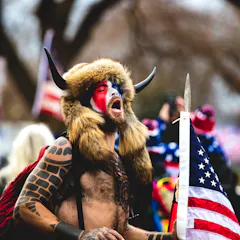
Online abuse is often dismissed as “just online.” But the rise of QAnon and similar groups demonstrates the very real consequences of online speech.
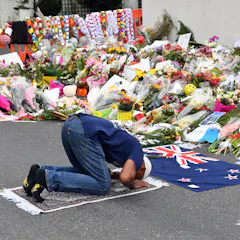
The Christchurch gunman’s surprise guilty plea makes him the first person convicted of terrorism in New Zealand. A legal expert explains what will happen next in the sentencing process.
Haji-Daoud Nabi was a lifelong friend, who helped inspire my research in Afghanistan on how violent events shape people’s sense of community. I never thought my work would one day apply at home in NZ.

The US, Russia and China haven’t backed the NZ-led Christchurch Call to crackdown on online extremism. Without them, and key non-western media, the initiative is unlikely to make enough difference.
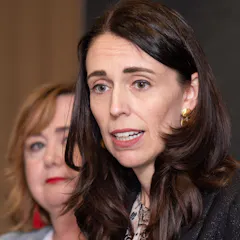
Rather than unifying the country, it appears the government’s overreach on gun legislation has paved the way for distrust and division.
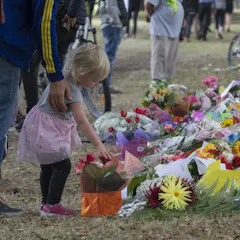
My assessment is that there are about 150 to 300 core right-wing activists in New Zealand. This might sound modest – but proportionate to population, it’s similar to extremist numbers in Germany.
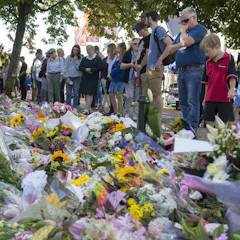
In the wake of last year’s Christchurch mosque attacks, New Zealand’s intelligence agencies must become more transparent in their reporting on the risk of right-wing terrorism.
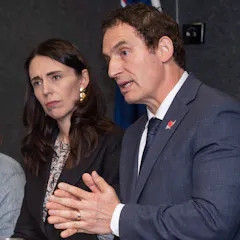
A register of all firearms is part of the next stage of New Zealand’s gun law reform, following the Christchurch mosque shootings.

New Zealand police is running gun collection events throughout the country as part of the government’s amnesty and buyback scheme.
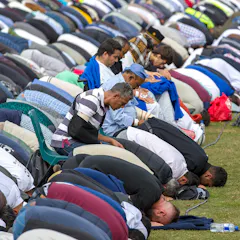
Through his lawyer, the alleged perpetrator of the Christchurch mosque attacks has entered not guilty pleas on 92 charges, including terrorism. A procedural hearing has found him fit to stand trial.
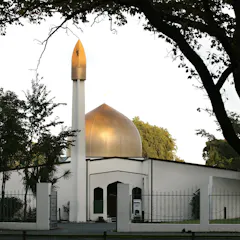
An additional charge of terrorism has been laid against the man accused of the Christchurch mosque shootings. This poses a risk of providing a platform for hateful ideas.
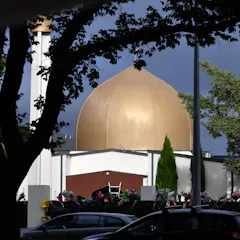
Before proceedings against the alleged perpetrator of the Christchurch terror attacks can go ahead, the court will have to establish whether he is fit to stand trial.
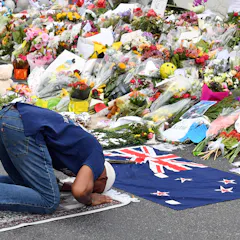
New Zealand’s terrorism law has never been prosecuted successfully since it was enacted nearly 20 years ago. So, why are prosecutors bringing a terrorism charge against the Christchurch shooter?
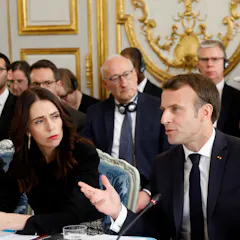
While the “Christchurch Call” summit has made concrete progress, we need to keep up the pressure on social media companies to become more transparent and accountable.
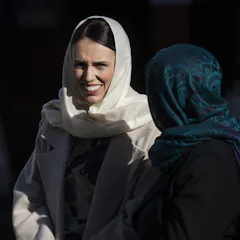
A Royal commission of inquiry has been set up to look into circumstances that led to the Christchurch mosque attacks. It will investigate intelligence services, it not the role of media.

After the Christchurch mosque shootings, New Zealand’s prime minister didn’t start a war on terror. She covered her head, cried, paid for funerals and passed gun control. Is it because she’s a woman?
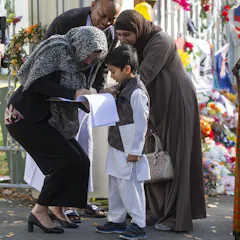
New Zealand’s response to the Christchurch mosque attacks is seen as a new way of reacting to violent extremism. The challenge now is how to translate domestic cohesion into foreign policy.
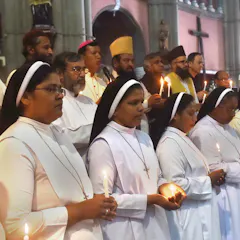
For centuries, Westerners viewed Islam as an inherently violent religion. But the struggle today, for all religions, including Christianity, is between liberals and conservatives, fundamentalists and moderates, reason and revelation.

Pierre Bayle, one of the most widely read philosophers, said tolerance should be based on humanity, not on faith.
Top contributors
-

Professor of Law, Auckland University of Technology
-
Professorial Fellow, University of Canberra
-
Professor of Law, University of Waikato
-
Distinguished Professor, College of Humanities and Social Sciences, Te Kunenga ki Pūrehuroa – Massey University
-
Senior Lecturer, New Zealand Institute for Security and Crime Science, University of Waikato
-
Teaching Fellow, Te Kunenga ki Pūrehuroa – Massey University
-
Director, Institute for Governance and Policy Studies, Te Herenga Waka — Victoria University of Wellington
-
Associate Professor, Cultural Anthropology, Australian National University
-
Associate Professor of Political Science, Brock University
-
Research Fellow, University of Waikato
-
Associate Professor, Terrorism and Security Studies, Charles Sturt University
-
Director of the Roy McKenzie Centre for the Study of Families and Children, Te Herenga Waka — Victoria University of Wellington
-
Professor of Diversity and University Director of Diversity, Auckland University of Technology
-
Associate Professor in Urban Geography, University of Sydney
-
Senior Lecturer in Religious Studies, Te Herenga Waka — Victoria University of Wellington