

Your brain is constantly gathering evidence for making decisions – even when there’s only one option to pick from.
Articles on Choice
Displaying 1 - 20 of 22 articles

Our brains know we’ll change our minds before we do. Understanding how might help us learn to make better decisions.
Brands don’t always deliver what they promise. Regulation needs to focus on preventing harm rather than managing fallout.
Many philosophers cast doubt on ‘doxastic voluntarism’: the idea that we can control what we believe, just like that. So can people be held to account for their beliefs?

Context, perceptions and expectations affect the choices both bees and people make.

Amid calls to ban certain books from libraries and schools, research shows that students benefit when they have the ability to choose which materials they want to read.
Learning to satisfice can lead to a simpler, more content life – here’s how.
People tend to dislike uncertainty and risk – two things that are hard to avoid completely during a pandemic. That’s part of why it can feel especially draining to make even small decisions these days.

A select group of charter schools have adopted a “no-excuses” philosophy. A forthcoming book shines the light on the drawbacks of that approach.

Cognitive scientists are investigating the ways relative factors like new options and the order they’re presented influence your choices and beliefs.

New research suggests there’s often a mismatch between how you respond and what the other person wants to hear.
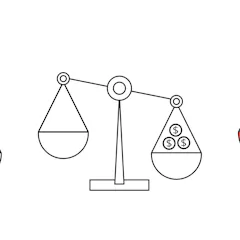
How much is your suffering worth in court? Often, it depends on the judge. But justice may be better served by letting victims choose between monetary compensation and a more restorative remedy.

Happiness may well be a choice, but it is a difficult choice. And much that might make that choice a little easier depends on the choices of influential others.

Although many feared that Education Secretary Betsy DeVos would destroy public education, a review of the past two years shows that much of her policy agenda has failed.
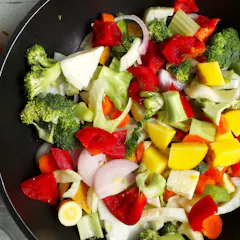
A lot of money is spent by food producers and retailers to try and influence the type of food we buy and eat. But what can be done to encourage healthier choices?
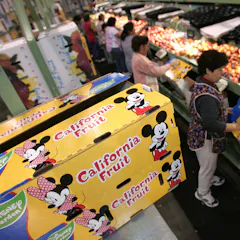
Defaults are powerful tools that policymakers and marketers can use to nudge us to make certain choices, whether in our interest or in theirs. How do we ensure they’re used responsibly?
Kenneth Arrow, the Nobel prize winner who died last month, showed us there is no perfect voting rule. So how does his theory work?

Very few organisations in the field of civic technology are choosing the right tools for the job.

Whether choosing a dinner, a car, a spouse or an investment, experts now know what part of the brain our likes and dislikes are encoded, how we represent alternatives, and even how we choose. This has…

Yet another survey has found Australians are paying more than their American and British counterparts for the same entertainment goods and services. In its submission to the government’s Competition Policy…
Top contributors
-

BehaviourWorks Australia, Monash Sustainable Development Institute, Monash University, Monash University
-
Visiting Professor UNSW, UNSW
-
Associate Professor of Marketing, Washington University in St. Louis
-
Assistant Professor of Educational Leadership and Policy Studies, University of Memphis
-
Professor of Health Economics, The University of Melbourne
-
Research Fellow, BehaviourWorks Australia, Monash Sustainable Development Institute, Monash University
-
Visiting Researcher, Network Society Lab, Journalism and Media Programme, University of the Witwatersrand
-
Research assistant professor, University of Cincinnati
-
Neuro-economist, University of Sydney
-
Assistant Professor of Marketing, Northeastern University
-
Professor, UNSW
-
Research fellow, BehaviourWorks Australia, Monash Sustainable Development Institute, Monash University
-
Assistant Professor of Public Policy and Education, Vanderbilt University
-
Ben L. Fryrear Chair in Marketing and Associate Professor of Business Administration, University of Pittsburgh
-
Professor of Literacy, University of North Carolina – Greensboro