
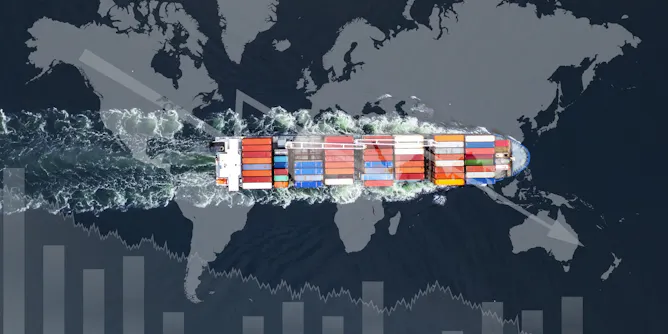
Changes to fundamental World Trade Organization rules are being driven by the US and EU. This week’s meeting in Cameroon could see developing nations lose out.
Articles on China trade
Displaying 1 - 20 of 32 articles

Solid-state batteries offer a promising new solution for electric vehicles, reducing the risks of spontaneous combustion when batteries are damaged or overheating.

With a trillion-dollar trade surplus, is China’s goal really to make everything ‘better and cheaper’ at home? The reality is not so simple.

New trade barriers are set to go into effect in July 2027.
Modelling of how Trump’s tariffs will hit global trade suggests the US will be the biggest loser – while a few nations may emerge as surprising winners.
China’s central bank has stepped in to boost the country’s struggling economy.

One student exchange program in the 1970s opened the door for an ongoing cultural exchange.
It’s not just size. China’s pragmatic trade strategy, which prioritizes meeting the development needs of its trading partners, has played a key role, too.
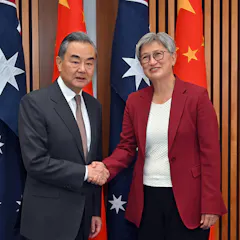
Differences between Australia and China will remain, but both foreign ministers this week stressed the need to manage them better to avoid another diplomatic freeze.
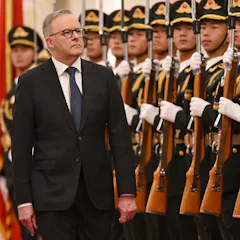
Beijing focused on the shared interests and identities between China and Australia, emphasising the enduring importance of the bilateral economic relationship.
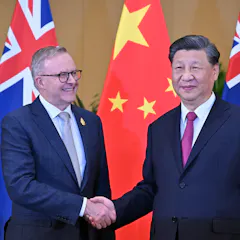
There are limits around what Australia might hope to achieve and what it should expect in Beijing, but there is room for cooperation.

There are several good reasons why fears that a recession in China could spark a recession in Australia need to be kept in perspective.
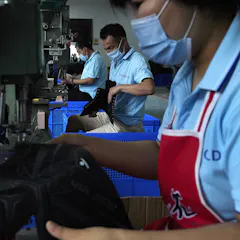
Despite significant financial and political pressures, many companies are still not moving their production and manufacturing out of China. Why not?
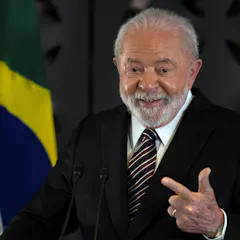
Lula’s courting of – or by – China and Western powers has confounded critics. But in reality, it is a continuation of the foreign policy he pursued during his earlier term in power.

The platform has already faced bans in a number of other countries – most of them citing privacy and surveillance concerns.

Nigeria and China should work more on the relationship between their citizens so that the two countries can continue to have good bilateral relations.
As China’s influence and economic strength grows, it is unlikely to give middle powers like Australia more latitude to manage their relations with both Beijing and Washington.
The recently signed RCEP trade agreement encourages even closer ties with China, but this puts New Zealand’s long-term interests at risk.
Australia’s policy-makers are pursuing a one-dimensional “stand up to Chinese bullying” approach — and it clearly isn’t working.
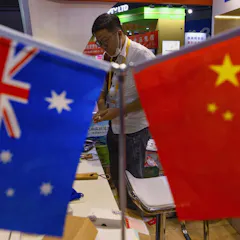
Australia has less to fear from China’s trade threats than some might think.
Top contributors
-

Director and Professor, Australia-China Relations Institute (UTS:ACRI), University of Technology Sydney
-
Associate professor, Te Herenga Waka — Victoria University of Wellington
-
Lecturer/ Assistant Professor, Macquarie University
-
Professor of World Politics, SOAS, University of London
-
Lecturer, International Law, University of Nairobi
-
Tony Walker AM is a Friend of The Conversation.
Director, La Trobe University
-
Associate Professor of Agricultural Economics, Colorado State University
-
Professor Emeritus, Macquarie Business School, Macquarie University
-
Adjunct Senior Lecturer, Applied Ethics and CyberSecurity, Griffith University
-
Professor of Modern Latin America History, University of Denver
-
Professor of Economics, University of Minnesota Duluth
-
Associate Professor, Rotman School of Management, University of Toronto
-
Director, China Studies Centre, Professor of Chinese Politics, University of Sydney
-
Industry Professor and Chief Economist, University of Technology Sydney
-
Law Professor, American University