
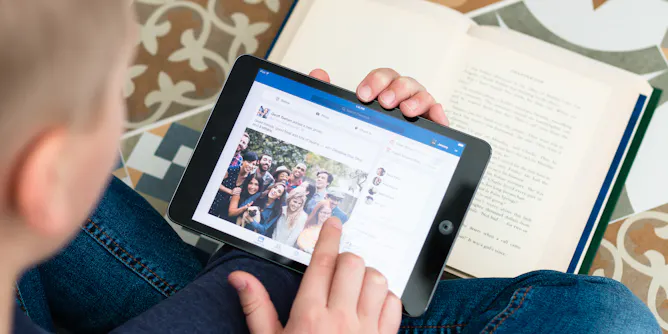
What can and should be done in light of response to the Facebook Files? The issues are undoubtedly complex, but solutions need to centre on children’s rights and prioritize what young people need.
Articles on Children's rights
Displaying 41 - 60 of 87 articles

Nigeria’s child rights law must be applicable in all states to protect children living in camps for displaced people.
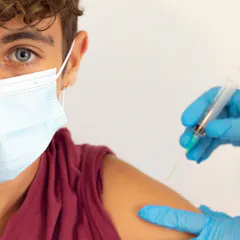
The law can give under-16s the right to consent to medical treatment, even without their parents’ approval.
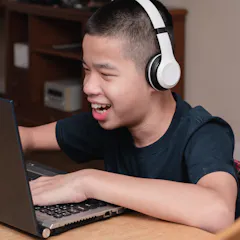
Traditional learning formats often fail marginalized students. We should be skeptical of a ‘one-size-fits-all’ or even ‘one-size-fits-most’ model.
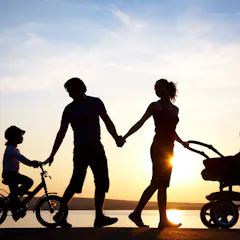
Judges have described New Zealand’s surrogacy parentage laws as ‘creaky’ and ‘inadequate’. The Law Commission has finally proposed significant reform.
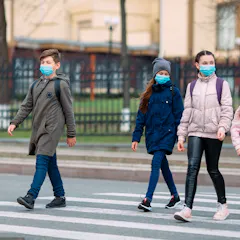
The NSW plan doesn’t measure up against international best practice. And Victoria doesn’t seem to be following a child-centred approach either.
One study found 80% of darknet traffic on Tor went to sites hosting unmoderated porn and child sex abuse material.
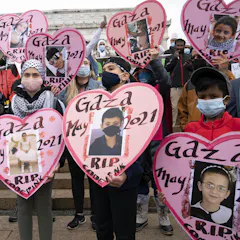
As Israel and Egypt enter into discussions about a truce with Hamas, Palestinian children’s thoughts and feelings on the conflict must be heard.
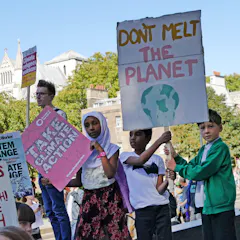
The children argue failure to tackle climate change constitutes youth discrimination.
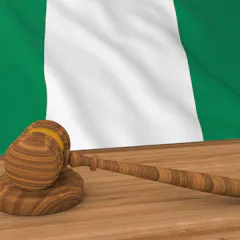
Countries where traditional laws exist must uphold children’s rights and push for their best interest.
World Children’s Day is an opportunity to acknowledge children for who they are, the many things they know and what they are capable of right now.
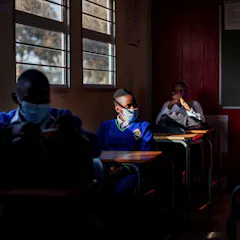
The country’s Constitution, as well as several court rulings, offer clear guidelines for how children’s best interests should be managed and prioritised.
With UNICEF ranking New Zealand 35th out of 41 rich countries for children’s well-being, the gap between rhetoric and reality is wider than ever.
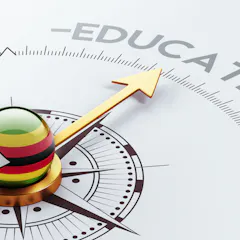
Zimbabwe’s Education Amendment Act of 2020 is a step in the right direction, but more still needs to be done.
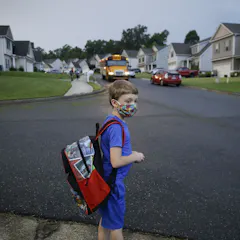
Any decision that places a child’s physical and mental health at risk shouldn’t be taken lightly, so policy-makers and parents alike should listen to those most affected — the children themselves.
Given their ability to accept correction, children have a better claim to rehabilitation, reorientation and reintegration.
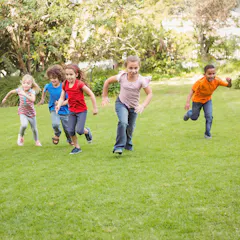
If returning to in-person instruction is truly impossible for public health reasons, policy makers must make large financial expenditures on quality and accessible distance education.
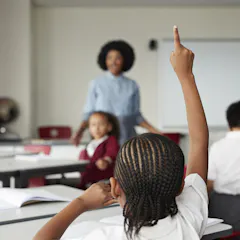
A Constitutional Court ruling sheds light on the relationship between private schools and children’s constitutional rights.
Children need to know how to get help when they feel at risk.
These are difficult and dire times, but holding on to the myth of childhood innocence won’t make this crisis any easier.
Top contributors
-

Professor of Law, University of Waikato
-
Professor of Law, University College Cork; Independent Social Research Foundation
-
Professor of Teacher Education, University of Toronto
-
Extraordinary Research Fellow: South African Research Chair in Cities, Law and Environmental Sustainability, Faculty of Law, North-West University
-
Jeffrey Bain Scholar & Professor of Law, Lewis & Clark
-
Associate Professor, Faculty of Law and Justice, UNSW
-
Associate Professor, School of Psychology, Scientist, Children's Hospital of Eastern Ontario Research Institute, L’Université d’Ottawa/University of Ottawa
-
Professor (Practice), Faculty of Business and Economics, Monash University
-
Professor of Human Rights Law, Monash University
-
Senior Lecturer in Criminology, Deakin University
-
Philip H. Knight Professor of Law, University of Oregon
-
Associate professor, Faculty of Law, L’Université d’Ottawa/University of Ottawa
-
Professor of Philosophy, Public Policy and Governance, University of Washington
-
Professor of Social Work, University of Birmingham
-
Lecturer in Human Rights Law, Queen's University Belfast