

The federal government has set aside $3.6 billion over the next two years for early educator pay. But what happens after that is not yet clear.
Articles on Childcare fees
Displaying 1 - 20 of 36 articles

The Albanese government announced it will fund a 15% pay increase for early childhood educators at a move set to cost $3.6 billion.

Childcare now constitutes around 60% of the overall cost of raising a child in the UK.

Childcare subsidies give mothers the choice to work and help reduce the earnings gap between mothers and fathers. In time, it may lead to greater acceptance of working mothers for future generations.

The National Party is promising rebates for childcare. But similar policies have been discarded overseas for failing to effectively reduce the cost of childcare. Is it time for a rethink?

The system has several elements and many problems. Making it fit for purpose will take a lot of work and even more resources than those that have just been announced.
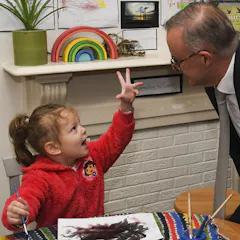
Cutting the cost of childcare for families won’t help them if there are no places available at local childcare centres or people to staff them.

Childcare centres are closing due to staff shortages, but this was a problem well before the pandemic.

The government is paying childcare services in hot-spots 25% of pre-pandemic revenue. But without parents’ fees, the sector is still in a tough position.

A report uses an international benchmark of no more than 7% of disposable income spent on childcare to determine affordability. It finds childcare is unaffordable for 386,000 Australian families.

If the government really wants to invest in early childhood education, it needs to back the workforce.
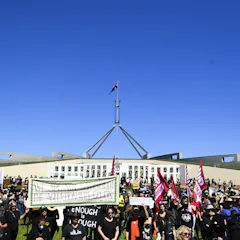
A Liberal male staffer masturbating on a female MP’s desk is merely a symptom of something very wrong in the Liberal Party’s attitudes to women, not the sum total of it.
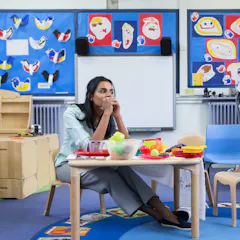
One in five early childhood educators said they planned to leave their job within a year. It is vital we design a system and policies to ensure there are enough to meet the demand.

The HILDA Survey suggests single-parent households on Australia are abandoning formal childcare as they face greater poverty rates.

Whether the policy benefits high-income or low-income families matters, but it also misses the point — early childhood policies need to focus on what benefits children.

The NSW and Victorian preschool funding announcements are likely to increase the growing focus on early childhood education, which is shaping up to be a major issue.
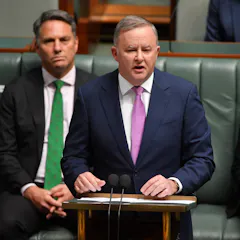
Labor’s proposed childcare measure would result in thousands of dollars saved per year. And it will make it affordable for parents who want to work more while accessing childcare.
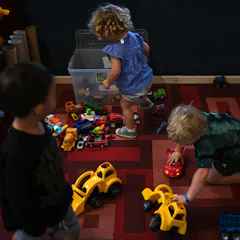
Whether families actually save anything at all depends entirely on where they live, and what provider they use.

A study found no statistically significant difference between the literacy and numeracy scores of school children who had attended preschool or childcare and children who didn’t.
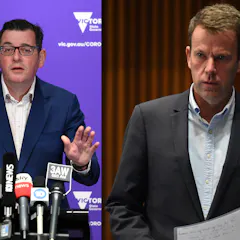
Victorian parents will have a total of 72 days of free absences from childcare, if services agree to waive the gap fee. And childcare services will receive 25% of their revenue from the government.
Top contributors
-

Former Education Policy Fellow, Mitchell Institute, Victoria University
-
Adjunct Associate Professor of Education Policy, Victoria University
-
Professor and Director, Mitchell Institute, Victoria University
-
Director, Peter Noonan Policy Impact Program, Mitchell Institute, Victoria University
-
Policy Fellow, Mitchell Institute, Victoria University
-
Professor of Sociology and Founding Director of The Future of Work Lab, Podcast at MissPerceived, The University of Melbourne
-
Emeritus Professor, University of New England
-
Researcher, University of Essex
-
Senior research fellow, The University of Melbourne
-
Professor of Political Communication; Director CAJ, The University of Melbourne
-
Honorary Fellow, School of Social and Political Sciences, The University of Melbourne
-
Program Director, Housing and Economic Security, Grattan Institute
-
Professiorial Fellow, The University of Melbourne
-
Professor of Economics, University of Bristol
-
Visiting Fellow, The University of Western Australia