

Family reunification is often framed as a cost, but evidence shows it functions as social infrastructure that supports work, well-being and economic stability.
Articles on Childcare cost
Displaying all articles

Childcare subsidies give mothers the choice to work and help reduce the earnings gap between mothers and fathers. In time, it may lead to greater acceptance of working mothers for future generations.

To encourage the ‘economically inactive’ back to work, the government is changing pensions, childcare funding and creating more support for people with long-term illnesses.

Investment in UK childcare should go towards better pay and conditions for workers. This could also help increase availability and affordability for parents.

The National Party is promising rebates for childcare. But similar policies have been discarded overseas for failing to effectively reduce the cost of childcare. Is it time for a rethink?

Jim Chalmers on Tuesday announced the budget outcome for the financial year just ended will be nearly $50 billion better than anticipated at the time former treasurer Josh Frydenberg’s delivered his budget in March.

The system has several elements and many problems. Making it fit for purpose will take a lot of work and even more resources than those that have just been announced.
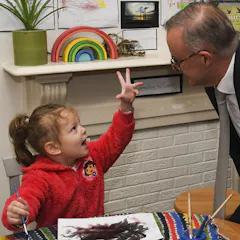
Cutting the cost of childcare for families won’t help them if there are no places available at local childcare centres or people to staff them.
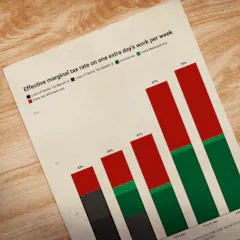
So high are childcare costs that on the fourth day or work per week a returning parent can face an effective marginal tax rate as high as 67%

The federal government introduced the current childcare subsidy and activity test in 2018. An evaluation of the policy has found it met some of its intended objectives but failed at others.

The Mitchell Institute mapped childcare availability across the country and found regions where demand rarely met the supply. They also looked at cost and workforce participation for women.
Top contributors
-

Professor and Director, Mitchell Institute, Victoria University
-
Associate Professor, POLIS@ANU Centre for Social Policy Research, Australian National University
-
Senior Lecturer in Employment Studies, University of Manchester
-
Visiting Academic, The Open University
-
Director, POLIS: The ANU Centre for Social Policy Research, Australian National University
-
Visiting Professor of Tax Law, New York University, and Professor of Law, The University of Melbourne
-
Senior Lecturer in Social Geography, Te Kunenga ki Pūrehuroa – Massey University
-
Professor of Social Policy, UNSW
-
Research Fellow, Australian National University
-
Social Policy Commissioner, Productivity Commission, and Adjunct Associate Professor, University of Tasmania
-
Professorial Fellow, University of Canberra
-
Associate Professor in Economics, Queensland University of Technology
-
Professor of Economics, University of Bristol
-
Policy Fellow, Mitchell Institute, Victoria University
-
Associate Professor of of Family and Consumer Sciences, University of Hawaii