
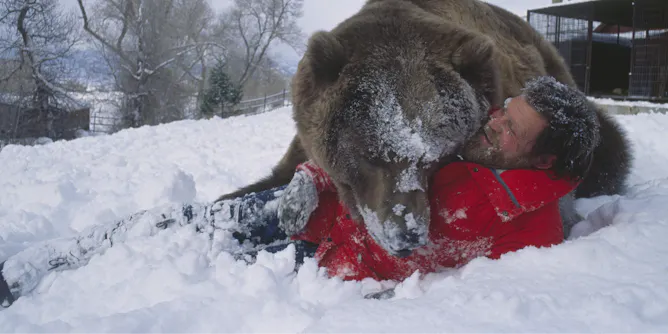
The turn to CGI has sidelined many of the dogs, bears and horses of yesteryear. But ethical questions aside, there’s still some magic in filming and seeing the real thing.
Articles on CGI
Displaying 1 - 20 of 22 articles

The groundbreaking use of generative AI in final film footage begs questions of the audience that are rooted in deep human psychology.
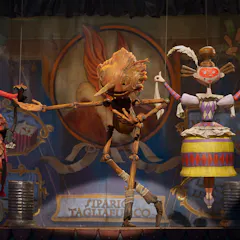
Stop motion has evolved monumentally since the first feature came out 100 years ago – yet it hasn’t lost its delicate charm.
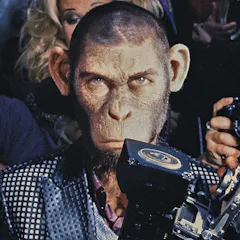
Full of high-octane visual thrills, Better Man’s seemingly bizarre choice to represent Williams as a chimp actually works rather well.
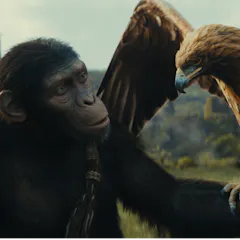
The future is teased in the tenth film of the Apes franchise.

For years, the biggest video game publishers have operated under the assumption that compelling stories and captivating characters don’t offer a good return on investment.

Jurassic Park was a technological breakthrough for film because of its use of CGI. It also revived an interest in paleontology and raised ethical questions about DNA use.
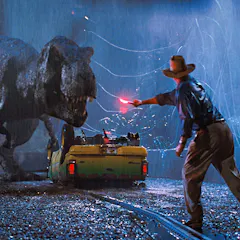
Rhyddhawyd Jurassic Park ar y sgrin fawr ym mis Mehefin 1993 a newidiodd sinema am byth.
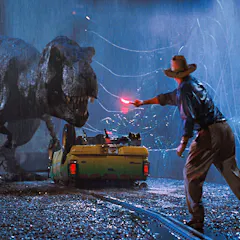
Jurassic Park was released on the big screen in June 1993 and changed cinema for good.

That impossibly beautiful model on Instagram might be just that. CGI influencers are already on social media, and Meta’s commercial interest means it shouldn’t be in charge of the ethical guidelines.
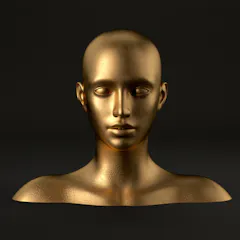
The creation of social media accounts based on fictional models raises pointed questions about race, representation and commodification.
Avengers: Endgame contained 2,500 visual effects – or VFX – shots. So what are visual effects, and how do they get to the big screen?

COVID-19 has hit the film industry hard, but some enterprising film-makers are already plotting ways to cope with the ‘new normal’.
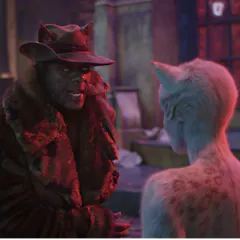
There are many reasons the movie version of Cats has flopped, not least the unfortunate way in which various characters have been assigned racial characteristics.
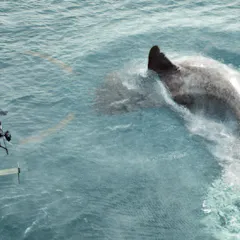
What is it that makes films about sharks so popular?
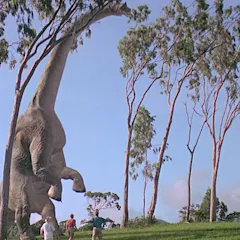
The first time computer-generated characters interacted with humans on a movie screen was 25 years ago, in ‘Jurassic Park.’ Since then, technology has improved, giving directors more choices.

Despite the furore over the ‘ghosting’ of Peter Cushing in Rogue One, directors will continue to push for improved technology enabling digital replication of actors.

Many critics have made outlandish claims, yet beyond the partisan noise there are legitimate concerns that deserve closer scrutiny.
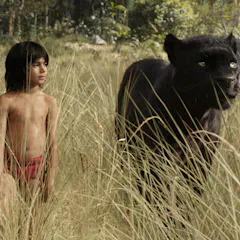
Welcome to Disney’s latest adaptation, where the only thing that’s real is Mowgli.
With the boundaries between film and game eroding, why are more people not exploiting the potential for cross-media creations?
Top contributors
-

Lecturer in Contextual and Critical Studies for Visual Effects and Motion Graphics, University of South Wales
-
Professor of Internet Studies, Curtin University
-
Communications Producer - Multimedia, University of Tasmania
-
Professor of Film Studies, De Montfort University
-
Senior Lecturer, Head of Department Design Innovation, Maynooth University
-
Professor of Accounting, The Ohio State University
-
Professor of Computer Science and Electrical Engineering, University of Maryland, Baltimore County
-
Professor of Film & Media Studies, University of California, Irvine
-
Professor of English, Macalester College
-
Senior Lecturer in Communication
-
Professor of Screen Media, King's College London
-
PhD Candidate in Internet Studies, Curtin University
-
Lecturer in Design, Visual Effects Projects, Te Herenga Waka — Victoria University of Wellington
-
Reader in Digital Media Studies, Cardiff University
-
Senior Lecturer in Film and Media Studies, Manchester Metropolitan University