
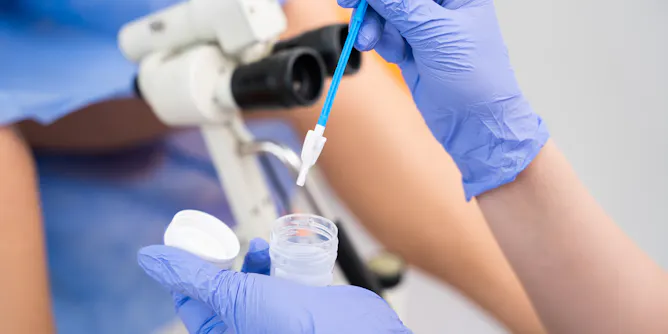
From July 2025, most 25–49s with a negative HPV result will be screened every five years. At-home kits will help reach those who avoid cervical screening.
Articles on Cervical screening
Displaying all articles

Only 6,000 women used self-collection in cervical screening between 2017 and 2019, out of about one million women eligible. We need to boost those numbers if we’re ever to eliminate cervical cancer.
Regular testing can mean potentially fatal diseases can be picked up and treated early.
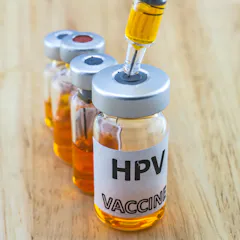
Why it is now realistic to talk about eliminating cervical cancer altogether.

Many countries have swapped Pap smears for the more accurate HPV screening. Why is the UK so far behind?

Medical research suggests cervical cancer screening for women under the age of 25 has little impact. Women should therefore be screened at a later age, and less often.
Smear tests are no fun for women, and the HPV vaccine and better screening will offer better protection from cancer and fewer trips to the women.

The Pap smear test is used for screening for cancer, but it could be repurposed for diagnosing cervical cancer, according to new research.
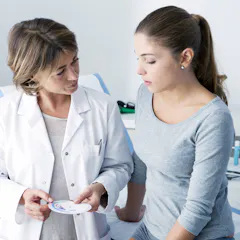
There is a lot of misinformation about the government’s new cervical cancer screening program that involves less frequent tests. Here are the facts.
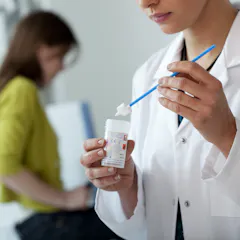
The cancer screening registry contract won by Telstra Health is only the first of the potential outsourcing of health programs. It creates a precedent that needs to be right.

Developers are using wearable tech to help women and girls better understand their bodies.
Top contributors
-

Cancer Screening Statistician, Queen Mary University of London
-
PHD candidate, Newcastle University
-
Professor of Family Medicine, University of Calgary
-
Cancer epidemiologist, King's College London
-
Epidemiologist, Queen Mary University of London
-
Lecturer in the School of Women's and Children's Health, UNSW
-
Honorary Enterprise Professor, School of Population and Global Health, and Department of General Practice and Primary Care, The University of Melbourne
-
Professor of Life Course Epidemiology, Faculty of Medicine, The University of Queensland
-
Clinical Professorial Research Fellow, Australian Women and Girls' Health Research Centre, The University of Queensland
-
Senior Research Fellow, Glasgow Caledonian University
-
Research Fellow in Implementation Science at the Centre for Health Policy, The University of Melbourne
-
Research Associate in Evaluation and Implementation Science at the Centre for Health Policy, The University of Melbourne
-
Research Assistant in Evaluation and Implementation Science, Centre for Health Policy, Melbourne School of Population and Global Health, The University of Melbourne
-
Associate Professor in Pharmacy Practice, Kingston University