
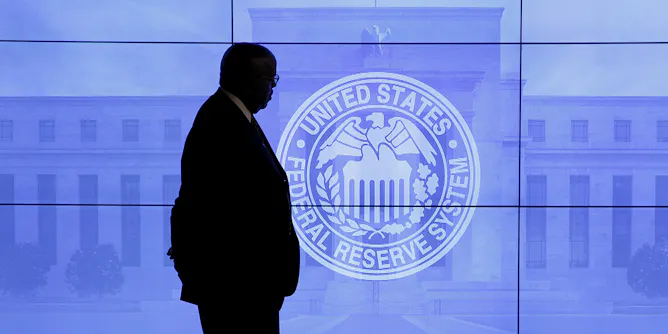
Just like apes, humans fear the unknown, and that’s why there’s so much uncertainty this week as markets brace for an interest-rate decision by the Federal Reserve.
Articles on Central banks
Displaying 141 - 160 of 171 articles
Attacks on the South African Reserve Bank and events in India that led to the exit of the governor of the country’s central bank are a warning that banks aren’t immune from political meddling.
Is the South African Reserve Bank safe from the wave of state capture sweeping through a number of the country’s institutions?

The 2008 financial crisis exposed major gaps in central banks’ operations. New features like quantitative easing have since emerged.
It’s not as easy as increasing quantitative easing when it comes to what central banks can do to address the current global uncertainty.

One of the worst hit countries during the financial crisis has regained economic strength inside a gilded cage – to the extent that it can now step outside, melt it down and re-sell the gold.

It’s becoming a matter of ‘when’ rather than ‘if’ the first central bank takes the plunge and introduces quantitative easing for the people.
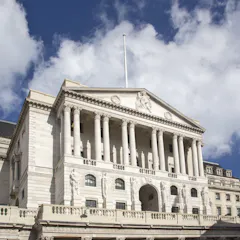
Mark Carney, governor of the Bank of England, has been criticised for his comments on how Brexit will affect financial stability in the UK.
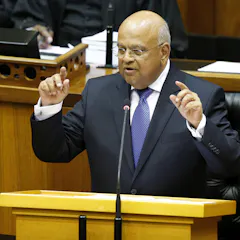
Forecasts are crucial for all economic and business activity. But looking into the future involves uncertainty and risk. Forecasts may be inaccurate, which creates a serious dilemma for policy makers

Like any commodity, the value of the rand is determined by the market forces of supply and demand. Its weakening is also affected by a myriad of structural problems facing the South African economy.

South Africa’s transition into democracy involved compromises that left white privilege intact and black poverty undiminished. Here are a dozen of Mandela’s economic deals that need to be undone.
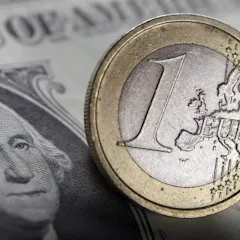
With economies in Europe and America forging very different recoveries, their central banks are having to navigate by different stars.

Inflation-targeting central bankers need to focus on stabilising inflation and not be sidetracked into correcting all other macroeconomic and financial problems.

Whenever speculation grew louder that the Federal Reserve would lift its target interest rate this year, stocks took a dive. Here’s why.
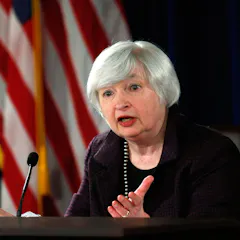
The more important question is when the federal government will get in the game and help support the economy.
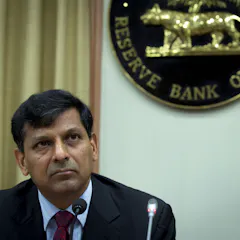
Monetary policy involves more than managing inflation, which is why it sometimes takes a committee to decide interest rates.

The continued ownership of shares in central banks by private investors may be a superfluous relic but it enhances governance and adds to the transparency and accountability of central banks.
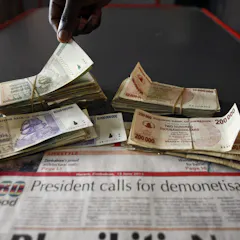
The misguided belief that banks create money out of nothing has generated public anger with organisations and individuals calling for an overhaul of the system and an end to money creation by banks.

Alexander Hamilton’s story is our story. It would be a mistake to remove him from the $10 bill.
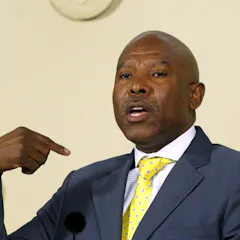
The South African Reserve Bank is a fine example of clear communication of the decision whether to hold, increase, or decrease interest rates. It also gives clear signals of future decisions.
Top contributors
-

Visiting Professor at the Business School, University of the Witwatersrand
-
Senior lecturer, Canberra School of Government, University of Canberra
-
Senior Lecturer in Economics, The Open University
-
Professor of Economics, University of Nebraska Omaha
-
Professor of Political Science, Michigan State University
-
Professor/Senior Research Fellow, Centre for Advancement of Scholarship, University of Pretoria
-
Visiting Faculty in Economics, Emory University
-
Senior Lecturer in Economics | Freelance Consultant, Sheffield Hallam University
-
Professor of International Economic Affairs at The Fletcher School, Tufts University
-
Associate Professor of Business, Boston University
-
Senior Lecturer in Economics, Sheffield Hallam University
-
Scientia Professor of Economics, UNSW
-
Professor or Political Science, Department of Government, University of Essex
-
Professor of Macroeconomics, University of Sydney
-
Lecturer in Economics, University of the Witwatersrand