
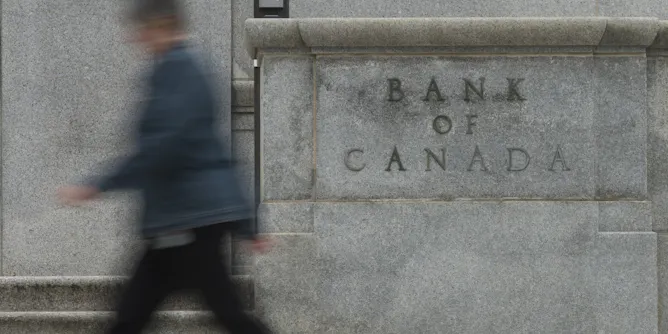
Unconventional policies can be used to alleviate — instead of exacerbate — inequality, something Canadians are clamouring for. The Bank of Canada needs to rediscover its former innovation zeal.
Articles on Central banks
Displaying 81 - 100 of 171 articles

The story of how money injections became the go-to policy for tackling economic crises.

With the global financial system on permanent life support, even trillion-dollar stimulus packages can only do so much to restore equality.

While Trump’s nominee to join the Fed favors returning to the gold standard, an economist explains why the US and the rest of the world abandoned it in the first place.

Yes, the bank would effectively pay you to borrow money. But negative interest rates won’t please savers, nor will they meet the big challenges of economic recovery.
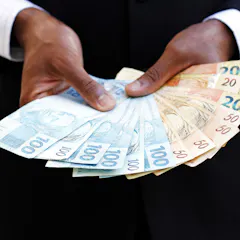
There’s no indication that handling cash increases your chance of catching COVID-19. But that hasn’t stopped countries around the world from looking at digital currencies.

Creating lots of new money is supposed to produce runaway inflation. The longer that it doesn’t happen, the more this branch of economics appears to have a point.

Much of what we now think is obvious about politics and economics was worked out by Alberto Alesina.

Long before COVID-19, central banks were lining their stores for winter.

We could welcome the news that prices have been rising much more slowly since the coronavirus pandemic – or we could get nervous.
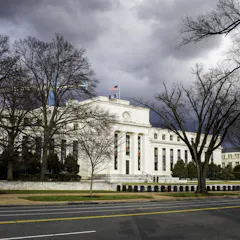
Like Congress with its $2 trillion bailout, the Fed is engaged in an unprecedented effort to save the US economy and financial system from collapse.

Markets normally rally when central banks throw trillions of dollars at a problem. But not this time.
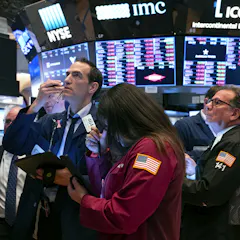
The Fed slashed interest rates to near zero but, just as in 2008, it will require unprecedented action to calm panicky markets.

The prospects of the Masters of the Universe fixing this problem look seriously in doubt.

In the week ending February 28, leading stock markets around the world faced their worst week since the financial crisis of 2008. And things could get worse.

Will the all-time lowest rate in the world of -0.75% be enough for these alpine explorers?
The idea that central banks should shift their mandates to take account of climate risks confuses ends and means.

How many people realise that the central banks’ great programme for reviving the global economy involves hand-picking which companies and sectors to help out?
The World Bank’s latest report on Nigeria deserved closer scrutiny, just like the opinions of economic experts outside government.
The days of using interest rates to keep the wheels on are at an end.
Top contributors
-

Visiting Professor at the Business School, University of the Witwatersrand
-
Senior lecturer, Canberra School of Government, University of Canberra
-
Senior Lecturer in Economics, The Open University
-
Professor of Economics, University of Nebraska Omaha
-
Professor of Political Science, Michigan State University
-
Professor/Senior Research Fellow, Centre for Advancement of Scholarship, University of Pretoria
-
Visiting Faculty in Economics, Emory University
-
Senior Lecturer in Economics | Freelance Consultant, Sheffield Hallam University
-
Professor of International Economic Affairs at The Fletcher School, Tufts University
-
Associate Professor of Business, Boston University
-
Senior Lecturer in Economics, Sheffield Hallam University
-
Scientia Professor of Economics, UNSW
-
Professor or Political Science, Department of Government, University of Essex
-
Professor of Macroeconomics, University of Sydney
-
Lecturer in Economics, University of the Witwatersrand