
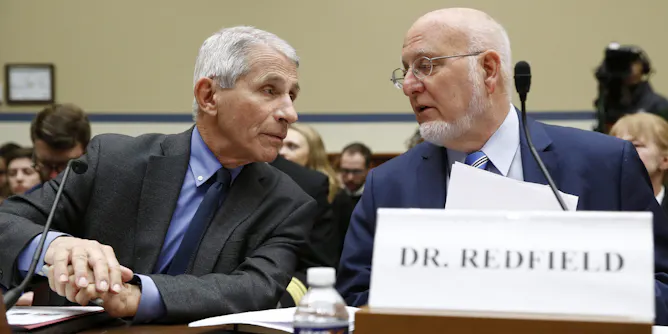
Those who work in the background to keep everyone healthy — public health nurses, health inspectors, laboratory techs and epidemiologists — deserve recognition in the fight against COVID-19.
Articles on Centers for Disease Control and Prevention (CDC)
Displaying 121 - 140 of 157 articles

Both cats and dogs can become infected with the coronavirus. The chances of them getting sick or passing it on to you or another animal are extremely low.

At-home mask makers should carefully consider fit and fabric variables when designing face coverings to help prevent transmission of SARS-CoV-2.

Researchers and public health officials still don’t know how widespread nor how deadly the coronavirus really is. Random testing is a way to quickly and easily learn this important information.
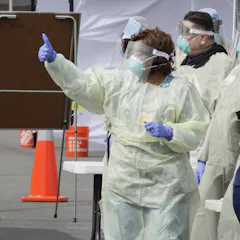
Officially, not that many people have recovered from the coronavirus. An epidemiologist explains what has to happen for a COVID-19 survivor to get a clean bill of health.
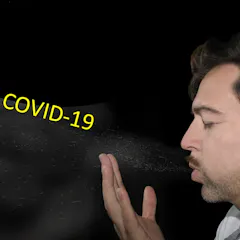
The CDC now recommends that everyone wear a face covering when they go into a public place. But there’s confusion about why and if this protects the wearer, people around them or both.

The president promoted the combination of hydroxychloroquine and an antibiotic for treating COVID-19. But a new study suggests it provides no benefits.

Facebook, Google and Twitter are stepping up to block misinformation and promote accurate information about the coronavirus. Their track records on self-policing are poor. The results so far are mixed.
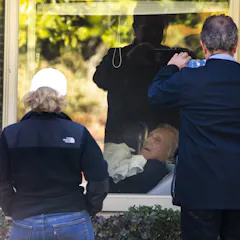
Nursing homes in the U.S. are not ready to care for coronavirus patients. Things need to change – fast.
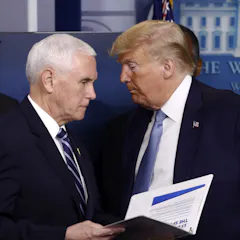
The federal government has declared a state of emergency over COVID-19. Two public health scholars explain what that means.

As long as teachers are creative and resourceful, kids will keep learning. What’s less clear is how schools will make up for the lost time if they remain closed for several months or longer.
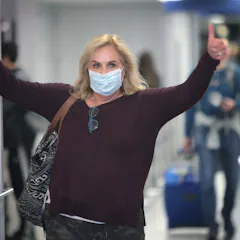
An expert explains how your individual rights could be affected during the coronavirus crisis.
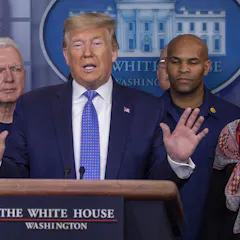
Usually when a leader handles a crisis poorly, it’s politically costly. But President Trump’s mishandling of the coronavirus crisis is not likely to hurt him, says an expert on health crises.
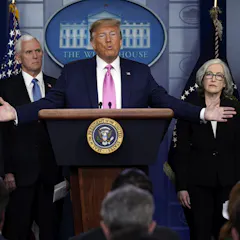
Trump called coronavirus a hoax, and he dragged his feet in addressing it. But the US health care system was ill-equipped from the start to deal with such a crisis. The pandemic shows the flaws.
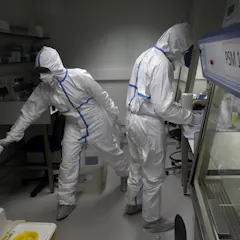
A molecular biologist explains who should get tested, how the tests work and what the US government is doing to make tests available during a rapidly changing crisis.
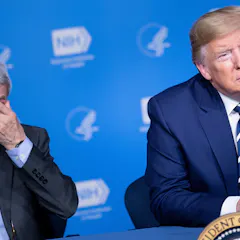
The US has public health agencies at the federal, state and local level. The spread of coronavirus is putting those agencies in the spotlight. What roles does each play and how are they coordinated?

As the novel coronavirus spreads, an expert offers ways the elderly can stay safe while staying connected.
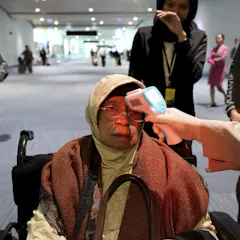
Travelers may undergo screenings at airports to control the spread of coronavirus. Research shows that these efforts have little to no effect on slowing the spread of disease.
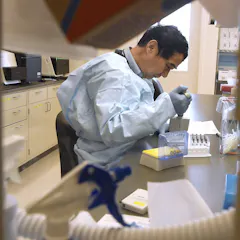
In a survey, a majority of liberals and conservatives reported that they trust doctors and the CDC to reduce US risk of a coronavirus epidemic.
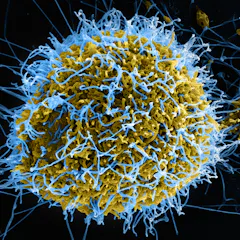
The Trump administration has cut funding for infectious disease research and reduced high-level staffing for global health security, leaving the nation less prepared for major outbreaks.
Top contributors
-

Assistant Professor of Pediatrics, University of Colorado Anschutz
-
Regents' Professor & Chair, Medical Laboratory Science, Texas State University
-
Professor of Medicine, University of Virginia
-
Teaching Professor of Public Health, Arizona State University
-
Associate Professor of Public Health, The Ohio State University
-
Adjunct Associate Professor of Epidemiology, University of California, Los Angeles
-
Instructor of Human Immunology, Emory University
-
Assistant Professor of Law and Director of the Medical-Legal Partnership Clinic, University of Memphis
-
Associate Professor of Medicine and Geriatrics, University of Virginia
-
Assistant Research Scientist, University of Michigan
-
Vice Provost for Faculty Affairs and Professor of Statistics, Virginia Tech
-
Clinical Associate Professor of Infectious Diseases, Stanford University
-
Clinical Assistant Professor of Nursing, Purdue University
-
Adjunct Professor of Epidemiology, University of Texas Health Science Center at Houston
-
Research Assistant Professor at the Institute for Social Research, University of Michigan