
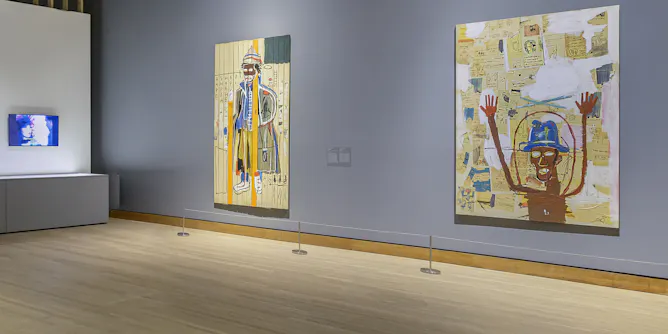
In the age of the Black Lives Matter movement, Basquiat’s work is more relevant than ever. It highlights racial inequality and violence against racialized people.
Articles on Cartoons
Displaying 21 - 40 of 64 articles
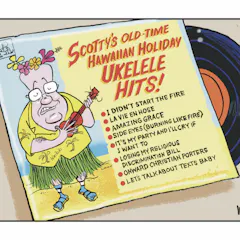
It’s the 20th anniversary of Best Australian Political Cartoons – and it has been quite a year. From Putin to Dutton to Albanese, our cartoonists have been hard at work skewering the powerful.
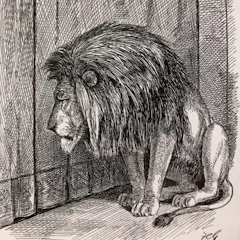
A cartoon commemorating the death of King William IV in 1837 would have been unthinkable; by the time Queen Victoria died in 1901, newspapers had changed.

Much of his work was imbued with a sense of the end, so it is fitting to look back at three of his best works to mark the illustrator’s passing
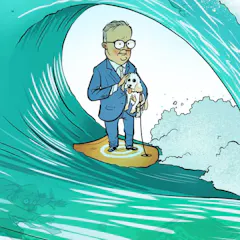
Political cartoonists have found their own ways of coping with a new government
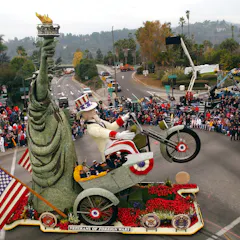
The iconic image may have originated with a meat supplier named Samuel Wilson. Or not.
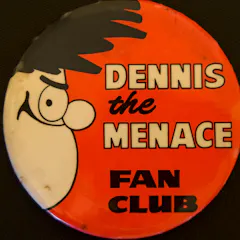
Cartoon character Dennis the Menace has had more influence on British society than you might think.
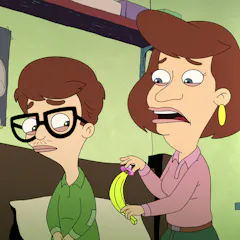
Growing up is never easy, but visualising complex ideas can help. Animation and character design allow us to put a metaphorical mirror up to society.
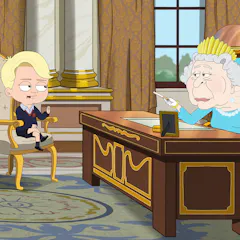
Royal satire has softened over the last 300 years, but audiences are more sensitive to barbs against the institution.
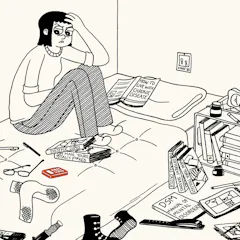
From the blog ‘Mom’s Cancer’ to novellas about lupus to moving Instagram posts, comic artists are humanising illnesses.
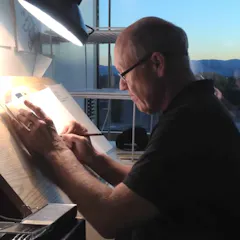
The condition challenges the centuries-old idea that all great artists are able to envision what they’re drawing.

When we read comics, we ‘hear’ sound on the page. Creators are experts at this cross-sensory form of storytelling - indeed one database lists over 2500 comic book sounds.
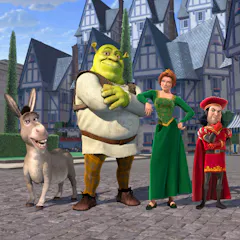
Released in 2001, it was the first film to really give Pixar a run for its money.
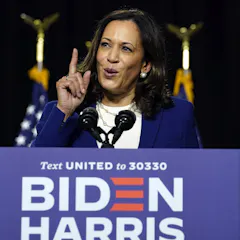
Unless we address the lack of diversity in newsrooms, we will continue to see work like Leak’s cartoon making it through the gate.
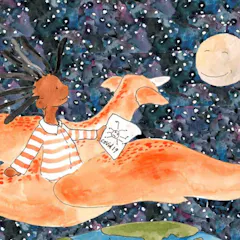
Scientists provide the credibility and accuracy, while the artists ensure this is communicated with creative flair and appealing designs.
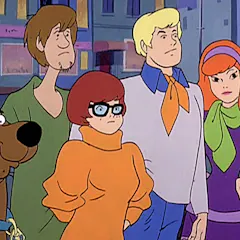
Demands for regulation of media violence reached a fever pitch after RFK’s assassination, and networks scrambled to insert more kid-friendly fare into their lineups. Enter: the Mystery Machine.
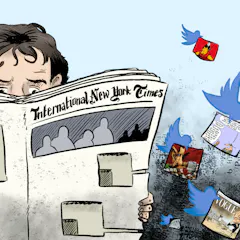
A New York Times decision has led to predictions of the death of cartooning. But rather than perishing, is the global art form just feeling the full force of technological and workplace change?
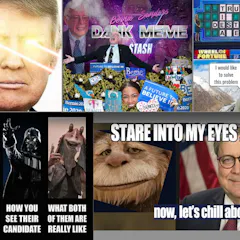
With sharp political commentary just as likely to be found on Tumblr as in the pages of the Times, why aren’t the best internet memes being published in the nation’s top periodicals?

The term ‘political correctness’ is often used to imply that those who resent racist comedy just lack a sense of humour. But First Nations people are using humour to speak back, especially on social media.
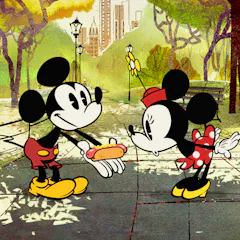
We’ve had 90 years of those famous ears.
Top contributors
-

Professor of English, Flinders University
-
Professor in Modern History, University of New England
-
Senior Lecturer: Director MSc Animation and VFX MDes Comics & Graphic Novels, University of Dundee
-
Assistant Teaching Professor of Critical Sports Studies, University of Colorado Boulder
-
Director of the Animation Academy, Loughborough University
-
Associate Professor of English, University of Oxford
-
Senior Lecturer, School of Media, Film and Journalism, Monash University
-
John Curtin Distinguished Professor, Curtin University
-
Senior Lecturer in the School of Design, RMIT University
-
Professor of Mass Communication, Media and Communication Science, Jacobs University Bremen
-
Professor of Sociology, University of Wisconsin-Madison
-
Lecturer in Comic Studies, University of Dundee
-
Professor of Cultural Studies and Research Director of the Department of Media, Music, Communication and Cultural Studies, Macquarie University
-
Maître de conférences en sciences de l’information et de la communication, CREM, Université de Lorraine
-
Doctoral candidate, University of Technology Sydney