

What does this new story have to offer cinema audiences accustomed to characters they already know and onscreen worlds that they have already visited?
Articles on Carl Sagan
Displaying all articles
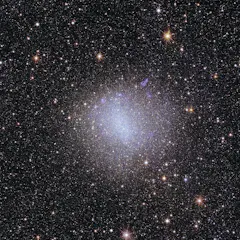
An astronomer breaks down 3 key components that allow researchers to make groundbreaking discoveries – and decide when results aren’t significant.
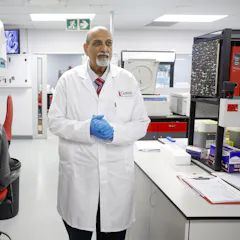
When asked to name a living scientist from their own country, more than half of the respondents in both countries did not reply.
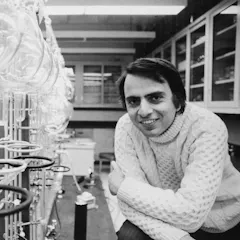
On what would’ve been the astronomer’s 90th trip around the Sun, here’s a look at his legacy as a scientist, advocate and communicator.
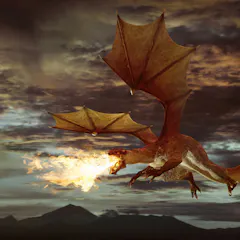
Enormous, scaly, fire-breathing dragons have fascinated civilizations for centuries. A scholar who studies monsters explains their power and appeal.

Crystals are part of a larger tradition of metaphysical religions that have a long history in the U.S.
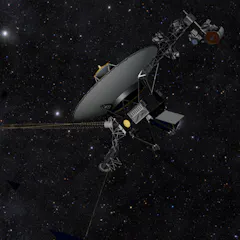
A professor of religion and science explains different views on immortality, from the religious perspective of President Jimmy Carter to the scientific, secular take of Carl Sagan.
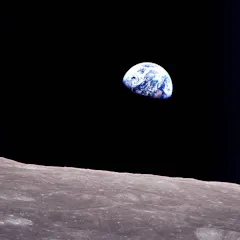
The first generation of spacefarers realised that Earth binds our planetary civilisation into a coherent whole. When, if ever, will politics catch up?
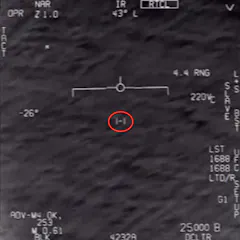
About 5 percent of all UFO sightings cannot be easily explained by weather or human technology. A physicist argues that there’s compelling evidence to justify serious scientific study and that the skeptics should step aside – for the sake of humanity.

Lynn Margulis (1938-2011) was a courageous scholar whose remarkable work on the role of symbiosis in evolution stands as a magisterial contribution of science.
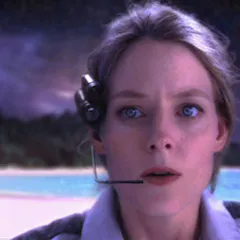
It is the 20th aniversary of Carl Sagan’s sci-fi film, Contact - and a great time to celebrate its legacy and revisit its main premise of Science vs. Religion.
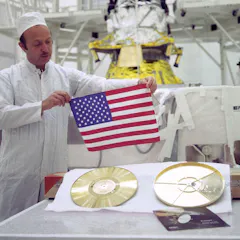
Humanity is the real target for these recordings which continue to inspire us to better understand ourselves and our place in the cosmos.
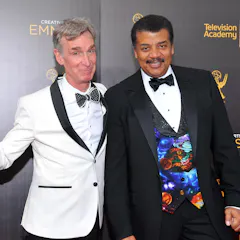
Popular programming that focuses on science tends to not actually be all that popular. Bringing in new audiences who aren’t already up to speed on science topics is a challenge.
Technology had enabled humans to explore the deep sea, the Earth’s poles, and outer space. But we shouldn’t forget historical lessons about frontiers in the process of traversing them.
Top contributors
-

Honorary Research Fellow, University of Sussex
-
Professor and Chair of Life Sciences Communication, University of Wisconsin-Madison
-
Associate Professor of Physics, University at Albany, State University of New York
-
Sorbonne Université
-
Professor, Universidad Nacional Autónoma de México (UNAM)
-
Professor of Life Sciences Communication, University of Wisconsin-Madison
-
Professor of American Literature and Religion, University of Victoria
-
Assistant Professor of Communication and Social Influence, Temple University
-
Post-Doctoral Research Fellow at the Annenberg Public Policy Center, University of Pennsylvania
-
Professor of Astronomy and Astrophysics, Penn State
-
Associate Professor in Archaeology and Space Studies, Flinders University
-
Professor Emeritus and Lecturer in Religion and Science, Florida International University
-
Instructor in English, Arizona State University
-
Associate Professor of Religious Studies, Texas State University
-
Professor of Earth, Planetary, and Space Sciences, University of California, Los Angeles