

Brexit suggested the importance of diversifying trade partners, while underlining the importance of geography.
Articles on Canada-US trade
Displaying 1 - 20 of 26 articles

Ottawa’s decision to walk away may have been justified, but it is costly for an economy still heavily dependent on the U.S. market.

Canada cannot match the U.S. economically, but it can make Donald Trump’s trade war politically costly as the U.S. heads toward midterm elections.

Here’s why Canada is in a tricky spot when it comes to saying more to counter the many inaccurate claims made about the ICC by the United States.

Provincial alcohol bans have drawn presidential notice. Ontario and Québec should now sell their U.S. inventories as a goodwill gesture while continuing to ban imports.

Instead of assessing parties along familiar ideological lines, many Canadian voters approached the 2025 election based on who could best protect the country from the U.S. That’s seemingly still the case.

Equating controversial or legally contested executive actions with the collapse of 250 years of constitutional democracy risks conflating the overreach of a singular president.

In 2026, Canada will feel growing pressure to align with some U.S. trade-restrictive measures and, like Mexico, should do so smartly.

Lower, targeted tariffs on Chinese imports would ease financial pressures for Canadian consumers and mitigate Canada’s excessive reliance on the United States.

As trade shocks escalate, Canada must prioritize long-term food security over short-term retaliation.
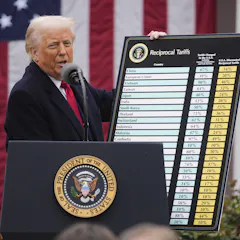
Canada must stand in solidarity with the international community to exert collective pressure on the U.S. A co-ordinated global response could compel Trump to reconsider his unilateral trade policies.

Donald Trump wants US allies to spend more on defence and has threatened NATO members with coercion. But allies have agency too, and are already planning their responses.
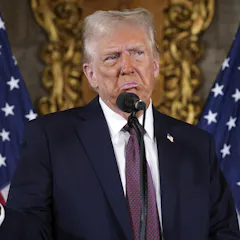
Dealing with an incendiary Donald Trump requires looking back on history and a degree of strategic thought that is currently hard to find in Canada’s federal and provincial capitals.

Eliminating interprovincial trade barriers could result in countless benefits for Canadians and reduce Canada’s over-reliance on the American market as Donald Trump threatens tariffs.
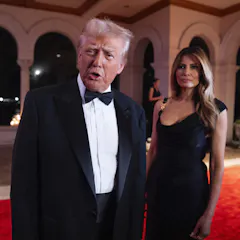
Donald Trump is flagrantly disrespecting Canadian sovereignty and, along with it, Canadian identity. Canada must respond accordingly.

Canada should consider an export charge on Canadian energy bound for the U.S and applied directly by the federal government. That would impose some unity on Canada’s approach to Trump 2.0.

A way for Canada to reduce its dependency on the U.S. would be to diversify its trading partners, which, in turn, would strengthen Canada’s bargaining position.
Scenario planning provides an effective way for Canadian officials to address high levels of uncertainty in the Canada-U.S. relationship. Here’s how it works.

The perishable nature of agri-food products makes any delay at the Canada-U.S. border costly to farmers, businesses and consumers.

A look back at how Canada secured auto investment in the past shows how a peripheral economy gained a major auto sector — and how it might hold onto it even in the face of U.S. protectionism on EVs.
Top contributors
-

Associate Professor of Political Science, Brock University
-
Associate Professor of Agri-Food Trade and Policy, University of Guelph
-
Professor and LR Wilson/RJ Currie Chair in Canadian Business History, University of Toronto
-
Associate Professor of International Relations and Asian Politics, Thompson Rivers University
-
Associate professor, ESG UQAM, Université du Québec à Montréal (UQAM)
-
Professor, Urban Economics, Université du Québec à Montréal (UQAM)
-
Professor, Johnson Shoyama Graduate School of Public Policy, University of Regina
-
Hyman Soloway Chair in Business and Trade Law, L’Université d’Ottawa/University of Ottawa
-
Associate professor and Barton Chair, Norman Paterson School of International Affairs, Carleton University
-
Professor of Operations Research, Brock University
-
Scholarly Director of the MacEachen Institute for Public Policy and Governance, Dalhousie University
-
Professor of Economics, University of Guelph
-
Professor, Environmental and Urban Change, York University, Canada
-
Lecturer, Political Science, University of British Columbia
-
Assistant Professor, Louisiana State University