

A 1952 law that President Harry S. Truman opposed, calling it a step backward, now underpins many actions by the Trump administration against noncitizens in the US.
Articles on Campus protests
Displaying all articles
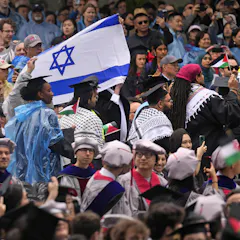
Since Hamas’ Oct. 7, 2023, attack on Israel and the ensuing war, some Jewish students have been vocal about support for Israel or for Palestinians. But many more have views that don’t fit into ‘either/or’ categories.

As colleges and universities grapple with antisemitism on campus, research reveals that views on Jews and Israel are more complex than current debates would make them seem.

From educational gag orders to the decline of tenure-track positions, academic freedom in the United States has been worsening in recent years.

Limiting who public space is for and how it can be used is central to settler colonialism both in Canada and other settler colonial places. Here’s how it’s used to silence and criminalize dissent.
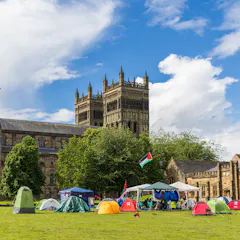
University leaders have struggled with how to respond to campus protests.

When university administrators accede to donor demands, they punish students for enacting the core values and principles their institutions profess.
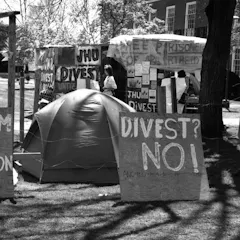
In the 1980s, university administrators called the police on anti-apartheid protesters, threatened to revoke their scholarships and ordered staff to demolish encampments.
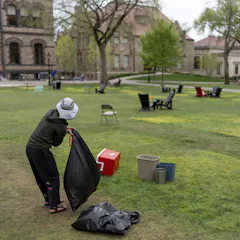
In most cases, it’s reasonable to expect that groups of protesters will abide by the law. But there are times when doing so diminishes the effectiveness of the protests.
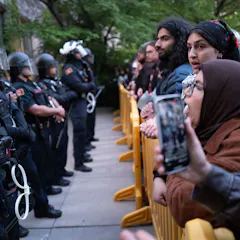
These books shine light on a rich history of campus protests in the US that goes back to the 1960s.
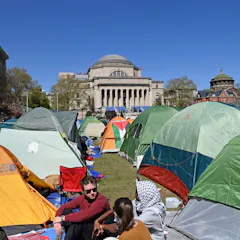
Police and military violence against student protesters in the 1960s was draconian, now questions are being asked about the police operations today.
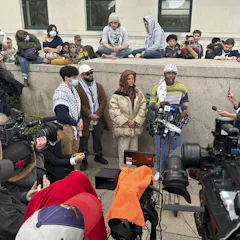
Analysis shows news stories on pro-Palestinian demonstrations at US universities spiked when they involved clashes.

How university campuses respond to concerns about student safety can set the stage for learning or encourage its opposite: divisiveness and censorship.
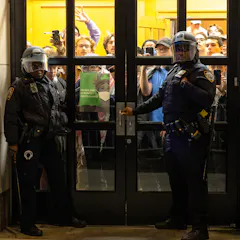
An expert on the Columbia University protests of 1968 draws parallels between protests then and the ones taking place there in 2024.
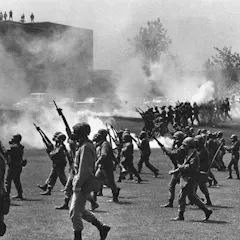
Even if you disagree with their concerns or their tactics, students should not be penalized for thinking critically about world events and trying to bring about positive social change.
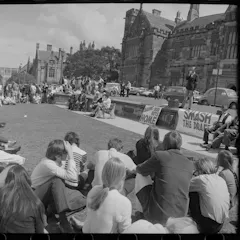
Australian universities have long been a site of protest. Today’s students join this legacy of activists who helped shape higher education and the Australian cultural landscape.
Top contributors
-

Associate Professor, Departments of General Education and Humanities, Mount Royal University
-
Senior Lecturer in History, The Open University
-
Associate Professor of Sociology and Interdisciplinary Studies, Athabasca University
-
Assistant Professor, Faculty of Management, University of British Columbia
-
Professor of Law, UCL
-
Professor of Journalism, Michigan State University
-
Professor of Black Studies and History, Amherst College
-
Independent writer and editor, University of Michigan
-
Assistant Professor of History, University of California, Santa Barbara
-
Department Chair and Professor of Philosophy, Rochester Institute of Technology
-
Professor of UK Human Rights Law, University of East Anglia
-
Associate Professor, Department of Communication Studies, Wilfrid Laurier University
-
Associate Professor, Simone de Beauvoir Institute, Concordia University
-
Associate Professor in Landscape Architecture, Planning and Urbanism, The University of Melbourne
-
Professor, Architecture, The University of Melbourne