

As colleges and universities grapple with antisemitism on campus, research reveals that views on Jews and Israel are more complex than current debates would make them seem.
Articles on 2024 campus protests
Displaying all articles
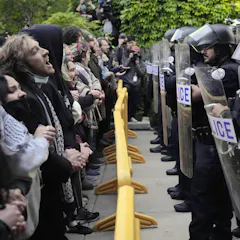
The anti-war protests that rocked college campuses across the US in spring 2024 may well erupt again in the fall. An expert on civil disobedience sets the bar high for deploying police.
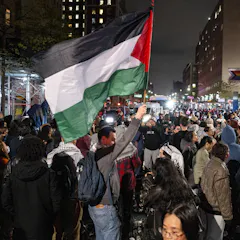
It’s now clear that tensions in academia regarding concerns about Israel’s relationship with the Palestinian people aren’t limited to campus protests.
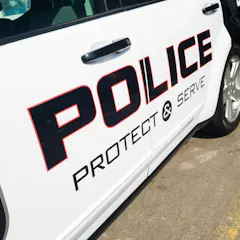
Prior encounters with police didn’t negatively affect student views of campus police, but perceptions varied among students from different ethnic and racial groups and LGBTQ+ students.
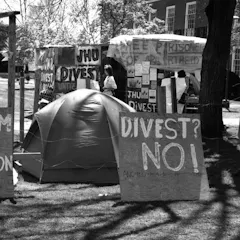
In the 1980s, university administrators called the police on anti-apartheid protesters, threatened to revoke their scholarships and ordered staff to demolish encampments.
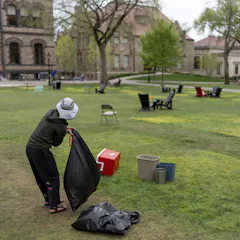
In most cases, it’s reasonable to expect that groups of protesters will abide by the law. But there are times when doing so diminishes the effectiveness of the protests.
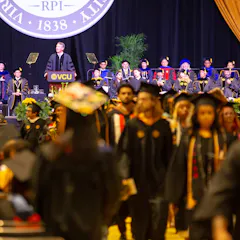
The right commencement speaker can create a memorable experience, generate favorable media coverage for the school and inspire donors. So why do colleges miss the mark on this once-a-year decision?

Divestment from Israel may violate state laws – at least for public institutions. Private universities with large endowments may face other obstacles.
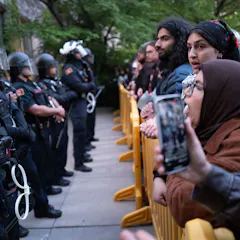
These books shine light on a rich history of campus protests in the US that goes back to the 1960s.
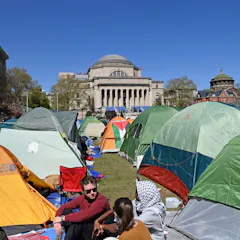
Police and military violence against student protesters in the 1960s was draconian, now questions are being asked about the police operations today.
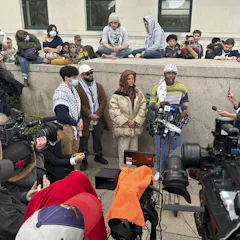
Analysis shows news stories on pro-Palestinian demonstrations at US universities spiked when they involved clashes.
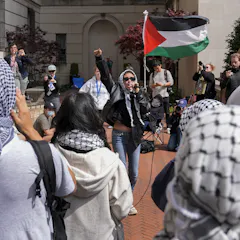
There’s been a concerted effort in Israel and the US to block this movement’s tactics and goals.
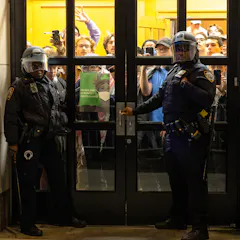
An expert on the Columbia University protests of 1968 draws parallels between protests then and the ones taking place there in 2024.
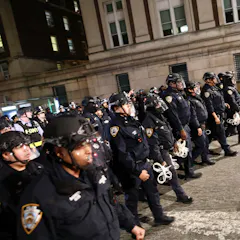
While most colleges and universities have their own police units, some schools, like Columbia University, have only private security − and then can call in outside police when they feel it is needed.
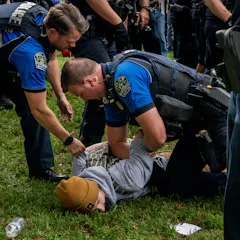
Throughout the 1960s and 1970s, conservative activists led a counterattack against campus antiwar and civil rights demonstrators by demanding action from college presidents, the courts and the police.
Top contributors
-

Assistant Professor of History, University of California, Santa Barbara
-
Executive in Residence, University of Southern California
-
Professor of Public Administration; Director, Center for Local Government, University of Colorado Denver
-
Assistant Professor of Criminal Justice, State University of New York at Fredonia
-
Professor Emeritus of Criminal Justice, University of Alabama at Birmingham
-
University Research Professor of Education, University of Kentucky
-
Instructor, School of Education, University of New Orleans
-
Professor of Citizenship and Self-Government, Harvard Kennedy School
-
Independent writer and editor, University of Michigan
-
Senior Lecturer in History, The Open University
-
Department Chair and Professor of Philosophy, Rochester Institute of Technology
-
Professor of Political Science, Carleton University
-
Professor of Black Studies and History, Amherst College
-
PhD Student, University at Buffalo
-
Professor of Journalism, Michigan State University