
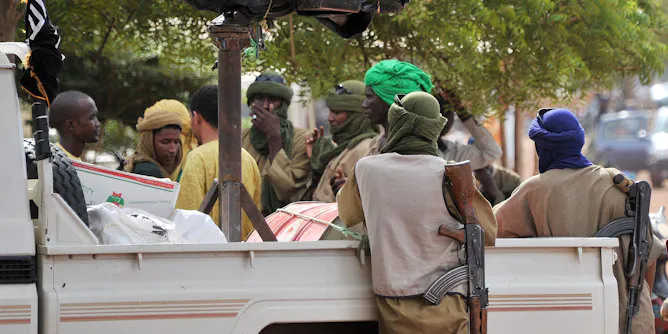
A combination of population explosion, failure of governance and endemic poverty creates a perfect breeding ground for a jihadist state in west Africa.
Articles on Caliphate
Displaying 1 - 20 of 29 articles

The suspect in a truck assault that left at least 15 dead had previously pledged loyalty to the Islamic State group, authorities say.
The Ottoman empire once stretched from Vienna to Cairo, an expert explains its power.
Western European states are ignoring the international legal rights of children and using national security arguments to avoid responsibility for them.
The US gives money to help Indonesia and other countries fight terrorism. But research shows that this money might not be effective, unless it directly reaches former extremists.
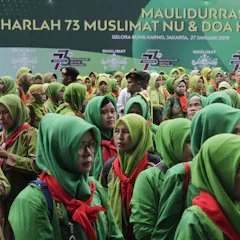
Nahdlatul Ulama is the world’s biggest Islamic organization, initiating a reform movement, which it is calling ‘Humanitarian Islam.’

The latest scandal to hit news media involves Rukmini Callimachi, the journalist behind the New York Times podcast “Caliphate.” The scandal spotlights the dynamic between reporters and “fixers.”
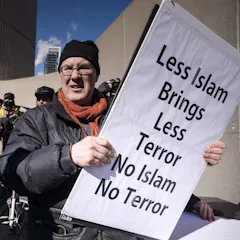
The need for security agencies and the media to view and present Islam and Muslims as constant potential threats feeds into a dangerously violent and deadly Islamophobia.
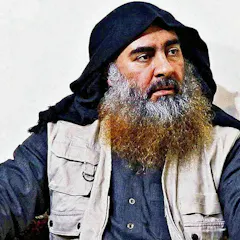
The Islamic State has appointed yet another ‘caliph’ after the death of Abu Bakr al-Baghdadi. What is the idea behind the caliphate?

Only by prosecuting extremists will the world be able to marginalize those who carry out violent acts and those who give credence to their ideas.
After a major defeat in Mosul, Islamic State seems to have suffered a blow that could end its goal of establishing a cross-border caliphate in the Middle East.
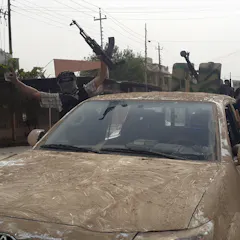
Do ISIS fighters feel guilty about the violence they perpetrate? Not likely, according to criminological research, which suggests terrorists “neutralise” their guilt, just as many other criminals do.

The final article of our series on the historical roots of Islamic State examines the role recent Western intervention in the Middle East played in the group’s inexorable rise.
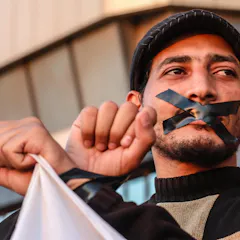
The rise of Islamic State and its declaration of the caliphate can be read as part of a wider story that has unfolded since the formation of modern nation states in the Muslim world.
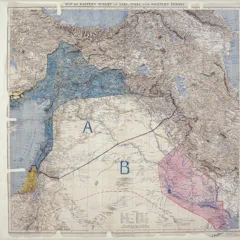
The leaders of Islamic State do not see their caliphate as an exercise in theocracy for its own sake, but as an attempt at post-colonial emancipation.
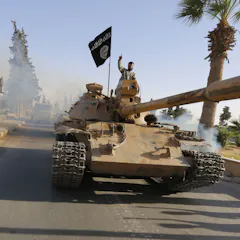
Despite what we’re told, religion isn’t inherently peaceful. People kill in the name of their religion, just as they love in its name.
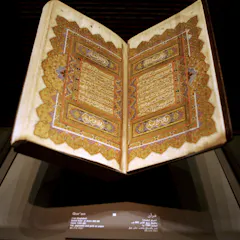
What makes Islamic State different to traditional Islam isn’t necessarily the religious texts the group uses.
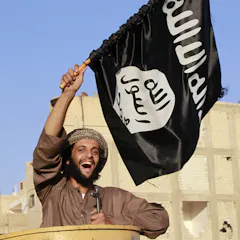
How far back in history does one have to go to find the roots of the so-called Islamic State? The first article in our series on the genesis of the terrorist outfit considers some fundamentals.
In contrast to what we have been taught - or teach our students - we are living in an increasingly hybrid world.
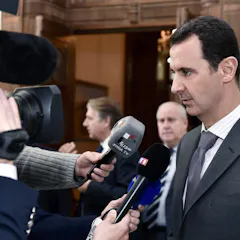
The Paris atrocities came just as Assad’s military position was improving. Can the dictator harness international fury at Islamic State to strengthen his position in Syria?
Top contributors
-

Research Fellow, Cambridge Muslim College & Teaching Fellow, SOAS, University of London
-
Chair in Global Islamic Politics, Alfred Deakin Institute for Citizenship and Globalisation, Deakin University
-
Lecturer in social policy, University of Bath
-
Visiting Professor, Political Science and Jackson Institute for Global Affairs, Yale University
-
Senior Research Fellow, Centre for the Advancement of Scholarship, University of Pretoria., University of Pretoria
-
Lecturer in Traditional Islamic Studies, Charles Sturt University
-
Jean Monnet Fellow (European University Institute) & Reader in History, Edge Hill University
-
Pre-doctoral researcher, Durham University
-
Associate Professor of Political Science, American University of Ras Al Khaimah
-
Professor in International History, Flinders University
-
Professor of Modern Middle Eastern History, University of California, Los Angeles
-
Honorary Senior Fellow, The University of Melbourne
-
Professor Emeritus, Department of Anthropology, California State University, Chico
-
Honorary Professor, Faculty of Medicine, University of British Columbia, University of British Columbia
-
Professor of International Relations, Lancaster University