
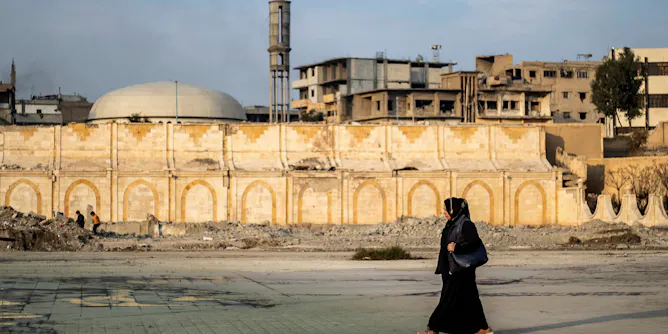
While some world leaders and foreign policy experts expected IS to increase its attacks during COVID-19’s early days, travel bans and curfews helped slow violence.
Articles on Understanding Islamic State
Displaying all articles
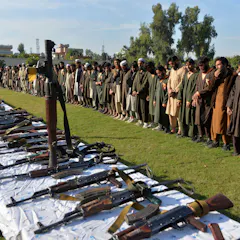
The Islamic State group, often called ISIS, is not just based in Iraq and Syria. A scholar tracks where the group and its affiliates have spread around the globe.
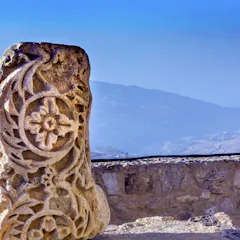
Islamic State propaganda uses a narrative of centuries-old ‘crusader’ aggression.
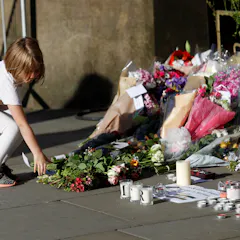
To the terrorist, children have become but a means to an end. Weapon and target.
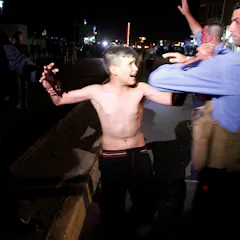
A young boy is strapped with explosives and sent to detonate himself and those around him at a school. An expert on terrorism explains how and why children become embroiled in militant conflicts.
Our series on understanding Islamic State attempts to catalogue many of the forces and events that can arguably have played a part in creating the conditions necessary for these jihadists to emerge.

The final article of our series on the historical roots of Islamic State examines the role recent Western intervention in the Middle East played in the group’s inexorable rise.
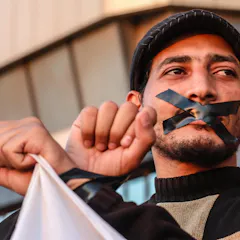
The rise of Islamic State and its declaration of the caliphate can be read as part of a wider story that has unfolded since the formation of modern nation states in the Muslim world.
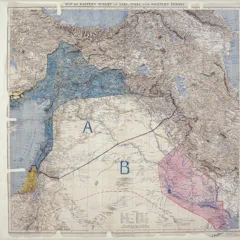
The leaders of Islamic State do not see their caliphate as an exercise in theocracy for its own sake, but as an attempt at post-colonial emancipation.
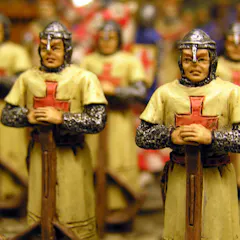
Representing even the Crusades as wars between Christians and Muslims is a gross oversimplification and a misreading of history.
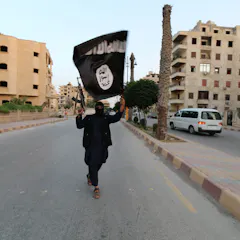
In seeking to link IS to earlier Islamic movements, Western commentators have associated the jihadist group with the medieval Ismailis, made famous in Europe by returning Crusaders as the Assassins.
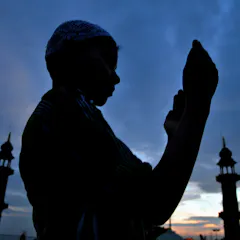
Since Islam is predicated on law, variations in the interpretation of that law – along with geography and distinct legal schools – have all contributed to differences in the religion.
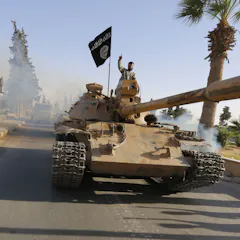
Despite what we’re told, religion isn’t inherently peaceful. People kill in the name of their religion, just as they love in its name.
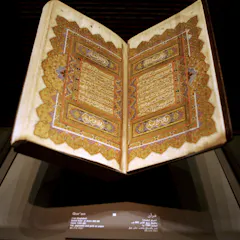
What makes Islamic State different to traditional Islam isn’t necessarily the religious texts the group uses.
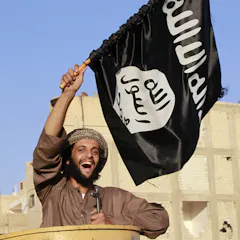
How far back in history does one have to go to find the roots of the so-called Islamic State? The first article in our series on the genesis of the terrorist outfit considers some fundamentals.
Top contributors
-

Research Fellow, Cambridge Muslim College & Teaching Fellow, SOAS, University of London
-
Professor of Communication and Middle East Studies, Georgia State University
-
Philip S. Bernstein Professor of Jewish Studies, University of Rochester
-
Professor of Religious Studies, University of Sydney
-
Professor of Modern Middle Eastern History, University of California, Los Angeles
-
Jean Monnet Fellow (European University Institute) & Reader in History, Edge Hill University
-
Professor Comparative Politics, University of Maryland
-
Senior Lecturer, Political Science Department, Yale University
-
Senior Lecturer in Medieval History, Manchester Metropolitan University
-
Professor of Islamic History, UMass Dartmouth
-
Chair in Global Islamic Politics, Alfred Deakin Institute for Citizenship and Globalisation, Deakin University
-
Co-Director & Head of the Department of Academic Research and Publications, The Institute of Ismaili Studies