
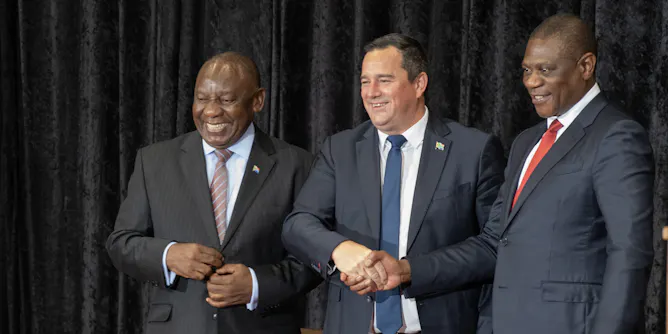
A sea change in the system of governance is needed to fix South Africa and rebuild an economy plagued by serious crises.
Articles on Cadre deployment
Displaying 1 - 20 of 28 articles
South Africa needs a new social contract whose core aim is the creation of dynamic economy.
There is never going to be a final assessment of Mandela’s legacy. How it is regarded will continue to change, depending on the destination South Africa travels to.
The book shows how parts of South Africa now fester with organised crime.
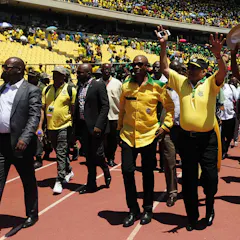
The decline in support for the ANC suggests that coalition governments will become increasingly common in the country, affecting its appointment policy.
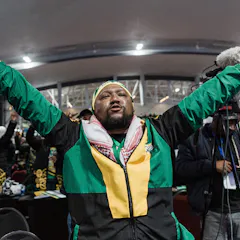
Despite its vagueness, the RET has become central to the contemporary ANC. It is destined to remain a powerful bloc within the party, and a constant constraint on Ramaphosa leadership.
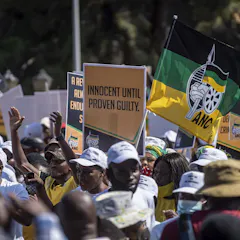
To his credit, former South African president Thabo Mbeki set up anti-corruption institutions that survived his own efforts to erode them.
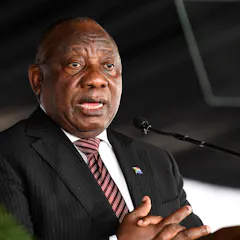
Almost 30 years into democracy, South Africa still hasn’t ensured the jobs of senior public servants are not tied to the tenure of government ministers.

The ANC retains its determination to rule yet lacks the capacity to do so effectively. The only way out of the dilemma is its defeat in an election.
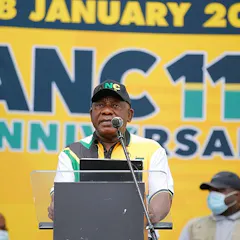
South Africans are led by a dithering president at the helm of an inept political party which has already passed its sell by date.

This history covers twelve decades, from the surrender of Boer guerrillas in the Second Anglo-Boer War in 1902 to the July 2021 looting spree and violence.
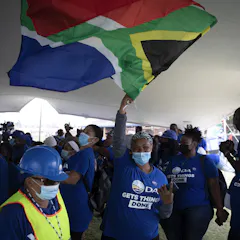
The 2021 local government elections signals widespread disillusionment with representative democracy that only a sea change in service delivery can fix.
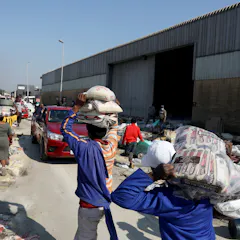
The democratic transition in 1994 was the result of an ‘elite pact’ that changed the country’s politics, but did little to undermine the foundations of white economic power.
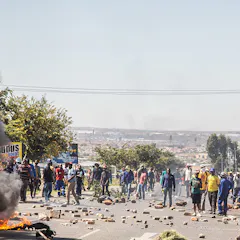
The problem in municipalities is not that the wrong people are being chosen. It is that the wrong people are doing the choosing – not only of candidates but of what they do if elected.
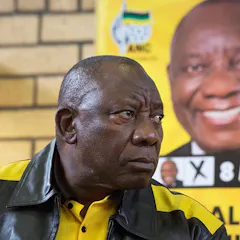
Ramaphosa will be eager to communicate his position that no one should be above scrutiny and that all parts of society,should be examined by the Commission.
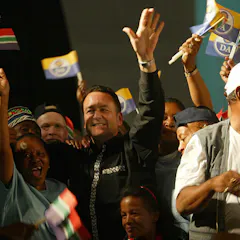
Leon mulls over the Democratic Alliance’s biggest challenge: ‘how to maintain its majority support among minorities, and increase its meagre voter share among the black majority’.

Professionalism has to start with ministers for it to stand any chance of being embedded throughout the public service.
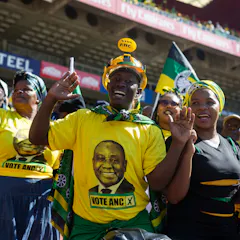
The election of Port Elizabeth’s first black mayor in 1995 signalled that the democratic change that had started in 1994 was irreversible. But problems lay ahead.
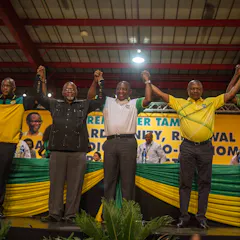
South Africa suffers capability deficiencies and institutional stasis due to poor political management.
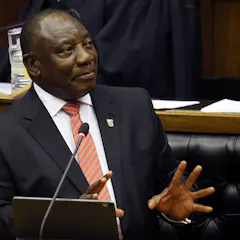
President Ramaphosa’s state of the nation speech showed his preference for less contentious matters that attract praise, rather than catalytic decisions.
Top contributors
-

Political Scientist, University of the Western Cape
-
Professor of Sociology, University of the Witwatersrand
-
Associate Professor of Political Science, University of Johannesburg
-
Extraordinary Senior Lecturer at the School of Public Leadership, Stellenbosch University
-
Head: Wits School of Governance, University of the Witwatersrand
-
Chief Research Specialist in Democracy and Citizenship at the Human Science Research Council and a Research Fellow Centre for African Studies, University of the Free State
-
Professor in Political Science, University of South Africa
-
Senior Lecturer, Department of Political and International Studies, Rhodes University
-
Senior Research Associate, University of Johannesburg
-
Emeritus Associate Professor in Public Law, UCT. Visiting Adjunct Professor, WITS School of Governance; Director, Africa Programme, University of Cambridge Institute for Sustainability Leadership, University of Cambridge
-
Extraordinary Professor, North-West University
-
Professor of Political Studies, University of Johannesburg
-
Professor of Law, University of the Witwatersrand
-
Professor of Urban Governance, University of the Witwatersrand
-
Senior Professor and Academic Head of Department: Political Studies and Governance, University of the Free State