
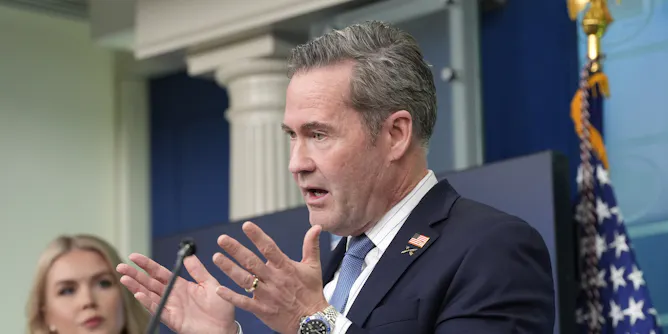
In foreign affairs, the national security adviser plays a coordinating role, setting the flow of recommendations to the National Security Council and the president.
Articles on Cabinet profile
Displaying 1 - 20 of 23 articles
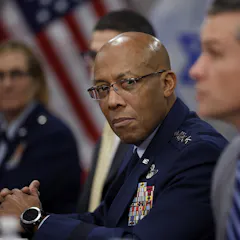
The highest-ranking military officer in the country, the chairman has no direct command authority. His role is as a presidential adviser rather than a decision-maker.
The commerce secretary manages a sprawling organization including trade, fisheries, weather forecasting and cutting-edge AI research.

Overseeing the FDA, NIH and several other public health and medical research divisions, the HHS secretary is a powerful force in how the nation accesses health care.

The USDA oversees food production and much more. However, it has little direct power to reduce food prices – a centerpiece of President Trump’s campaign.
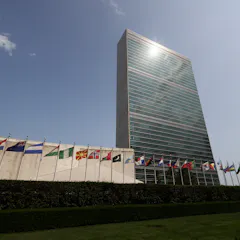
The US ambassador to the UN has considerable power and influence over US international affairs.
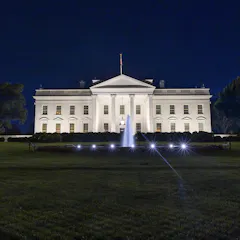
Headed by the president’s science adviser, OSTP serves as a one-stop shop for everything science and innovation inside the White House.
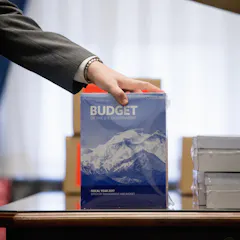
The OMB is like the government’s central nervous system – it, and its director, are at the center of pretty much everything.
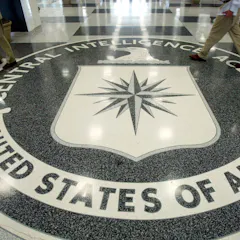
The director of the CIA is responsible for overseeing the agency’s clandestine operations and advising the president on national security matters.
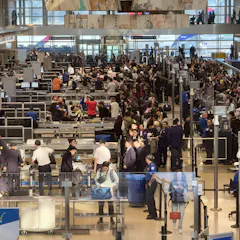
The Department of Homeland Security’s massive bureaucracy has many critical national security functions and spends billions of taxpayer dollars seeking to keep the nation safe.
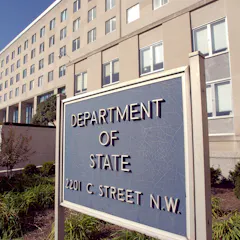
Marco Rubio, Donald Trump’s pick for secretary of state, will begin his confirmation hearing on Jan. 15.
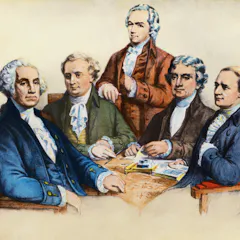
The US now faces the likelihood of a bruising and raucous set of confirmation hearings − a clear break from the cooperative system the founders established.

The Energy Department has a dual mission with a heavy science focus and manages large, expensive programs, many of which are behind schedule and over budget.

As Pete Hegseth has found, leading the US Defense Department is a big job, affecting Americans’ security at home and abroad and overseeing huge numbers of people and immense amounts of money.

Enforcing environmental laws isn’t a job that makes people popular. But polls show that Americans generally want more environmental protection, not less.

The Interior Department manages about one-fifth of all US land. Its secretary mediates among many competing uses for it, from recreation to energy production.
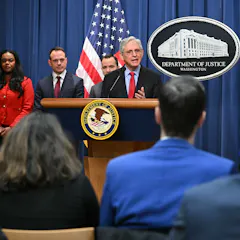
The combined political and legal roles and responsibilities of the US attorney general can create conflicts. Some attorneys general yielded to political pressure from the president – many did not.
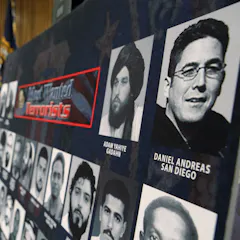
The FBI investigates everything from terrorist threats to cybercrime to public corruption. What does the presidentially nominated, Senate-confirmed head of the sprawling agency actually do?
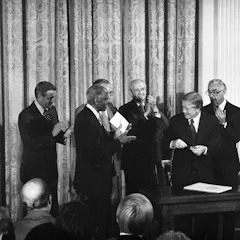
If Republicans manage to achieve a long-standing goal by getting rid of the Department of Education, there wouldn’t be a secretary of education anymore.

NASA administrators have hard choices to make, but the outcomes are often out-of-this-world exciting.
Top contributors
-

Associate Professor of Law, Arizona State University
-
Professor of Practice in International Relations, USC Dornsife College of Letters, Arts and Sciences
-
Associate Professor of Practice of Public Policy, University of Michigan
-
Cecil D. Andrus Endowed Chair for the Environment and Public Lands, Boise State University
-
Executive Director, Sabin Center for Environment and Sustainability, Wake Forest University
-
Professor of Strategy and Security Studies, Air University
-
Executive Director, McCain Institute, Arizona State University
-
Professor of Industrial Engineering, Georgia Institute of Technology
-
Professor of International Affairs, Georgia Institute of Technology
-
Professor of History & American Culture Studies, Washington University in St. Louis
-
President, Dickinson College
-
Shelby Cullom Davis Professor of International Security and Director of the Center for Strategic Studies, The Fletcher School, Tufts University
-
Senior Lecturer in Political Science, Auburn University
-
Assistant Professor of Law, The Ohio State University
-
Visiting Lecturer in Princeton School of Public and International Affairs, Princeton University