
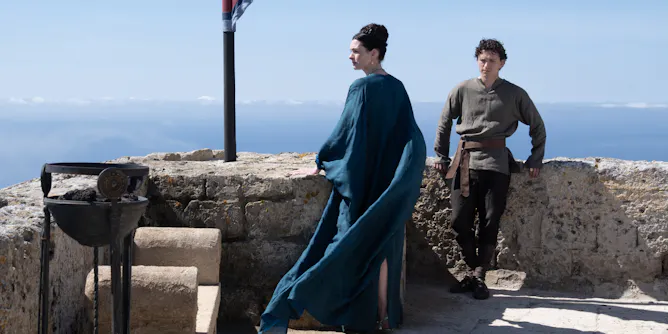
The Sea Peoples are widely blamed for the collapse of the interconnected world of the Bronze Age. But what’s the evidence say?
Articles on Bronze Age
Displaying 1 - 20 of 26 articles
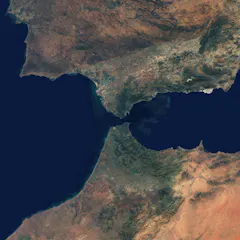
New research shows northwest African communities actively shaped connections and exchange between many cultures.
Iran is drawing on a characteristic of money that has been around since at least the bronze age: enabling trade between strangers and across political boundaries.
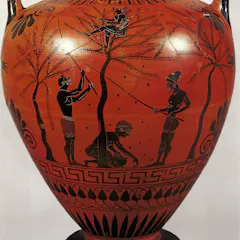
Roman author Pliny the Elder wrote that ‘There are two liquids that are especially agreeable to the human body: wine inside and oil outside.’

A ritual and funerary landscape is emerging in northwestern Africa, revealing connections with the Mediterranean, Atlantic and the Saharan regions.

The tin would have made a 4,000km journey to thriving markets in the east Mediterranean.

The Maghreb has long been absent from studies on the recent prehistory of the Mediterranean. The new findings change that.
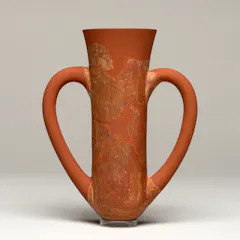
Based on organic residues – imperceptible to the naked eye and detectable only at a molecular level – bronze age wine consumption must be fundamentally reconsidered.

Archaeology teaches us that we are not immune to extinction.
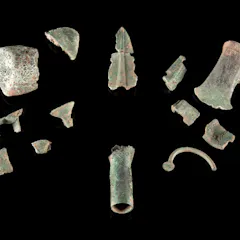
Did Bronze Age Europe have a market economy? New research suggests “hoard piles” could be linked to the exchange of small pieces of metal – much like money changes hands today.
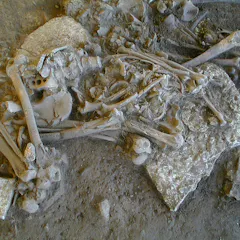
Neolithic populations declined 5,000 years ago, but the reasons are subject to debate.
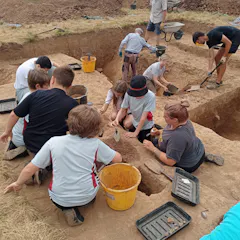
Since 2011, professional and amateur archaeologists in Cardiff have been unearthing prehistoric artefacts. But last summer, they began to discover something even more extraordinary.

Why is socio-economic inequality so threatening to complex societies and how can archaeology inform public policies for mitigating it?

Recent excavations reveal that what was once thought to be a Bronze Age fort is actually much younger, and produce evidence of a huge settlement that was home to 4,000 people.

Researchers used advanced chemical analyses to study breastfeeding in some of the world’s first farming communities.

New research reveals remarkable evidence of a copper-mining bonanza in Wales that was so productive the metal reached France, Germany, Denmark and Sweden.
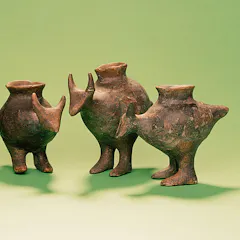
Ancient farmers ensured their children were fed and entertained in a similar way to modern parents.
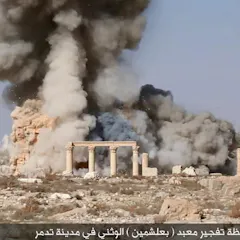
Armed conflict in Syria has been a disaster for the area’s cultural heritage. A displaced archaeologist describes what’s being lost.
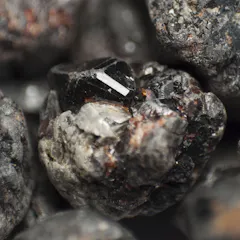
On its own it’s just tin. But mix it with other elements and it turns into a material that helped shape the ancient world.

Considering language from a biological perspective led researchers to the idea that new food processing technologies affected neolithic human beings’ jaws – and allowed new language sounds to emerge.
Top contributors
-

Research Associate, McDonald Institute for Archaeological Research, University of Cambridge
-
Honorary Research Fellow, Department of Archaeology, Durham University
-
Postdoctoral researcher in genetics, University of Leicester
-
Research Fellow, University of Southampton
-
Assistant Professor of the Archaeology of Early Europe, Leiden University
-
Visiting Assistant Professor of Anthropology, Binghamton University, State University of New York
-
Professor of Archaeology, University of Aberdeen
-
Senior lecturer, Cardiff University
-
Postdoctoral Research Fellow in Geology and Geophysics, University of Utah
-
Postdoctoral researcher, Department of Comparative Linguistics, University of Zurich
-
Professor of General Linguistics, University of Zurich
-
Post-doctoral researcher, Classics and Ancient History, University of Sydney
-
Associate professor in Physical Geography, Northumbria University, Newcastle
-
Associate Professor in European Archaeology, Australian National University
-
Associate Professor, School of Archaeology and Anthropology, Australian National University