

Performing at the coronation of King Charles III will be just one of many firsts for the activist soprano.
Articles on British colonialism
Displaying 21 - 37 of 37 articles
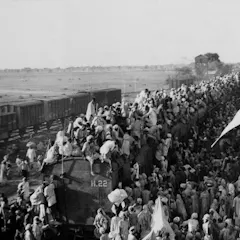
On the 75th anniversary of India’s partition, scholars from the US, Canada, France, UK and Australia write about their favorite book or film that best explains the trauma of a violent division.
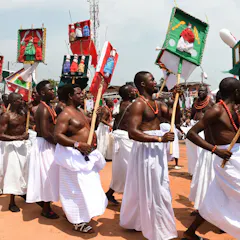
The fear of domination of one ethnic group or section by another has persistently undermined efforts at democratic consolidation in Nigeria.

Tan France, of Queer Eye fame, delves into the skin-shade prejudice he experienced as a child in England and the colonial history at its roots.

Brexit has reopened an old battle over Northern Irish identity, leading to clashes in the street. Scores have been injured in the troubled UK territory’s worst outbreak of violence in decades.
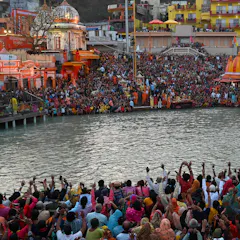
Kumbh Mela, a Hindu pilgrimage that started earlier this month in India, has survived wars and famine since its origin. But the biggest threat has been the spread of illness – back then as now.
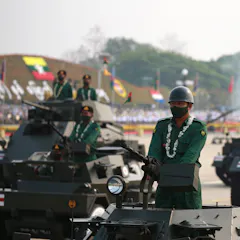
What began in the 1940s as a revolutionary army created to liberate Myanmar from British colonial rule soon turned repressive. The country has been a military dictatorship on and off since 1962.
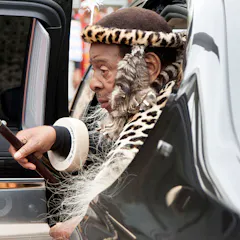
The king retained his position because undemocratic centralised power is too big a temptation for those who seek to benefit.

The story of Nigeria’s #EndSARS movement shows just how durable law enforcement institutions are – and why the road to reform goes straight uphill.
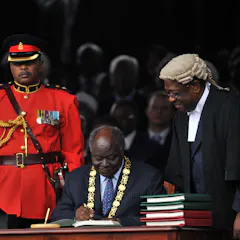
Kenya’s constitution-making process has exhibited a gyration pattern that often starts with a belief that governance reforms can rectify the country’s problems, but ends up as a power struggle.

That none of his collections were published in apartheid South Africa testifies to the police state’s censorship.

It is not hard to see the roots of 20th century apartheid policies in the legacy of the British settlers.
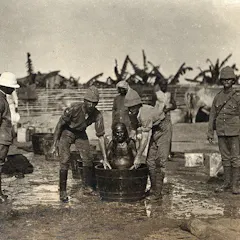
Racism against fellow Indians and classism against the poor characterised India’s early response to coronavirus, that is reminiscent of British imperial public health policies.
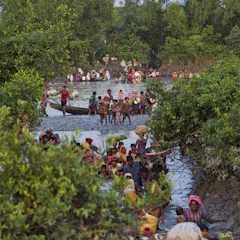
Dozens of Muslim-majority countries are asking the UN’s International Criminal Court to investigate and prosecute a 2017 massacre in Myanmar that killed an estimated 10,000 Rohingya Muslims.
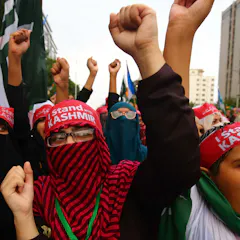
Roughly translating as ‘Hindu-ness’, Hindutva reframes the majority religion more as an identity, stoking tensions and intolerance of Muslims.
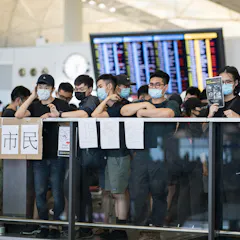
What Beijing could learn from the British response to the 1967 Hong Kong riots.

Today in South Sudan’s political climate, footballing success may wield more symbolic importance than anything else.
Top contributors
-

Associate Professor of History, CQUniversity Australia
-
Cohen Professor of Holocaust and Genocide Studies, Keene State College
-
Senior Lecturer in International Relations, University of Waikato
-
Associate Professor of World Cultures and Languages, Northern Illinois University
-
Professor of African Studies, University of Leeds
-
Doctoral Candidate, Department of Religion and Culture, Wilfrid Laurier University
-
Professor of Law, University of Technology Sydney
-
Professor of Anthropology, Religion and Transnational Studies, Emerson College
-
Assistant Professor the history of modern and contemporary India, University of Nottingham
-
Political Scientist, University of the Western Cape
-
Postdoctoral Research Fellow, Trinity College Dublin
-
Senior Lecturer, Covenant University
-
Honorary Professor of International Relations, The University of Melbourne
-
Herbert Lehman Professor of Government, Department of Anthropology, Columbia University
-
Associate Professor Sport History, Stellenbosch University