

It’s almost impossible to be without a smartphone these days – but the way we hold and sit while using them can cause an array of physical health problems.
Articles on Breathing
Displaying 21 - 37 of 37 articles
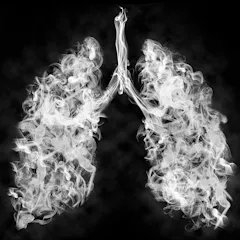
A new discovery offers hope for ways to treat a debilitating disease that has become a leading cause of death in the US..

You might think the more oxygen you breathe in the better. But too much oxygen can make you sick.
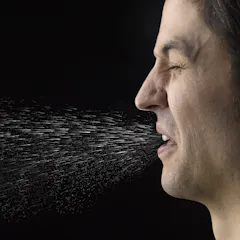
More than 200 scientists wrote to the World Health Organization, warning about aerosol transmission of the coronavirus.

The body has many natural defenses against viruses and other pathogens. One antiviral molecule produced in the body is nitric oxide and it is created when we breathe in through the nose.

Physiotherapists can help patients during and after coronavirus infections.

A fetus needs oxygen long before its lungs work and it’s exposed to the air. Some ingenious biochemistry explains how the mother’s blood delivers it.

Controlled coughing can help people with cystic fibrosis, under supervision and in hospital. But when done at home, it could help spread the coronavirus.
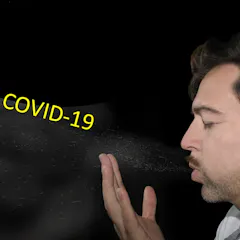
The CDC now recommends that everyone wear a face covering when they go into a public place. But there’s confusion about why and if this protects the wearer, people around them or both.

Bushfire smoke is making it difficult for some people to breathe. Those with asthma are at particular risk, but not everyone with the condition has been diagnosed. Here’s what to look out for.

Are you a worry wart? Not to worry. Turns out you were born that way, to some degree. Humans have a default mode in their brains that lead them to worry, but there are many ways to switch gears.

Responding to pressure with your respiratory system.

A sigh is the brain’s way of stopping the tiny sacks in your lung from collapsing.

Deep breathing is one of the simplest ways to deal with stress.

Echidnas can survive quite low levels of oxygen.
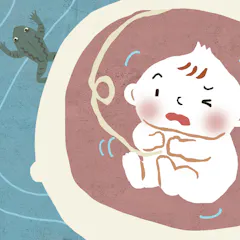
Hiccups serve no clear purpose. Tadpoles have a hiccup reflex which helps keep their lungs safe while they transition. So our hiccup reflex might be from our amphibian ancestors.

Breathing in through your nose has many medical benefits over mouth breathing. As usual, be wary of misinformation and bias when looking up health on the internet.
Top contributors
-

Professor of Anatomy, Lancaster University
-
Associate Professor of Medical Sciences, University of Wollongong
-
Professor, Environmental Studies Program at UC Santa Barbara
-
Associate Professor of Environmental and Occupation Health, University of California, Irvine; University of Southern California
-
Senior Lecturer, Department of Environment and Agriculture, Curtin University
-
Professor of Civil & Environmental Engineering, Clarkson University
-
Distinguished Professor Emeritus of Molecular & Medical Pharmacology, School of Medicine, University of California, Los Angeles
-
PhD Candidate, Sport and Exercise Science, Anglia Ruskin University
-
PhD Candidate in Sport and Exercise Science, Anglia Ruskin University
-
Associate Professor in Educational Psychology, University of Sydney
-
Assistant Professor of Medicine, Vanderbilt University
-
Researcher, The University of Melbourne
-
Professor of Mechanical Engineering, Clarkson University
-
Ph.D. Candidate in Analytical Chemistry, Colorado State University
-
David King is a Friend of The Conversation.
Senior Lecturer in General Practice, The University of Queensland