
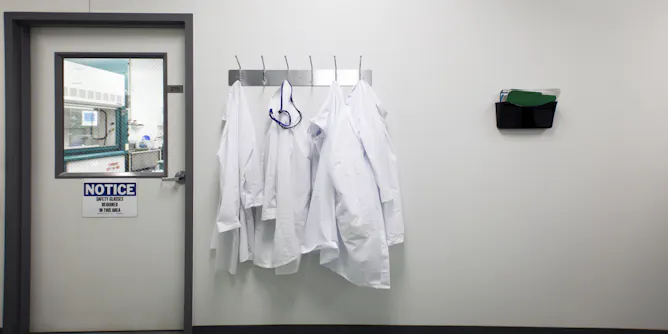
What do US researchers make of all the Trump administration science-related policy changes? A survey of 280 academic scientists asked them.
Articles on Brain drain
Displaying 1 - 20 of 23 articles
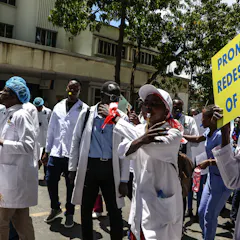
Health workers consistently move from poorer countries to richer ones, a pattern that tracks closely along lines drawn by colonial history.

Young people in rural Wales don’t want to leave, but without opportunity or a voice, many feel they have no choice.

Many of the world’s best and brightest STEM researchers have long moved to the US. But now that brain gain is at risk of reversing to become a brain drain, with science funding and visas in chaos.

PhD programmes play a role in advancing research, innovation, and economic and scientific progress.

African countries seem to agree that migration can link to development outcomes, but struggle with actually implementing it.

It is important for intending migrants to be aware of the realities in the destination countries to avoid post-migration disappointments.
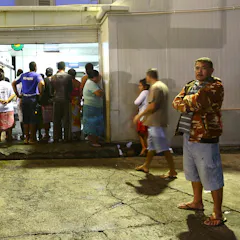
The new government is likely to increase the numbers of workers coming to New Zealand on seasonal work schemes. But the impact on Pacific economies and communities is now too great to be ignored.

International career mobility can give people valuable knowledge and expertise to be used in their home country.

Hosting migrants isn’t only motivated by humanitarian reasons. In Germany immigration provides solutions to demographic and economic problems.
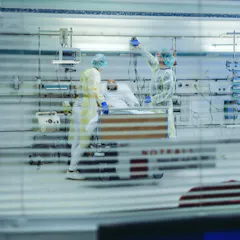
The pathway for foreign doctors to practise in New Zealand is neither easy nor very fair, meaning an over-stretched health system is missing out on valuable expertise.

The creation of a Research Excellence Barometer for Africa would contribute to retaining talent and expertise and ensure that Africans benefited from their own research efforts.
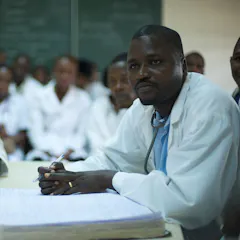
India, Nigeria, Pakistan and South Africa lose thousands of trained doctors each year, lured away to work in richer countries – at great cost to their nation’s healthcare systems.
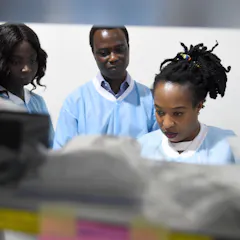
Mentoring can help build the confidence of young scholars in Sub-Saharan Africa, reducing the likelihood of brain drain.

Through their exposure to new trends in knowledge production, African academics in the diaspora can contribute to equipping African students for the global economy.

With limited resources and inadequate infrastructure, African universities appear to be under tremendous strain. But some are beating the odds and getting it right.
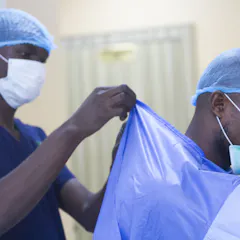
To reverse brain drain, the government should create a conducive environment for investment that will ensure employment opportunities

The Global State of Young Scientists Africa project investigates the challenges that shape the career trajectories of young African scientists.

South Africa must act to halt the decline and save its universities’ well deserved global reputation of excellence.

Newly translated Chinese Ministry of Education records shine light on China’s shifting place in the global higher education landscape.
Top contributors
-

Associate Professor of Geography, Michigan State University
-
Honorary Research Associate, Te Kunenga ki Pūrehuroa – Massey University
-
Research Assistant, Te Kunenga ki Pūrehuroa – Massey University
-
PhD Candidate in Geography, Environment, and Spatial Sciences, Michigan State University
-
Previous Vice President of the Academy of Science of South Africa and DSI-NRF SARChI chair in Fungal Genomics, Professor in Genetics, University of Pretoria, University of Pretoria
-
Professor of Development Studies, Te Kunenga ki Pūrehuroa – Massey University
-
Honorary Associate Professor in Medical Microbiology, University of Cape Town
-
Postdoctoral fellow, Tilburg University
-
Emeritus Professor, School of Public Health, University of the Western Cape
-
Tutorial Fellow, School of Medicine, University of Nairobi, University of Nairobi
-
Postdoctoral fellow, Hebrew University of Jerusalem
-
Lecturer, University of Lagos
-
Professor, Social Sciences, Université Mohammed V de Rabat
-
Research Fellow, Center for Cultural and African Studies, Kwame Nkrumah University of Science and Technology (KNUST)
-
Senior lecturer, Kenyatta University