
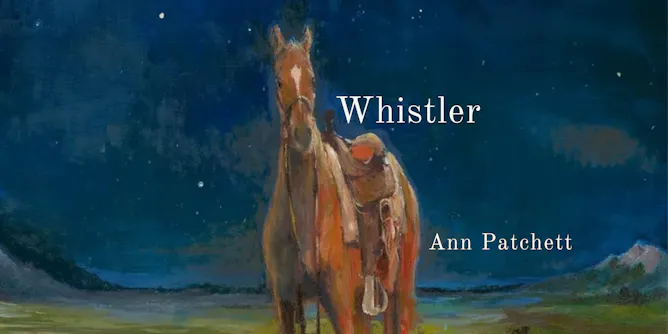
Ann Patchett’s 11th novel follows a daughter and father who reunite and learn to be better to each other.
Articles on Book reviews
Displaying 61 - 80 of 952 articles

How can you map a changing landscape and retain its history and spirituality?

Douglas Stuart won the Booker Prize for Shuggie Bain. His third novel, John of John, continues his exploration of masculinity and sexuality in repressed families.

In A.D. Hope: A Life, Susan Lever shows the philosophical reach, formal brilliance and impassioned force of Hope’s poetry.

Patricia Cornwell’s uneven memoir is part misery memoir, part confessional. It tells of celebrity encounters and wild fame – but her childhood is a tough read.

David Carlin and Peta Murray offer hopeful, poignant and personally informed responses to ageing and mortality.

Most of Errol Flynn’s films now seem B-grade at best – but Patricia O'Brien’s biography of this Tasmanian devil is compulsive reading.

The high drama of Douglas Stuart’s new novel sometimes feels like a soap opera – but his lyrical prose and atmospheric narrative elevate the genre.

Marlowe’s artistic brilliance was arguably more concentrated, his imagination more original and his ideas more daring than Shakespeare’s.

Lena Dunham’s searingly funny, shockingly honest memoir reveals how Hollywood culture allows pretty much anything, except human frailty.

Periodic Bitch tells what it’s like to live with PMDD: an extreme, chronically understudied and widely misunderstood form of premenstrual illness.

Conversations about death emphasise choice, control or dignity. Circle of Wonders offers a quiet corrective, insisting that dying is relational.

London Falling is well worth reading – but could have matched this star reporter’s masterpieces if it had ranged more widely.

In Yñiga, Glenn Diaz gives readers a glimpse into his country’s history in the only way that would do it justice.

This pacey, compulsive novel satirising the manosphere, tradwives and Instagram influencers will keep you up all night.

Siri Hustvedt is writing for her own survival in Ghost Stories, an extraordinary new grief memoir.

In Raven Mother, Jane Messer writes of the grandmother she never knew: a woman who defied expectations but was undone by war, displacement, exile and separation.

Fiona Wright’s genre-defying social satire will ring bells for people who are locked out of the housing market, and those who care about inequality.

Rich Kid, Poor Kid highlights the urgency and devastation of the school funding problem in Australia.

Romy Ash’s second novel, Mantle, asks what would happen if a pathogen made us wake up to ourselves – and change course.
Top contributors
-

Distinguished Professor Emerita of Creative Practice, Faculty of Arts and Design, University of Canberra
-
Dennis Altman is a Friend of The Conversation.
Vice Chancellor's Fellow and Professorial Fellow, Institute for Human Security and Social Change, La Trobe University
-
Adjunct Researcher, English and Writing, University of Tasmania
-
Professor in Politics and Journalism, University of Notre Dame Australia
-
Adjunct Professor, Australia-China Relations Institute, University of Technology Sydney
-
Emeritus Professor of Creative Writing, The University of Melbourne
-
Professor, Chair of Australian Literature, The University of Western Australia
-
Senior Lecturer, Writing, Department of Media and Communication, Swinburne University of Technology
-
Senior Lecturer, Discipline of English and Writing, University of Sydney
-
Professor of Communication, Deakin University
-
Professor of Psychology, The University of Melbourne
-
Professor of English Literature, University of Southern Queensland
-
Senior lecturer, Canberra School of Government, University of Canberra
-
Senior Lecturer in Humanities, University of Southern Queensland
-
Deputy Director, Institute for Ethics, Governance & Law, Griffith University