
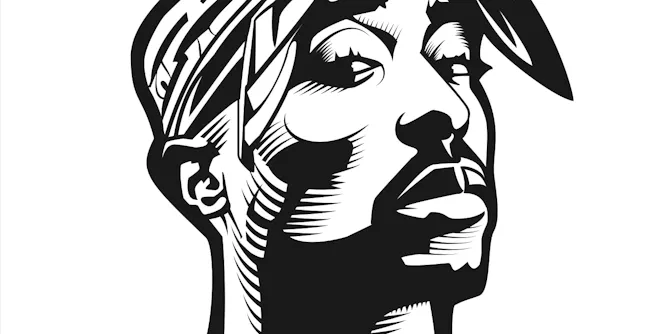
Tupac is proof that being young, marginal and Black does not necessarily mean being powerless.
Articles on Black Panthers
Displaying all articles

Philadelphia police revoked the carry licenses of five members of the Black Lion Party for International Solidarity, citing ‘good cause.’ Is that constitutional?
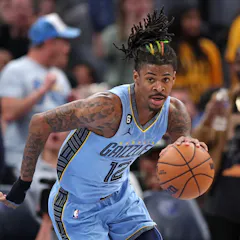
America’s veneration of gun ownership is seconded only by its commitment to rendering armed Blacks as an existential danger to the civility and structure of America.
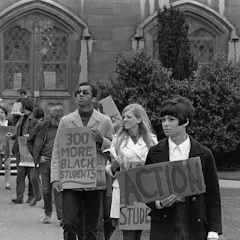
Washington isn’t a state that typically comes to mind in discussions about student-led protests from the Civil Rights Movement. A Black history professor seeks to change that with a new book.
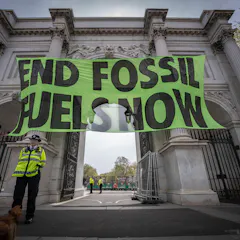
Direct action can make the demands of a mainstream movement seem reasonable.
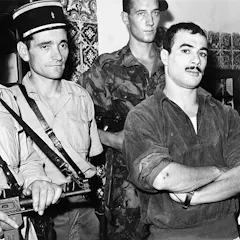
The film showed how a country can win militarily, but still lose the battle for ‘hearts and minds’.
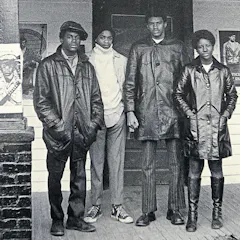
In the early hours of Feb. 10, 1971, heavily armed officers moved in on a house occupied by Black Panther activists – marking a policing trajectory toward a more militarized response to Black activism.
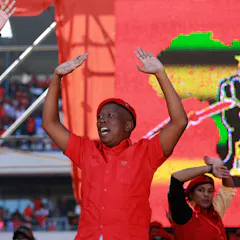
The EFF’s militarised aesthetic is more than a sideshow. It forms a key part of its spectacle-oriented brand of politics.
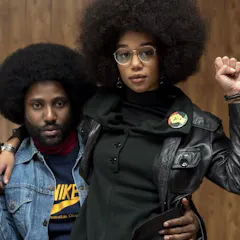
BlacKkKlansman is more than a good story: it expertly weaves together comedy with serious drama to bring the story of past racism to illuminate our present day issues.
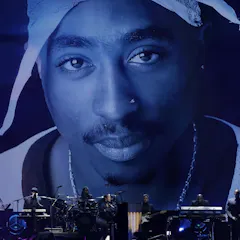
Tupac’s sensitivity, intelligence and creativity confronted the hostile forces that antagonized black youth across the country in the 1970s and 1980s.
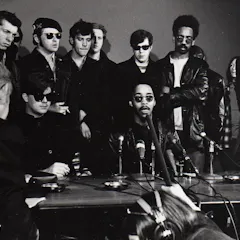
In this article from 2017, a look at the coordination of strategy between white and Black activists to fight systemic class oppression.
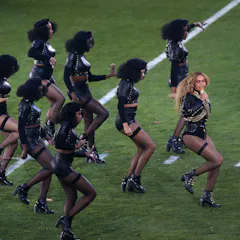
Dressing like a Black Panther at the Super Bowl was always going to raise a few eyebrows – and that was the point.
Top contributors
-

Lecturer, University of Leicester
-
Professor of History and Founding Director, Center for the Study of Popular Music, University of Connecticut
-
Professor, Departments of English Langauge and Literature & Communication Arts, University of Waterloo
-
Adjunct Lecturer of Law, University of Pennsylvania
-
Professor of Law, University of Wyoming; Institute for Humane Studies
-
Associate Professor of African American History, California State University, San Bernardino
-
Lecturer in Sustainability, University of Manchester
-
Reader, University of Liverpool
-
Postdoctoral Research Fellow in Philosophy, University of Johannesburg
-
Professor of Africana Studies and Art & Design, University of Delaware
-
Professor of U.S. History, High Point University
-
DISCO Network Postdoctoral Research Fellow, Purdue University
-
Honorary research affiliate, Centre of Criminology, University of Cape Town