
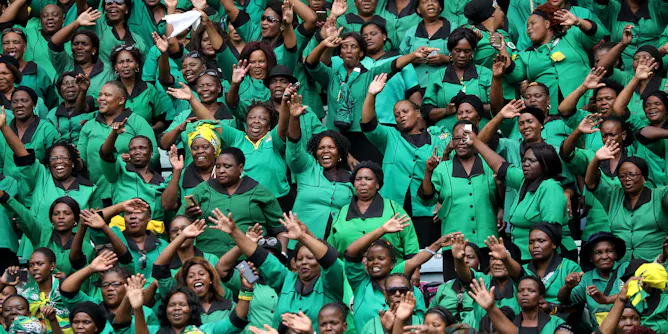
South Africa has the world’s largest white minority living under black rule.Colour line tensions might remain a feature of the country’s political landscape.
Articles on Black Economic Empowerment
Displaying 21 - 40 of 40 articles
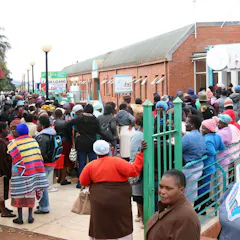
Much deeper social forces underlie the struggles within the governing ANC and society over the shape of the economy.
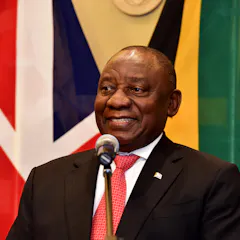
Polls indicate that South Africans are unlikely to totally abandon the African National Congress.
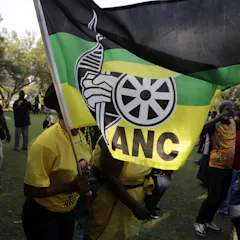
Two authors unpack the fragility of South Africa’s political parties and why democracy is a lifelong commitment.
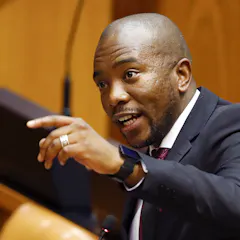
South Africa’s official opposition, the Democratic Alliance needs to face its racial dilemmas.

Unexpressed racism may be even more dangerous if it’s left lurking below the surface.

South Africa needs a robust economic policy agenda to make it more open, productive and inclusive.

The Steinhoff corporate scandal will do South Africa a huge service if it makes the point that corruption and mismanagement have nothing to do with race.

South Africa’s governing ANC has always seen economic growth as the driving force for change. This was wishful thinking as the damage done by apartheid will take far more to undo.
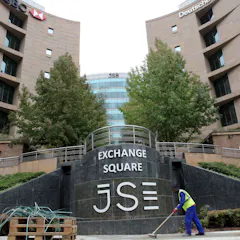
The debate about white monopoly capital in post-apartheid South Africa is good for the country’s politics but it tends to come with bad sociology.
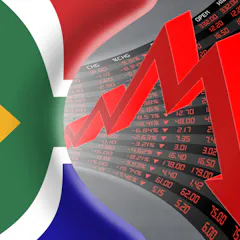
The rising talk about ‘white monopoly capital’ as an obstacle to economic inclusion in South Africa is a red herring.
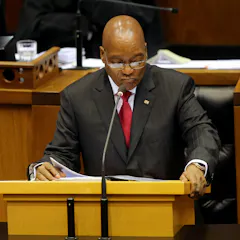
South African President, Jacob Zuma, wasted lots of time and space in cheap politicking instead of galvanising South Africans to work together for a better future.
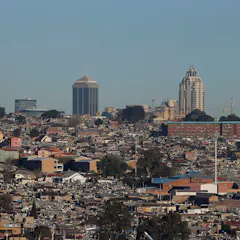
In his recent state of the nation address South Africa’s President Jacob Zuma spoke emphatically of “radical economic transformation” causing nationwide debate. What does it really mean?
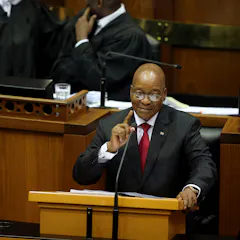
South Africa’s President, Jacob Zuma, promised radical economic transformation in his 2017 state of the nation address. A lot of what he said in support of this promise is alternative facts.

The slow pace of transformation in post apartheid South Africa is a reflection of persisting racism that has infected formal corporate institutions.
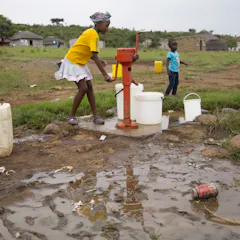
Massive state capture activity is taking place in the South African water sector under the guise of radical economic transformation, threatening financial sustainability and water supply.

South Africa needs take a radically different path if it is going to make its economy more inclusive. It must start from the premise that markets are intrinsically skewed to historic privilege.

A recent study of firms listed on the Johannesburg Stock Exchange suggests that companies with gender-diverse boards are more responsible corporate citizens.
Research shows that South African companies are neglecting the more challenging aspects of sustainability reporting.

White males still dominate South Africa’s boardrooms 17 years after legislation was passed to foster the inclusion of black executives and women. Companies have not yet embraced employment equity.
Top contributors
-

Professor of Sociology, University of the Witwatersrand
-
Professor of Political Studies, University of Johannesburg
-
Political Scientist, University of the Western Cape
-
Professor of Economics, Centre for Competition, Regulation & Economic Development, UJ, and at SOAS University of London; advisor Shamba Centre for Food & Climate, University of Johannesburg
-
Emeritus Professor, Poverty, Land and Agrarian Studies, University of the Western Cape
-
Professor of Urban Governance, University of the Witwatersrand
-
Senior Lecturer, Department of Political and International Studies, Rhodes University
-
Deputy Dean for Research and Post-Graduate Studies, Faculty of Economic and Management Sciences, University of Pretoria
-
Senior Researcher, Centre for Competition, Regulation, and Economic Development, University of Johannesburg
-
Visiting Adjunct Professor, School of Governance, University of the Witwatersrand
-
Academic in the Department of Business Management., Stellenbosch University
-
Senior Lecturer, Graduate School of Business Administration, University of the Witwatersrand
-
Lecturer in Economics, University of the Witwatersrand
-
Professor of Economics and Public Finance, School of Governance, University of the Witwatersrand
-
Associate professor, University of Cape Town