
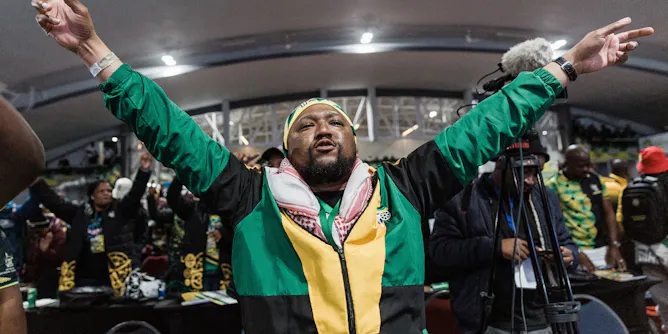
Despite its vagueness, the RET has become central to the contemporary ANC. It is destined to remain a powerful bloc within the party, and a constant constraint on Ramaphosa leadership.
Articles on Black Economic Empowerment
Displaying 1 - 20 of 40 articles

The study analysed the content of six news outlets from 1994 to 2014, looking at how core socio-economic issues were reported.
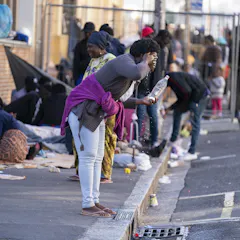
South Africa does not put refugees in camps. So, the government is responsible for their protection and well-being. Its performance was hit-and-miss.
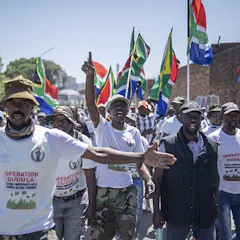
Ending violence against foreigners can only happen by first recognising – and addressing – the hazards of South Africa’s crumbling system of indirect rule.
The democratic transition in 1994 was the result of an ‘elite pact’ that changed the country’s politics, but did little to undermine the foundations of white economic power.
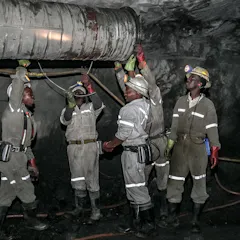
There’s a significant variation in how companies, including multinationals, respond to South Africa’s black economic empowerment policies.
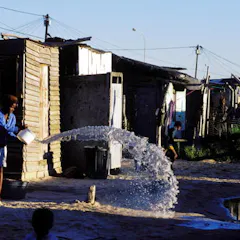
The new governing elite mistakenly believes that the goal of a democratic South Africa is simply to extend to everyone what whites enjoyed under apartheid.
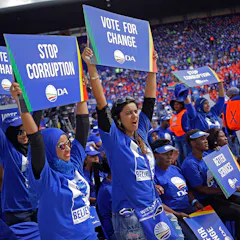
The problem for the Democratic Alliance is not one of policy. There is real substance in its commitment to substituting racial criteria for overcoming historical disadvantage.
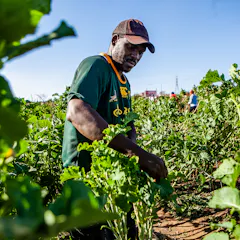
The new initiative reproduces the core weaknesses of post-apartheid state land and agricultural policy. These have done little to improve the livelihoods of the poor.

It is vital that the latest move by government towards restructuring succeeds in making the industry safe, reliable and viable, contributing to the country’s economy.
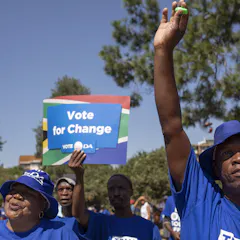
Each black person and woman may be an individual but, because they are black and women, they face obstacles which whites and men don’t.

His appearance on behalf of the families of mine workers shot by the police at the Marikana Commission of Inquiry was just one of his efforts to seek justice for the poor and marginalised.
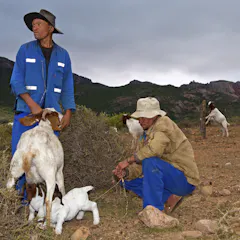
When South Africa eventually emerges from the fog of the COVID-19 crisis, structural reform, including land reform, will be high on the political agenda as never before.

In South Africa, state corruption has taken hold with utter disregard for ethics and democratic norms in a cynical exploitation of the post-apartheid transformation agenda.
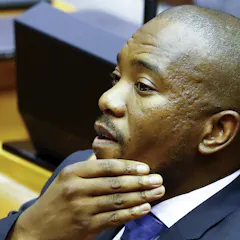
There is no moral equivalence between apartheid’s use of race categories and their continued use by the democratic government.
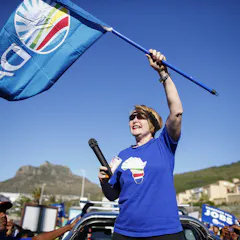
The Democratic Alliance’s problems can be traced back to the politicisation of race, which has persisted even after the dawn of democracy in 1994.
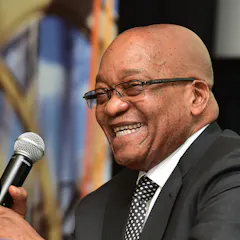
South Africans may well be seduced by the prospect of Zuma appearing at the Zondo commission, but he was not alone in driving the state capture project.
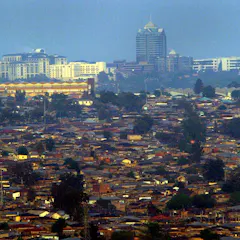
In matters of policy-making and governing, understanding the systemic complexity of interrelated forces is crucial to avoiding failure.

The FF+‘s constituency is overwhelmingly Afrikaner white Protestants. But, it appears to have made inroads among coloured conservatives.

The black middle class are angry at their exclusion from mainstream economic activity.
Top contributors
-

Professor of Sociology, University of the Witwatersrand
-
Professor of Political Studies, University of Johannesburg
-
Political Scientist, University of the Western Cape
-
Professor of Economics, Centre for Competition, Regulation & Economic Development, UJ, and at SOAS University of London; advisor Shamba Centre for Food & Climate, University of Johannesburg
-
Emeritus Professor, Poverty, Land and Agrarian Studies, University of the Western Cape
-
Professor of Urban Governance, University of the Witwatersrand
-
Senior Lecturer, Department of Political and International Studies, Rhodes University
-
Deputy Dean for Research and Post-Graduate Studies, Faculty of Economic and Management Sciences, University of Pretoria
-
Senior Researcher, Centre for Competition, Regulation, and Economic Development, University of Johannesburg
-
Visiting Adjunct Professor, School of Governance, University of the Witwatersrand
-
Academic in the Department of Business Management., Stellenbosch University
-
Senior Lecturer, Graduate School of Business Administration, University of the Witwatersrand
-
Lecturer in Economics, University of the Witwatersrand
-
Professor of Economics and Public Finance, School of Governance, University of the Witwatersrand
-
Associate professor, University of Cape Town