

Bitcoin has lost over half of its value since November 2021.
Articles on Bitcoin
Displaying 61 - 80 of 287 articles

Some foreign officials promoting central bank digital currencies want to be able to track and limit transactions in real time.

Stablecoins are less volatile, and considered a safer bet than many cryptocurrencies.

Narcissism and belief in conspiracy theories may be among the factors that motivate people to buy cryptocurrencies.

Cryptocurrency allows Ukraine to get quick financial support, and Russia, to bypass international sanctions and protect some of its economic interests.

Proof of Work mining is inherently wasteful, but don’t expect a switch any time soon.

Many people promoting cryptocurrencies are looking for something bigger than the future of financial transactions. They’re aiming to break free of governments and corporations.
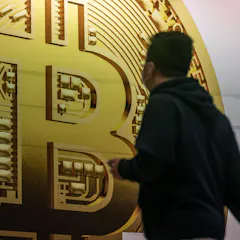
Bitcoin’s annual electricity consumption is more than three times New Zealand’s – those hidden environmental costs must be part of any future regulation.
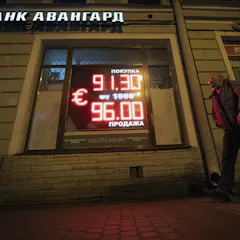
A closer look at Bitcoin transactions suggests ordinary Russians are the ones buying more cryptocurrency, hoping to hang onto savings as the ruble’s value plummets.

Two weeks into the invasion, here’s what’s been happening so far.

What bitcoin giveth, it also takes away.

Whether the cryptocurrency hype makes you crypto curious or crypto skeptical, there are many ways your life could be affected by crypto’s underlying technology, blockchain.

The premise of ‘eco-friendly’ non-fungible tokens is shaky at best.

Blockchain technology can be made greener if we change the way transactions happen.

As decentralized autonomous organizations with philanthropic aims begin to form, it’s unclear whether they can operate without breaking IRS rules.

With mantras, a mysterious founder and promises of societal salvation, there are echoes of religious traditions in the cryptocurrency.

Although it’s estimated illicit activity amounts to less than 1% of all cryptocurrency transactions, figures of losses are still staggering – and on the rise.

Jurisdictions have long contended with the threat cryptocurrencies pose to central banks’ power over monetary policy.

For the metaverse to work, people need to own their virtual bodies and possessions and be able to spend money. The same cryptographic technology behind bitcoin will make that possible.

Plus, a philosopher explains the history of the idea that we might all be living in a simulation. Listen to The Conversation Weekly podcast.
Top contributors
-

Professor of Law, University of East London
-
Director of UWA Centre for Software Practice, The University of Western Australia
-
Senior lecturer, Canberra School of Government, University of Canberra
-
Associate Professor in Financial Technology, University of Liverpool
-
Director of the Centre for Digital Finance, Associate Professor in Finance, University of Southampton
-
Professor of Economics, RMIT University
-
Professor of Finance & Financial Technology, University of Reading
-
Assistant Professor - Geography and Development, Northumbria University, Newcastle
-
Professor and Head, School of Business, Monash University Malaysia
-
Senior Lecturer in Business and Commercial Law, Lancaster University
-
Hon Associate Professor. Research interests - AI and the law; Social relationships of trust; Sustainable futures, Australian National University
-
Professor of International Finance and Commodities, Trinity College Dublin
-
Associate Dean, Research and Innovation, University of Salford
-
Professor of AI and Public Policy, University of Salford
-
Professor of Management, University of North Carolina – Greensboro