
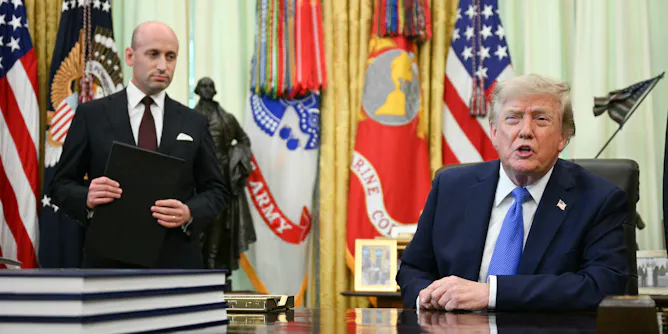
Two new executive orders take aim at aspects of birthright citizenship the high court did not address in its June 2026 ruling.
Articles on Birthright citizenship
Displaying all articles
Birthright citizenship has become a point of debate as some governments adopt more restrictive policies aimed at limiting access to citizenship for some migrants.
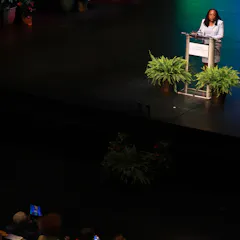
Jackson’s concurrence traces the 14th Amendment to work done by people ‘beyond Congress’ and Black Americans who ‘helped galvanize the push for full equality.’
A former federal judge analyzes key Supreme Court decisions this term, reflects on growing judicial invective evident in its opinions, and judiciously gives praise for some great writing.
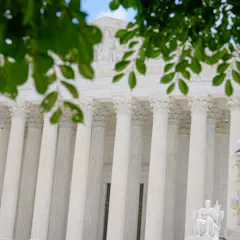
Pointing to the citizenship clause of the 14th Amendment, the high court ruled that all babies born in the United States ‘are citizens by birth.’
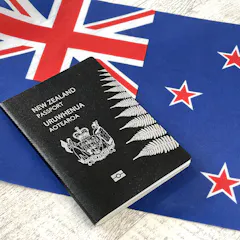
The US Supreme Court will soon rule on Donald Trump’s attempt to end automatic citizenship rights for people born in the US. It’s not a clear-cut issue in NZ either.

A university president who’s a former federal judge looks at the rule of law and the Trump administration’s first year, concluding the president ‘simply lacks respect for our system of justice.’
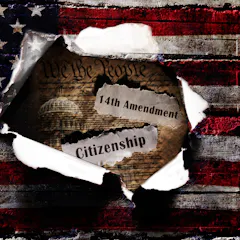
Advocates for each side will provide a different explanation for who falls under ‘the jurisdiction’ of the United States.
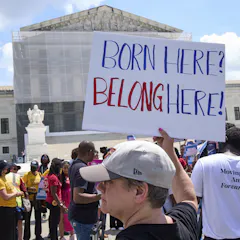
The Supreme Court can still invalidate the newest national injunction and allow the order to go into effect anywhere it is not currently barred from doing so. That would create administrative chaos, the authors write.

What is the purpose of US District Courts
and Court of Appeals, and why do some courts have multiple judges and others have only one?

The Supreme Court just made it harder for judges to block presidential policies nationwide, but lawmakers hold the key to changing that.
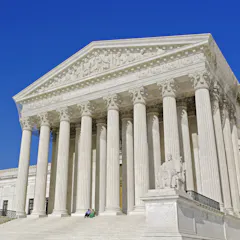
Arguments before the US Supreme Court on birthright citizenship – awarded to those born in the US – actually focused on the power of federal judges to impose nationwide injunctions.
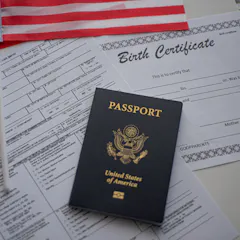
Three federal judges have struck down Trump’s executive order on birthright citizenship since he signed it in January 2025. Now, the Supreme Court will hear arguments in the case.
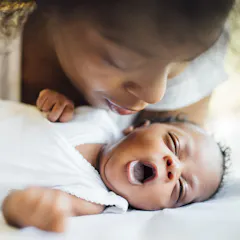
Having the support of family members living in a foreign country was one of the reasons Nigerian women gave for choosing to have their babies overseas.
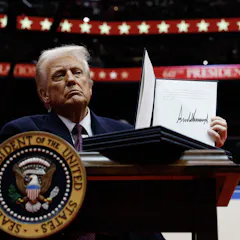
If it comes into force, President Donald Trump’s executive order ending birthright citizenship could have consequences for people and processes in the US and abroad.
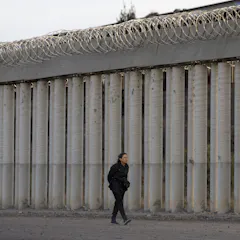
It seems counter-intuitive that many US voters who identify as having Latino heritage are in favour of strict restrictions on migration from Latin America.
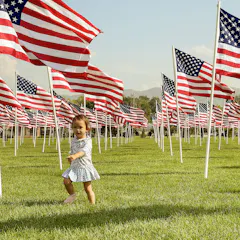
Since the earliest days of the nation, any person born on US soil is a US citizen. A new Supreme Court ruling limits judges’ ability to block Trump’s order.
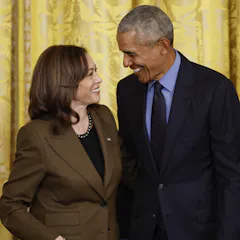
A falsehood once used on Barack Obama – that he wasn’t eligible to be president – is being recycled to challenge the right of Kamala Harris to serve as president.
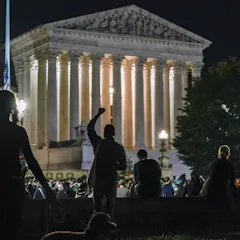
A 6-3 conservative court will hear a broader range of controversial cases, shift interpretations of individual rights and put more pressure on local democracy to make policy decisions.
If upheld, a federal court ruling would solidify birthright citizenship as the law of the land, and overturn more than a century of federal refusal to grant American Samoans citizenship status.
Top contributors
-

Richter Professor Emerita of Political Science, Swarthmore College
-
Professor of American Civics, University of Tennessee
-
Professor of Political Science and Women’s, Gender and Sexuality Studies, University at Albany, State University of New York
-
William Nelson Cromwell Professor of Jurisprudence and Political Science, Amherst College
-
Professor of Law and Director of the Center for Professional Ethics, Case Western Reserve University
-
President, Dickinson College
-
Associate professor, London School of Hygiene & Tropical Medicine
-
Senior lecturer, University of Essex
-
Clinical Associate Professor of Law, Co-Director, USC Immigration Clinic, University of Southern California
-
Associate Professor, Department of Law and Legal Studies, Carleton University
-
Professor of Legal Studies and Political Science, UMass Amherst
-
Lecturer, Department of Journalism, City St. George's, University of London, City St George's, University of London
-
Associate Professor of Political Science, Boise State University
-
Associate Professor, School of Law, University of New England
-
Senior Lecturer, Politics and International Relations, University of Auckland, Waipapa Taumata Rau