

When does supporting women who use drugs so they can avoid unplanned pregnancies turn into something more coercive?
Articles on Birth control
Displaying 41 - 60 of 74 articles

The ban on the pill led to much sorrow and frustration, but determined couples found imaginative ways to cope and work around it.

Support for over-the-counter birth control pills is growing. But a drawback could be that insurers would not pay for them. Also, some people have safety concerns. Could pharmacists be the solution?

Long-term or historical use of oral contraceptives may lead to an increased risk of depression in later years; understanding the risk will better inform the decision whether or not to take the pill.
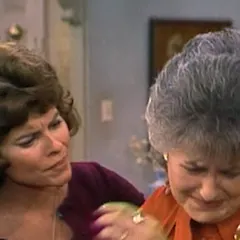
Abortion has been a huge political issue in the US for the last 50 years. But the abortion debate is not new. It began at least a century before landmark abortions rights decision Roe v. Wade.

Approximately 25% of women – representing all races and backgrounds – will undergo an abortion before the age of 45.

Tanzania was an early, ardent believer in family planning. Now it joins a growing number of developing nations that see potential advantage in having a huge and growing workforce.

It’s very difficult to measure whether a conception was intended. But those data are vital to understanding women’s choices.
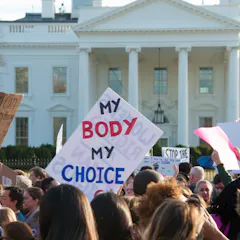
Women face extraordinary difficulty in seeking the birth control method of sterilization due to sexist reproductive norms.

July marks 50 years of Pope Paul VI’s encyclical prohibiting contraceptive use. For many years prior to it, the church had not been so explicit on its stance. How did it become such a thorny issue?

Over the past 45 years, women have married later, attained higher education and joined the workforce in record numbers. Could it all be turned back?

There are more than 30 different types of contraceptive pills. But brand names such as Microgynon, Levlen, Yaz and Brenda give little indication of the ingredients, dose or who should use them.

We usually focus on the physical health effects of the pill, yet the most common reason women stop or change the pill is mental health side effects.
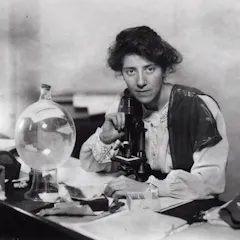
It’s been 100 years since a book written by Marie Stopes revolutionsed the way that people talked about sex.

Medicinal chemists are tweaking a natural molecule that can be a deadly poison – a modified version might work as a nonhormonal male contraceptive.

Long-acting reversible contraceptives are more reliable than other methods of contraception and most women are happy with them.

What do intercontinental missiles and Apple’s app store have in common? Alvin M Weinberg.

It seems counterintuitive that cuts to teen-pregnancy prevention programmes should lead to fewer pregnancies, but that’s what the latest research finds.

Understanding where teens learn about sex and how that influences them can help us find ways to encourage healthy sexual behaviors, such as using condoms and birth control.

Why research into male contraception keeps hitting the buffers.
Top contributors
-

Associate Professor in Contraception, Reproductive and Sexual Health, Anglia Ruskin University
-
Associate Professor of Women and Gender Studies & Jewish Studies, University of Colorado Boulder
-
Venable Professor of Law, University of Baltimore
-
Professor of Women's, Gender and Sexuality Studies, The Ohio State University
-
Professor of Law, Politics and Society, Drake University
-
Associate Professor of Health Policy and Management, University of Pittsburgh
-
Associate Professor of Family Medicine and Obstetrics & Gynecology, School of Medicine, University of Washington
-
Associate Professor of Pharmacy and Therapeutics, University of Pittsburgh
-
Senior Research Associate, Centre for the Study of Existential Risk, University of Cambridge
-
Research Professor of Medicinal Chemistry and Associate Program Director of the Institute for Therapeutics Discovery and Development, University of Minnesota
-
Deputy Director of Clinical Studies, School of Medicine, Faculty of Health, Deakin University
-
Professor and clinician in fertility medicine, Hudson Institute
-
PhD, Political Science, Western University
-
Assistant Professor of Sociology, Louisiana State University
-
Fellow of the Royal Australasian College of Physicians and founding director of the Monash Institute of Medical Research, Monash University