

Like friendship itself, the slower ageing is more than just skin deep.
Articles on Biological age
Displaying all articles

Understanding your ‘biological age’ can help you live longer.

These tests promise to show how much cellular ‘wear and tear’ your body has undergone, and how that corresponds with your age in years. Here’s what the science says.
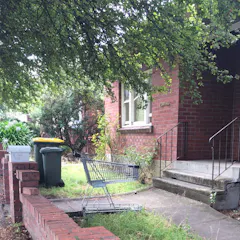
People age differently depending on the lives they lead. DNA testing shows every year of living in a privately rented home add 2.4 weeks of ageing compared to those who own their home.
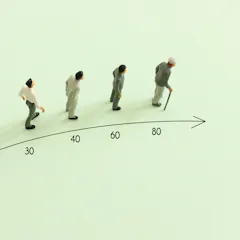
Why we should all try to be biologically younger.
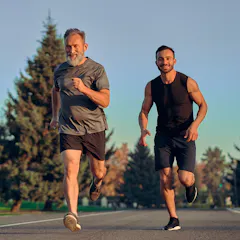
Many factors such as smoking, how much your exercise and what foods you eat, can affect your biological age.
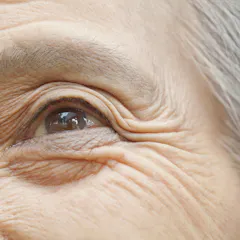
Aging is a culmination of factors spanning from your cells to your environment. A number of interconnected processes determine how quickly your body is able to repair and recover from damage.

Aging is a major risk factor for many chronic diseases. Figuring out what influences longevity and how to identify rapid agers could lead to healthier and longer lives for more people.

Predicting life expectancy remains in the realm of science fiction, but it may soon be possible. Are we prepared for such information? And who else would benefit from this knowledge?

Your pup may be older than you think. Another reason to let sleeping dogs lie.

Research shows that feeling younger than you are could be good for you.
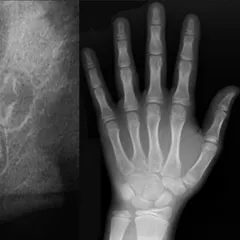
If an undocumented migrant is a minor or an adult can have far-reaching implications. A forensic anthropologist explains why relying solely on dental X-rays to determine age doesn’t work.
We may not be able to ‘age backwards’, as some jellyfish do, but research is slowly revealing the secrets of successful ageing for humans.

Various tests claim to be able to tell your true age. Here’s how they do it.

Bio-banding is all the rage as youth football seeks to make the most of young talent. Here’s why we shouldn’t get carried away.
Top contributors
-

Associate Professor of Anthropology, Binghamton University, State University of New York
-
Associate Professor (Housing Policy), Adelaide University, and Research Associate, ESRC Research Centre on Micro-Social Change, University of Essex
-
Director of Sport, Performance and Health, Heriot-Watt University
-
Lecturer, Aston University
-
Professor, Neuropsychology, University of Westminster
-
Professor of Housing Research, Adelaide University
-
Professor of Biological and Social Epidemiology,, University of Essex
-
Reader in Ageing Physiology, University of Westminster
-
Professor of Cyber Security Practice, Edith Cowan University
-
Professor, School of Biological, Earth & Environmental Sciences, UNSW
-
Lecturer in Biological Sciences, University of Wollongong
-
Postdoctoral Fellow in Genetics, CSIRO
-
Senior Lecturer in Computer Science, RMIT University Vietnam
-
Karolinska Institutet
-
Assistant Professor in Molecular, Cellular, and Developmental Biology, University of Michigan